
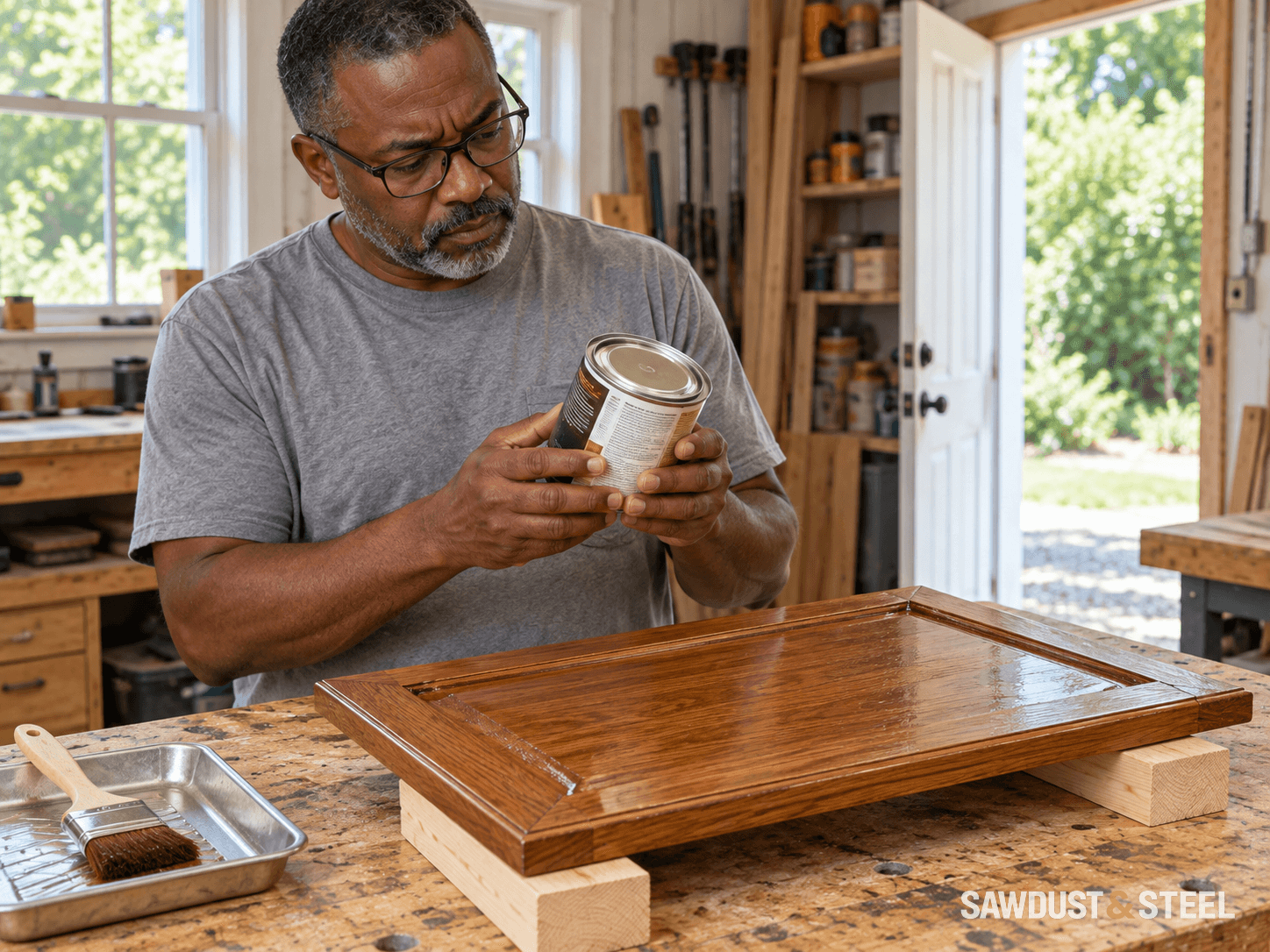
You lift the cabinet door to put it back on its hinges and leave a thumbprint in the finish. It had the whole night to dry. Unfortunately, the coating did not read the part of your schedule about having the kitchen back by breakfast.
Leave the next coat in the can. The useful question is whether this surface needs more time under the right conditions, or whether the preparation and application have produced a layer that will not dry as intended. Adding a harder-looking topcoat is not a reliable way to settle that question.
Name the product before naming the cure
Find the label and current instructions for every layer: cleaner, stripper, conditioner, stain and topcoat. Record when each went on, how it was applied and what was wiped off. Oil, wax, hardwax oil, stain and film-forming topcoat are not interchangeable terms. A non-curing maintenance oil should not be expected to behave like a hard varnish film.
Write down whether the surface was bare wood or an existing finish. Include the wood species and whether it is veneer. If an old can was used, note its age, storage conditions and anything unusual when it was opened. Do not add a guessed solvent or hardener to make the remaining mixture seem more cooperative.
Separate recoat time from readiness for daily use
A surface can be ready for its next specified coat before it is ready for books, dishes or a tightly fitted door bumper. General Finishes distinguishes drying between coats from curing for normal use. Its general guidance gives approximately 21 days for water-based finishes and 30 for oil-based finishes under ideal conditions. Those are examples from that manufacturer's system, not waiting periods for every finish in the shop.
Use the exact product's test for readiness. Do not repeatedly press the visible face with a thumb, put a hot mug on it or slide a heavy object across it to see what happens. A spare sample prepared alongside the work gives you somewhere less expensive to investigate. A finish that has become firm but is still within its cure period needs protection; one that continues to smear needs a drying diagnosis.
Look at where the coating is thickest
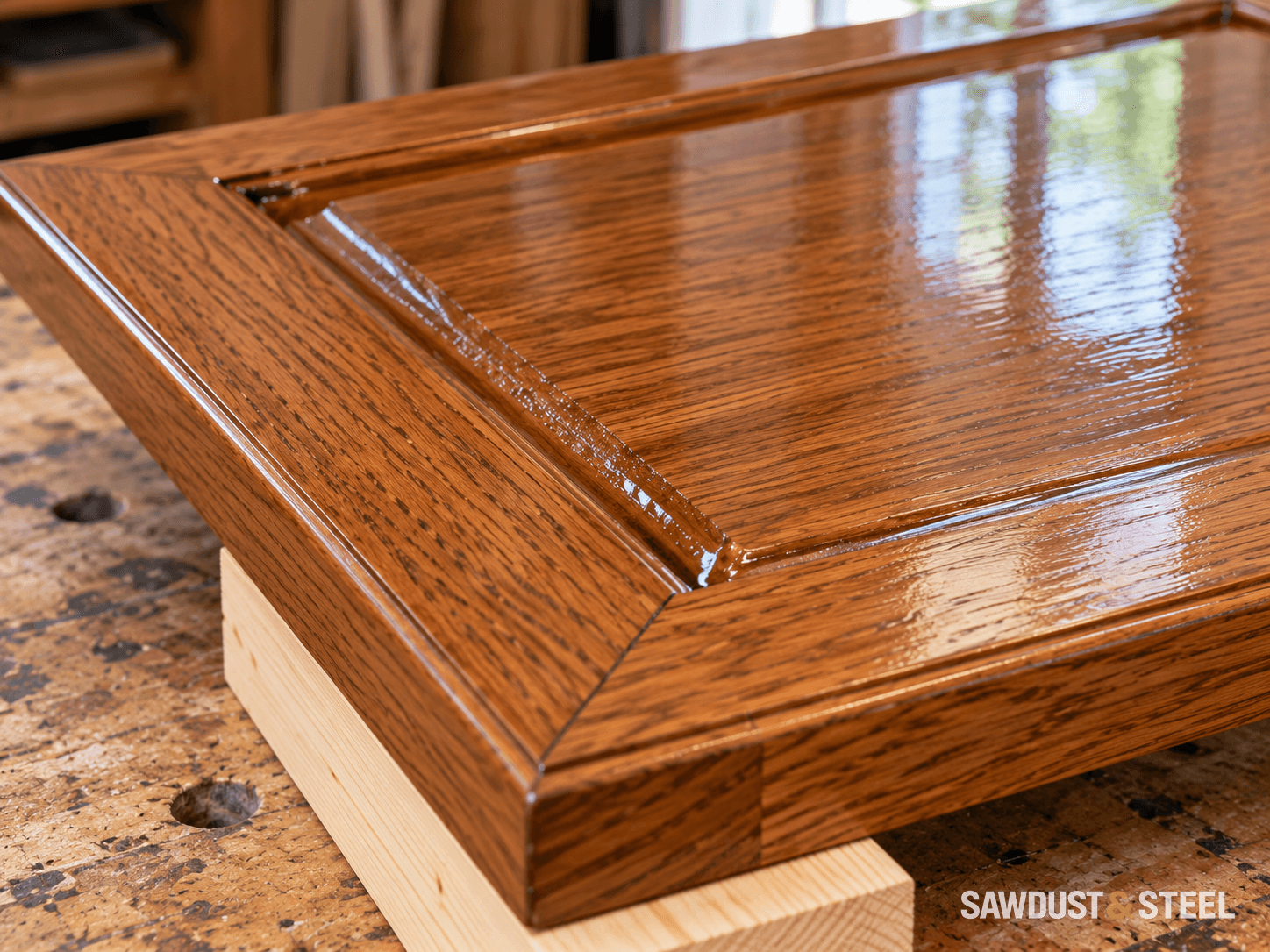
Compare the flat face with routed corners, moulding recesses and the lower edge of a vertical piece. A wipe-on application can leave excess in these places even when the centre looks thin. If the instructions called for removing excess stain and it was left as a heavy coloured film, waiting longer may not recreate the intended application.
General Finishes' Gel Stain instructions specifically warn against recoating a tacky surface. They identify thick application, layering and unsuitable drying conditions as problems; they also warn that their gel stain remaining tacky after five days may never dry and may need removal. This is a product-specific warning. It is not a five-day deadline for stripping an unrelated finish.
Record the room the finish actually spent the night in
The room may have been comfortable while you worked and much colder after the garage heater went off. Check temperature and humidity where the piece is drying, including overnight conditions. Compare them with the label's requirements. 'Indoors' does not describe an unheated Ontario garage particularly well in late autumn.
Maintain the product's specified ventilation and temperature. Do not aim a heat gun at the coating or put a fuel-burning heater beside finishing work. Follow the label and safety data sheet for ignition sources, protective equipment and disposal of used cloths. A drying problem does not justify improvising a different chemical or heating process.
| What you find | Useful next step |
|---|---|
| Still within the stated drying period, under suitable conditions | Leave it undisturbed and use the maker's readiness check before recoating |
| Cold or humid overnight conditions | Correct the workspace conditions within the product instructions and ask about the additional wait |
| Excess coating, incompatible layers or an uncertain old surface | Give the manufacturer the full layer history before attempting removal or repair |
| Dry surface still within its cure period | Protect it from normal loads and cleaning until the specified use stage |
If removal is needed, protect the wood underneath
Ask the finish maker for a compatible removal and restart method, including how to recognize a sound stopping point. Test it on a small inconspicuous area. Sanding a gummy coating can load the abrasive and tempt you to press harder; on veneer, that can turn a finish problem into missing face wood.
When the history includes old paint or unfamiliar coatings, resolve material hazards before disturbing them. Keep the product names and your test result with the piece. For the restart, reproduce the complete proposed sequence on an offcut, including the waiting periods. A successful sample costs less than another optimistic coat across every cabinet door.