
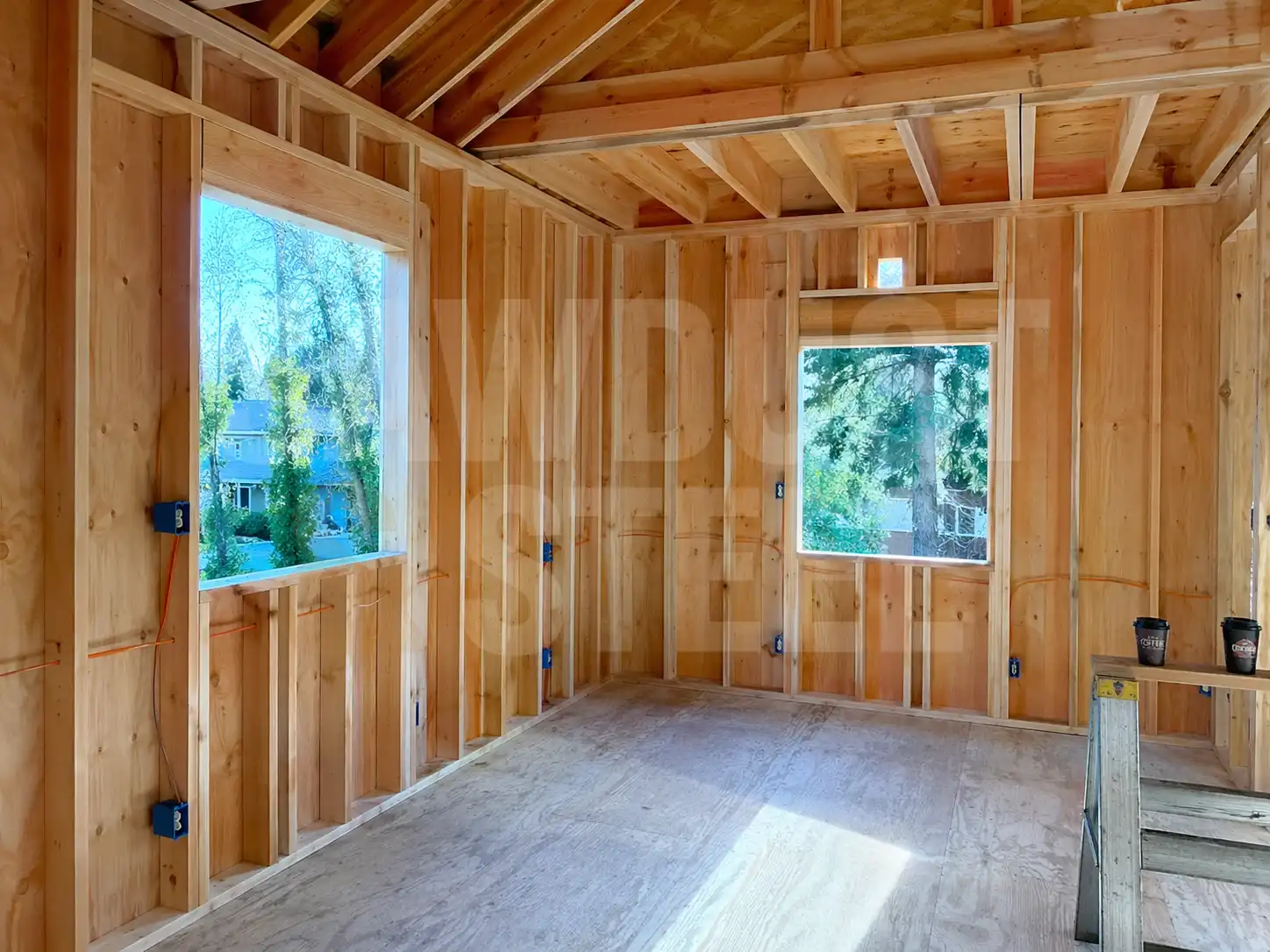
Someone points to plastic behind the drywall and calls it the air barrier. Someone else calls it the vapour barrier. Both descriptions might apply. The useful question is what that particular layer does in that particular wall, and whether its edges are connected well enough to do it.
Give the two jobs different names
NRCan's building-science guide distinguishes moisture carried by moving air from vapour moving through materials by diffusion. An air-control layer addresses the first route; vapour control addresses the second. One material can serve both functions, but the terms are not interchangeable descriptions of every sheet you find.
A simple way to read a renovation drawing is to trace the air-control line with a pencil. Follow it past windows, floors, wall corners and ceiling junctions. Then ask which materials provide the specified vapour resistance. That exercise often reveals an unfinished connection which was invisible in a shopping list of insulation, plastic and tape.
| Function | What to look for | What it does not replace |
|---|---|---|
| Air control | Continuous connections across joints and penetrations | A planned ventilation system |
| Vapour control | Specified material resistance in the chosen assembly | Repairing a rain leak |
| Rainwater control | Drainage and flashing at the exterior | Air sealing the room-side junction |
A good middle does not fix an open edge
Imagine new plastic covering every stud bay, with an unsealed strip at the floor and several rough cuts around pipes. The sheet may have the specified material properties while the completed installation still lacks a continuous air barrier. Conversely, carefully taped sheathing can contribute to air control without being the same vapour-control arrangement as interior polyethylene.
Ask for the repair detail at the actual obstruction. An outlet box, a beam pocket and a window frame have different shapes and service needs. The chosen sealants and tapes must suit their substrates and conditions. Do not coat electrical components, block intentional drainage or use ordinary expanding foam around a heat-producing component because it happens to fill the gap.
Identify what is already there
Collect old drawings and photograph exposed layers before removal. Record foil facings, coatings, rigid boards, masonry, membranes and existing interior plastic where visible. Mark unknown layers as unknown. Colour and texture alone do not establish a product's vapour resistance or its approved use.
If opening the wall is necessary, plan it with the contractor and address suspect older materials first. The pre-demolition asbestos guide covers that stage. A controlled opening which answers several questions is more useful than a row of exploratory holes made before anyone knows what information the designer needs.
Do not add a second layer by reflex
A homeowner replacing kitchen drywall might reasonably want to improve the wall while it is open. The next question is how the retained exterior layers affect the new assembly. Ask the designer which direction the construction can dry, how water entry is controlled and whether the proposed interior finish changes that answer. There is no universal instruction to add polyethylene to every old wall or remove it from every new one.
The distinction matters especially when combining exterior insulation with interior work. The re-siding insulation guide walks through the opening and attachment details that accompany the new thickness. Keep the two trades on the same wall section so each does not unknowingly change the other's assumptions.
Air sealing changes the house as well
NRCan's air-leakage guidance calls for attention to whole-house ventilation and combustion air during substantial tightening. Ask whether the project needs an assessment of those systems and how completion will be checked. The aim is controlled fresh air and reliable equipment operation, not simply fewer accidental holes.
For a small repair, document what was sealed and watch the affected area. For a broad retrofit, a professional airtightness assessment may help identify priorities and compare the result. Our blower-door and thermal-camera guide explains what each tool can and cannot establish.
Ask for a detail you can keep
Before concealment, request photographs showing the whole junction and a close view of the connection. Save the product names and the final section drawing. Label a photograph with its location rather than just 'vapour barrier done'. A future installer needs to know which layer must be maintained when adding a cable or replacing a window.
At the next site meeting, ask three concrete questions: where is the continuous air-control line, what limits vapour diffusion, and how can this assembly dry? Those answers are far more useful than winning an argument about what to call the plastic.