
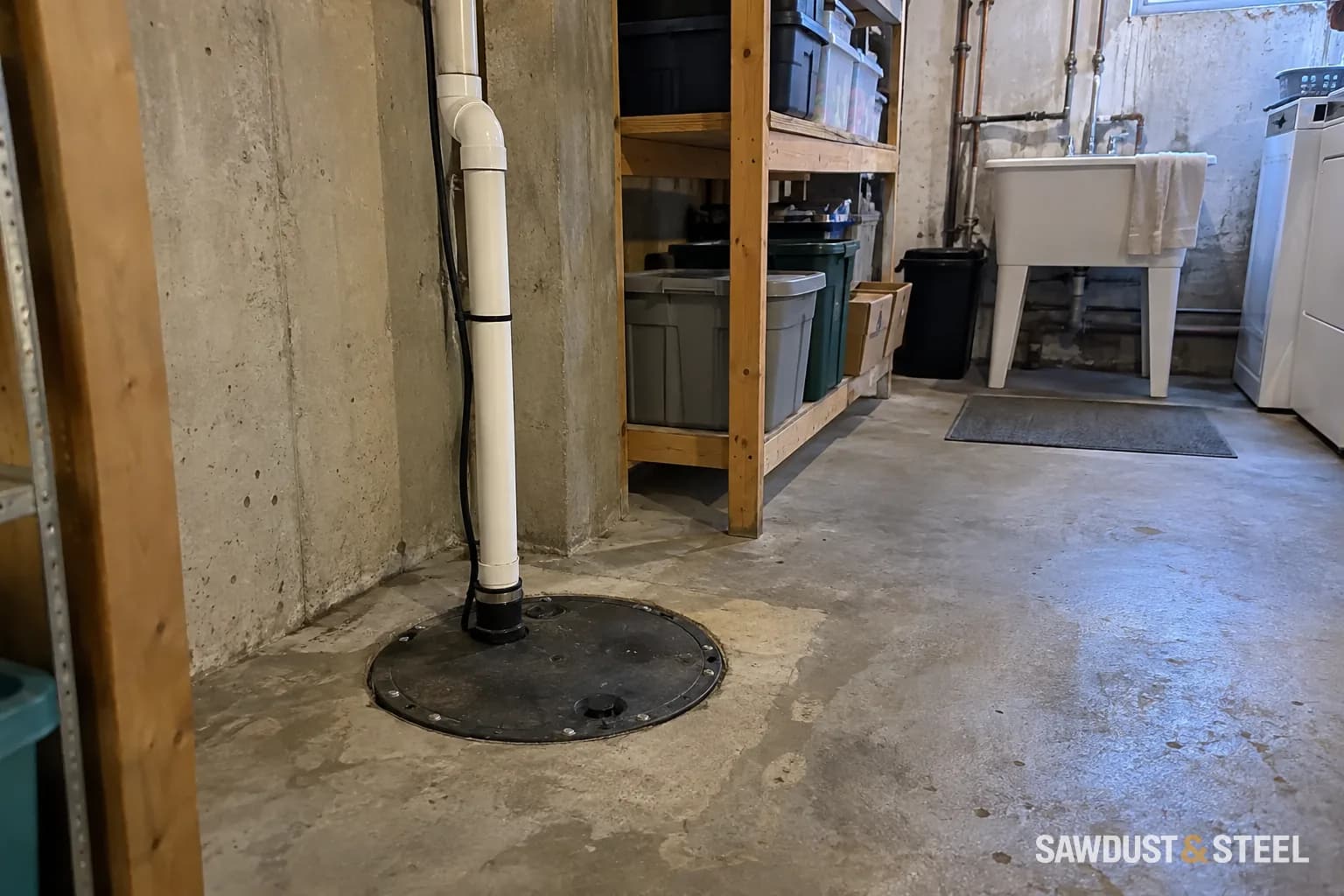
Two round lids in a basement can conceal two entirely different systems. Neither becomes a bathroom connection simply because it already contains a pump.
Before drawing a shower beside the mechanical room, find out what each pit receives and where it discharges.
Follow the contents, not the lid colour
Liberty Pumps describes a sump pump as removing water collected in a sump basin. A sewage system is selected for wastewater from fixtures, with the appropriate basin, pump, venting, discharge, and controls.
Drainage sump
- Collected foundation drainage
- Sump basin + drainage pump
- Approved drainage destination
Its discharge route depends on the property and local requirements.
Sewage ejector
- Wastewater from connected fixtures
- Sealed, vented basin + sewage pump
- Sanitary drainage system
Used where those fixtures cannot drain by gravity to the available connection.
| System | Question to ask |
|---|---|
| Drainage sump | What foundation or other drainage enters it, and where does the water go? |
| Sewage ejector | Which fixtures discharge here, and how is the wastewater delivered to the sanitary system? |
| Grinder system | Why does this particular discharge arrangement require a grinder? |
A grinder is not automatically a premium upgrade to every sewage pump. Liberty's FAQ distinguishes sewage and grinder applications. Equipment selection follows the actual plumbing design.
Establish whether pumping is needed
A plumber needs to check elevations and the available sanitary connection. Being in a basement does not, on its own, prove that a bathroom needs a pump. Gravity drainage may be possible; where it is not, the pumping arrangement must be designed accordingly.
Do not connect a toilet or shower to an unidentified drainage pit. The fact that a pump can move liquid does not establish that the system can lawfully or reliably handle sewage.
Leave room for the unglamorous parts
Include service access, vent routing, electrical requirements, controls, and any specified alarm in the plan. On a basement layout, we moved a cupboard after the plumber showed us the space needed to remove the basin lid and service the pump. A little hatch in the cupboard floor would have exposed the lid but not made the equipment removable. We changed the cabinetry before it was ordered.
Ask what happens during a power failure, which fixtures must stop being used if the system is unavailable, and how the owner will recognise an alarm. Have the plumber show you the installed system at handover and leave its model and instructions together. That is a better time to learn which bathroom depends on the pump than during its first outage.
Make the quote name the system
Request the equipment model, basin arrangement, discharge destination, vent route, and scope of testing and inspection. Include restoration of the slab and finishes where required.
"Pump included" is too little information for something the household hopes never to think about. The drawing should be more specific than the lid.
If the reason for identifying the pit is a new bathroom, bring the existing rough-in sketch and fixture layout to the plumbing assessment.