
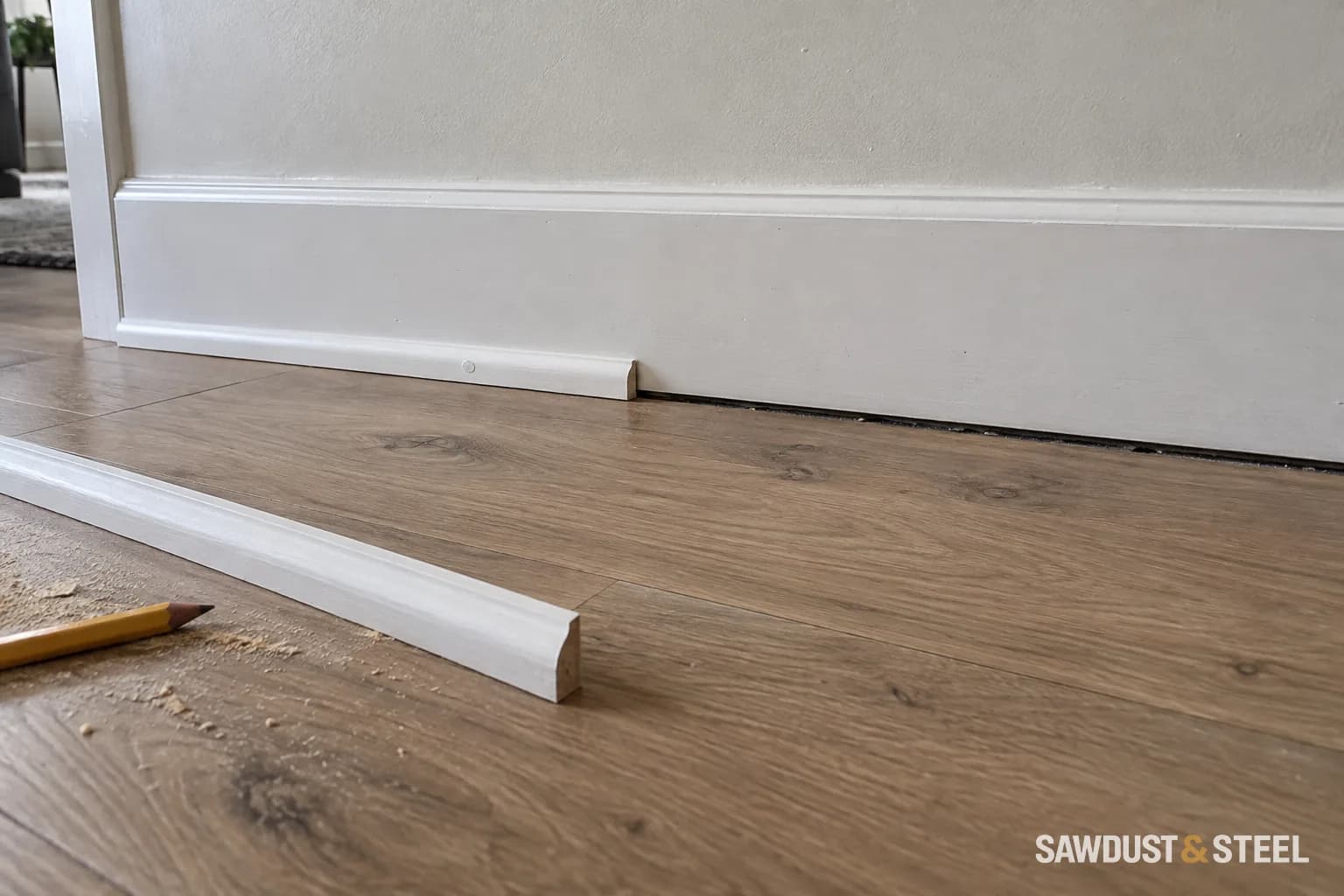
The flooring installer wants a clear perimeter. The painter wants the trim finished. Both have a reasonable point, and neither has priced the scuffed corner you may inherit between them.
| Situation | Useful sequence | Detail to settle first |
|---|---|---|
| New floating floor and new baseboards | Install the floor, then fit the final baseboards without restraining it | Required perimeter movement space and where the trim fastens |
| Keeping existing baseboards | Lay out the flooring perimeter and suitable shoe moulding before installation | Whether the moulding covers the required gap without pinning the floor |
| New carpet | Agree baseboard height and complete painting with the installer before the carpet arrives | Carpet and cushion thickness, wall-edge finishing and later carpet replacement |
Carpet needs its own conversation. The Carpet and Rug Institute recommends finishing painting and other remodeling before carpet installation. Its residential installation standard describes tucking the carpet backing neatly at the wall. Agree the trim height and edge detail with the installer using the actual carpet and cushion; do not borrow a gap measurement from a different floor.
For painted trim, our caulking-before-painting sequence covers the wall joint and final coat. Keep that cosmetic work separate from the movement space the flooring needs.
Let the flooring system set the movement rules
TORLYS installation instructions illustrate the need to fasten finishing trim to the wall rather than restraining the floating floor. Use the instructions for your actual product. The trim should conceal the required perimeter space without pinning the floor.
Decide whether the old baseboard deserves to stay
Compare removal and wall repair with keeping the baseboard and adding appropriate shoe moulding. Check door casings and any old paint line if the height changes. Agree who paints, caulks the appropriate joints, and protects the new surface. A clean schedule still needs a small allowance for final touch-ups.
Before the next step
- Choose the flooring and its perimeter requirements first.
- Compare keeping versus removing the existing baseboard.
- Assign final touch-ups and floor protection in the schedule.
Agree on the perimeter detail and final paint touch-ups before installation day. If you're replacing the trim too, look at an inside-corner sample before ordering enough moulding for the whole room.