
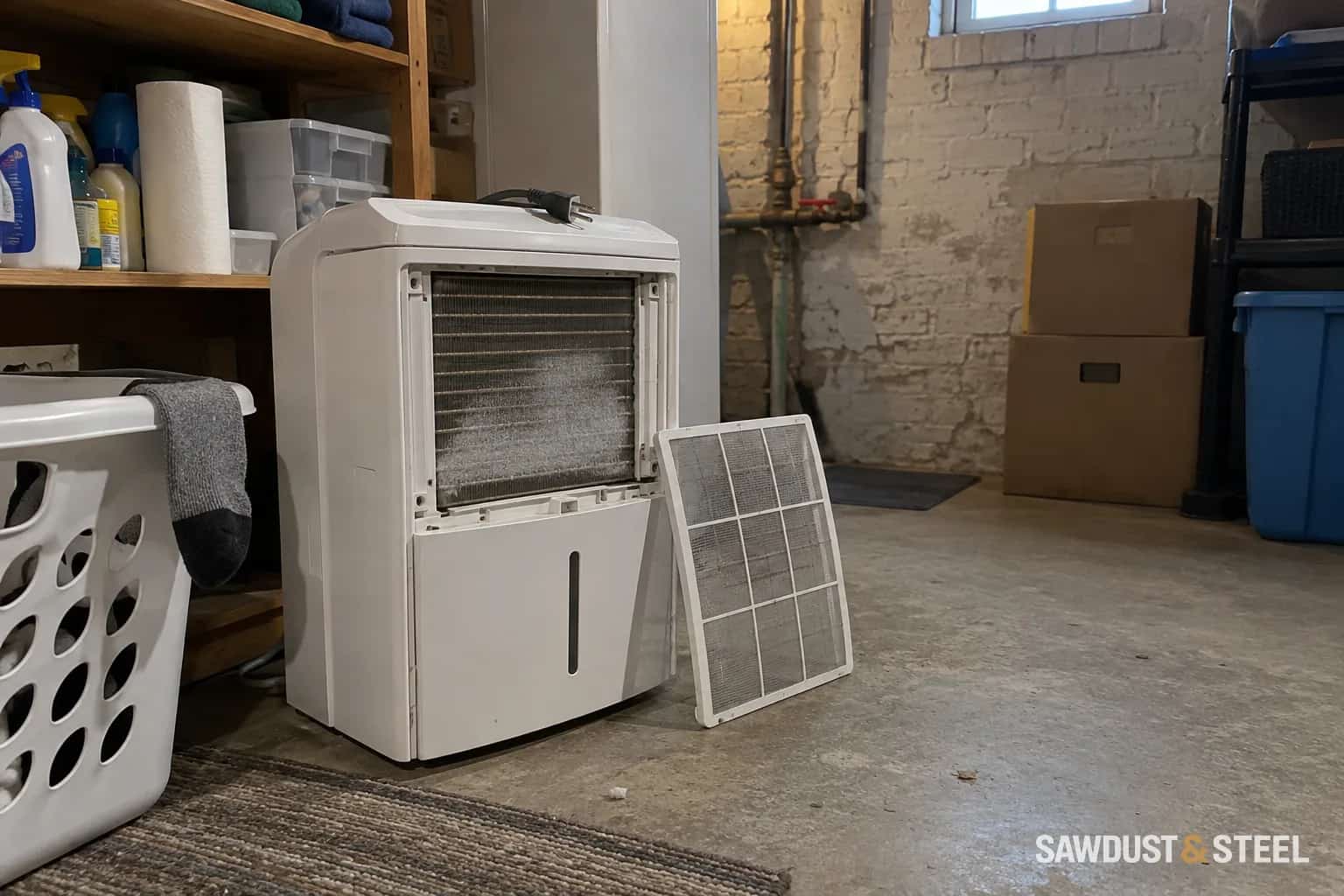
The bucket used to fill every day. Now the fan runs, the basement still feels damp, and the coil has become a small skating rink. Turning the humidity target down again is unlikely to answer the important question: can this unit work in this room?
Read the room temperature and the model label
A refrigerant dehumidifier removes moisture on a cold coil. In a cool room, frost can interfere with that process. ENERGY STAR's buying guidance recommends looking for a unit designed for lower temperatures when the space regularly falls below about 18°C (65°F). That is a product-selection prompt, not a universal shutoff temperature.
GE's operating guidance gives different limits for ordinary and low-temperature models and directs owners to the specific manual. Do not borrow a minimum temperature from a different machine. Record the model number, the room temperature near the unit, and its stated range.
Distinguish brief frost from persistent ice
Some units have an automatic frost-control cycle. GE notes that a light coating at startup can disappear during normal operation. A growing block of ice, repeated ineffective cycling, or a room that stays damp deserves further investigation. The manual should explain the expected defrost behaviour.
- Switch the unit off if ice persists and follow its instructions for defrosting. Do not chip the coil or apply direct heat.
- With power disconnected as directed, clean the user-serviceable filter and check that the air openings are unobstructed.
- Move stored boxes, curtains, or furniture out of the specified clearance area.
- Check the actual room temperature against the manual before restarting.
- Observe the next operating cycle. If ice returns under suitable conditions, arrange service rather than repeatedly forcing it to run.
An empty bucket does not always mean an iced coil
| Observation | Useful next check |
|---|---|
| No water in the bucket, but a drain hose is connected | Water may be leaving through the hose. Confirm its destination and operation. |
| The unit stops and shows a bucket warning | Check seating, drainage, and the model's indicator instructions. |
| The unit runs in a cold room and ice returns | Confirm low-temperature suitability and have recurring faults assessed. |
| The unit collects water but the room remains damp | Look at moisture entering the room, capacity, and operating conditions. |
Our dehumidifier drainage guide covers gravity hoses and pumped drainage. Keeping these symptoms separate can save a perfectly functional appliance from being replaced for a hose problem.
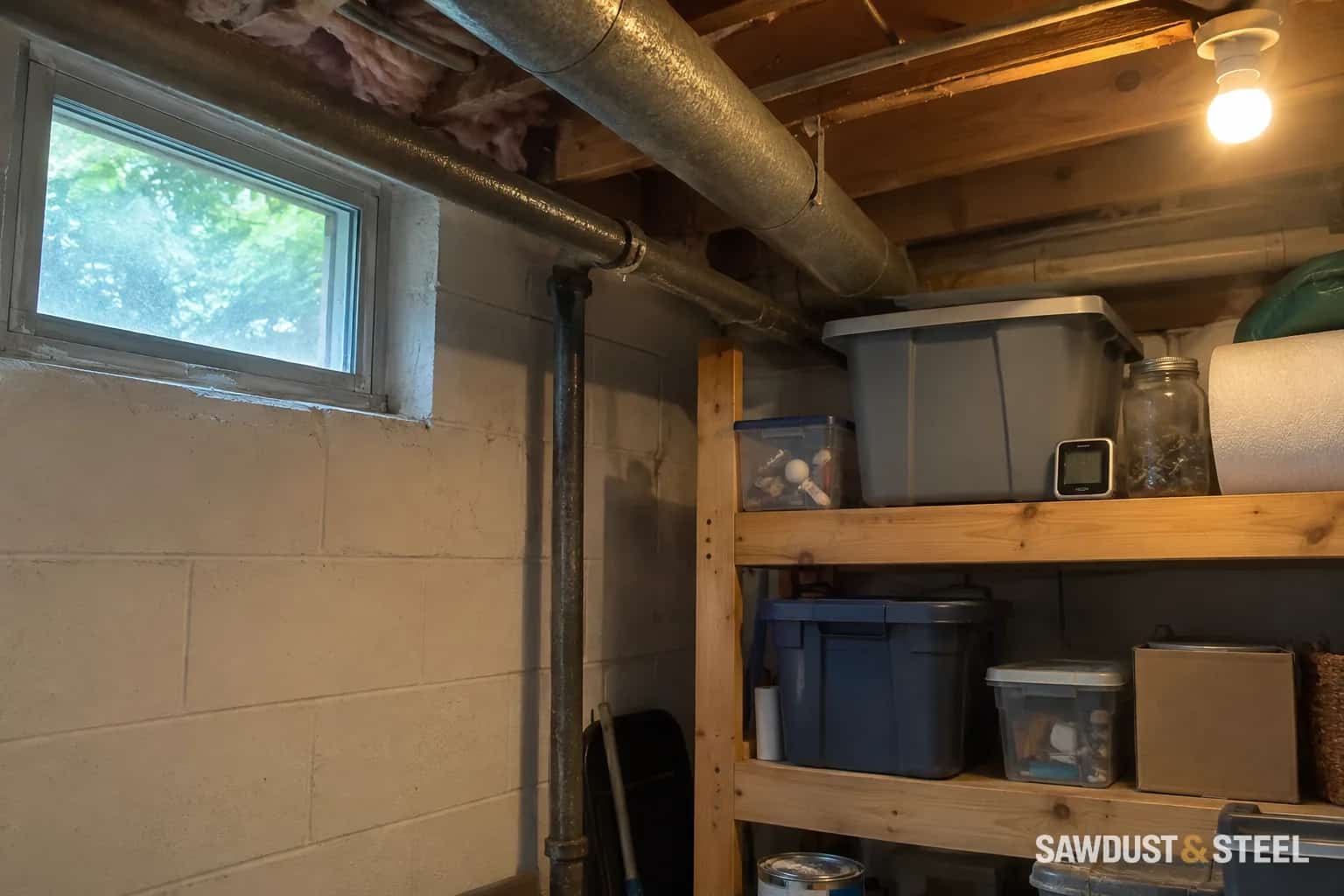
Check why the basement needs so much drying
A dehumidifier manages moisture in the air. It does not repair rainwater entry, a plumbing leak, or damp materials concealed behind finishes. Health Canada's moisture guidance puts identifying and correcting the source alongside humidity control.
Before buying another unit, bring together the humidity trend, temperature readings, rainfall timing, and photographs of any wet areas. If the basement is deliberately kept cold, ask about equipment suited to that use. A larger daily water-removal rating does not, by itself, establish cold-room compatibility.