
You move a storage shelf and find mould on the wall. The next useful question is where the moisture came from, not necessarily which laboratory can identify the specks.
Health Canada: addressing moisture and mould generally does not recommend mould air testing. Air-test results do not reliably tell you the health effects in a particular home or identify the cause of the moisture problem. Visible growth, water damage and persistent odour already justify investigating the building conditions.
This does not mean every investigation is simple. It means a test should answer a defined question and change a decision, rather than becoming an expensive prerequisite to fixing something you can already see.
Start with observations you can locate
Visible damage or dampness
Investigate the moisture source and affected materials.
Proposed sampling
Ask for the precise question, method and decision it will inform.
Repair scope
Correct moisture and address affected materials appropriately.
Completion
Verify the agreed building conditions; do not promise a health diagnosis.
Decision guide; not a construction detail or a substitute for the project specifications.
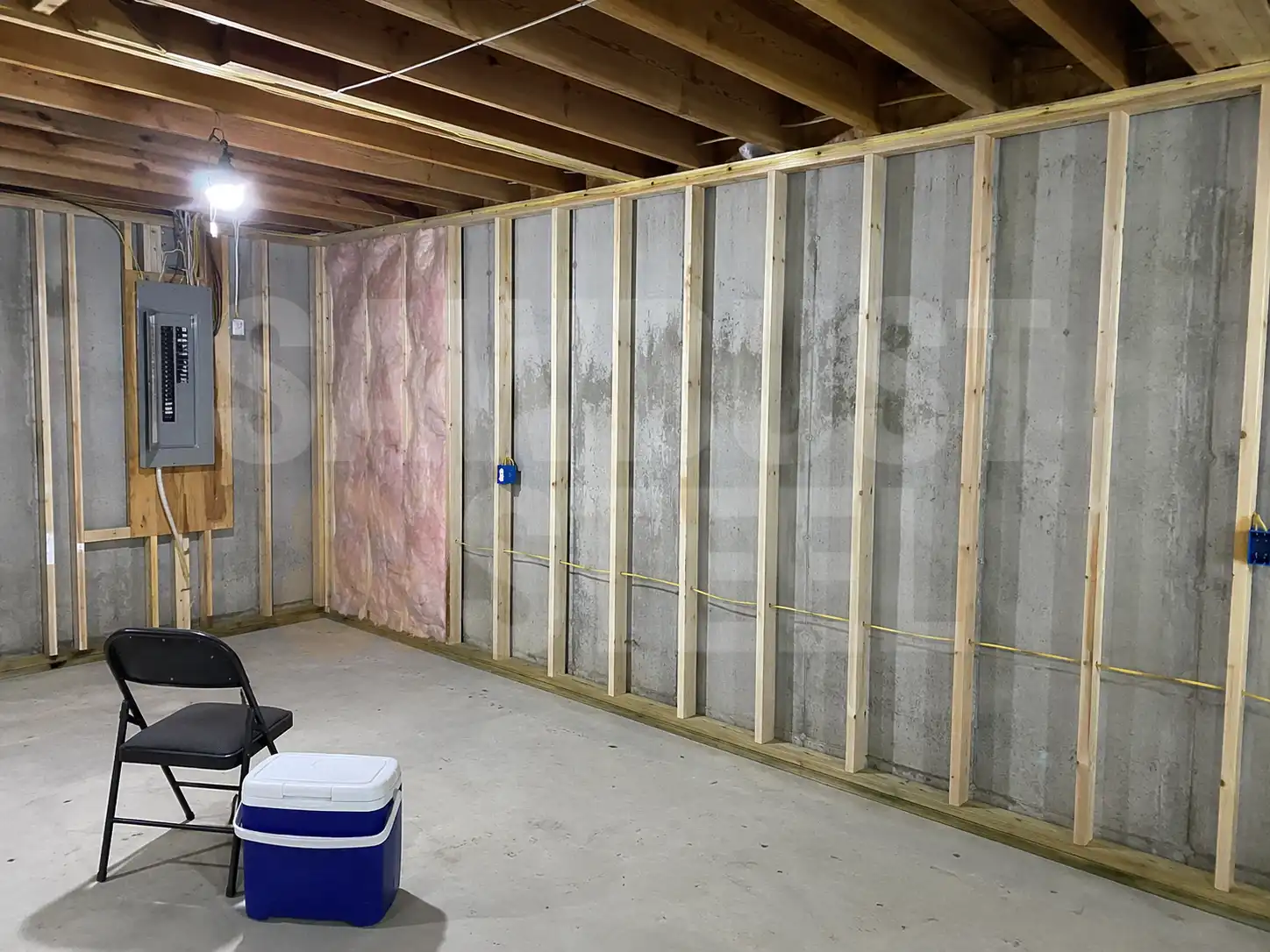
Record where the problem appears and what surrounds it: a foundation wall, a pipe, a cold corner, stored cardboard or a window. Photograph the area without disturbing suspect material. Note when odour is strongest and whether staining changes after rain, snowmelt, plumbing use or humid weather.
A basement-wide complaint may have a very local source. For example, damp boxes against a cold wall need a different investigation from staining below an active plumbing leak. Our basement storage guide helps separate storage conditions from the condition of the building itself.
Avoid scraping, sanding or opening a large affected cavity just to get a better photograph. The investigation and cleanup method should suit the extent and conditions. Widespread growth, recurring damage, hidden contamination or uncertainty about safe access are good reasons to involve a qualified professional.
Ask what the proposed air test will decide
If someone recommends sampling, ask them to finish this sentence: "Depending on the result, we will change..." Useful answers identify a particular investigation question, sampling design and interpretation. "Then you will know the house is safe" is far too broad a promise.
The US EPA: mould testing or sampling also says visible mould generally does not require routine sampling and explains that sampling needs expertise. Its regulatory discussion is American, not an Ontario pass/fail standard. Do not import a numerical threshold from a US article and treat it as clearance for your basement.
Ask whether the professional has inspected for moisture and visible damage first. Find out who interprets the results and whether the report will explain uncertainty. A laboratory identification without a building assessment can leave you knowing more about a sample and very little about the repair you need.
Separate building work from health questions
An air result cannot diagnose symptoms or tell an individual how their health will respond. Discuss health concerns with a qualified health professional, especially where someone is experiencing symptoms. The building investigation should proceed on its own evidence about moisture and affected materials.
For the building, ask for a written scope: identify and correct the moisture source, deal with affected material using an appropriate method and verify that the area is ready for its intended use. Avoid a treatment-only proposal that leaves the leak or condensation problem unchanged.
If the basement has recently flooded, the more useful next read is when flood-damaged walls can close. Drying verification and contamination assessment are separate from collecting a sample of room air.
Decide how completion will be checked
Agree on the completion criteria before work starts. The assessor should explain what will be inspected, how the moisture cause will be checked, what material records will be kept and whether the circumstances warrant any specialized verification. A routine air sample is not a substitute for looking at the repaired area.
Keep photographs of accessible surfaces before and after work, along with the moisture findings and repair scope. If a wall cavity is opened, document its condition before it disappears again. These records make a recurring complaint much easier to investigate.
Finally, revisit the ordinary habits around the repaired area: storage against walls, blocked airflow, unnoticed plumbing drips and humidity control. Maintenance cannot fix a defective assembly, but it can prevent a repaired corner from becoming a damp storage nook again. Spend the investigation budget on a question whose answer helps you change the conditions.