
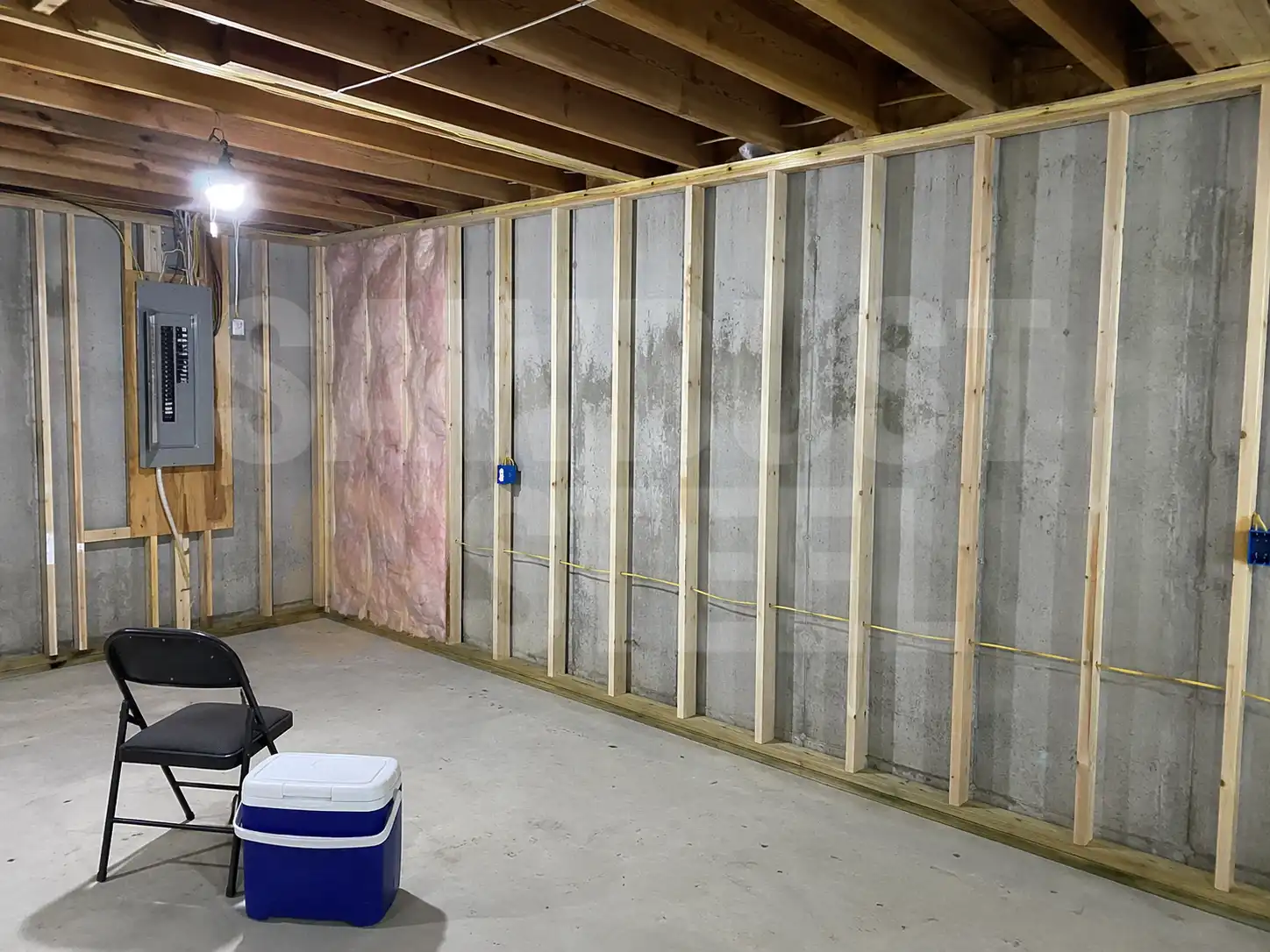
The fans are loud, the drywall delivery is booked and everyone wants the basement back. That pressure is understandable. It is also a poor way to decide whether a wall cavity is ready to close.
The rebuild needs separate answers about safety, contamination, material condition and moisture. A wall can feel dry at the front while the bottom plate, backing or material behind it remains wet. Drying equipment running for several days tells you that equipment ran; it does not document the condition of every assembly.
Establish what entered the house
Before cleanup or inspection, make sure the area is safe to enter, including electrical and structural hazards. If water may contain sewage or other contamination, use qualified restoration help and the relevant local guidance. Do not treat contaminated floodwater as an ordinary clean-water spill.
| Question | Evidence to request |
|---|---|
| Was contamination addressed? | Water source assessment and cleanup/removal scope |
| What remains in the assembly? | Material inventory and reasons for retention |
| Has it dried appropriately? | Dated, located readings and material-specific acceptance criteria |
| Why will it stay dry? | Cause investigation, completed repairs and any outstanding limitations |
Health Canada: flood cleanup and indoor air quality calls for prompt drying and removal of affected porous materials that cannot be adequately dried. Its rapid-cleanup advice is about reducing damage and mould risk, not a guarantee that walls can be closed after a particular number of hours.
Record the water source, affected rooms and approximate extent using photographs. Have the restoration contractor explain which materials can remain, which must be removed and why. Insurance documentation is useful, but it does not replace a safe cleanup plan or a material assessment.
Make a material-by-material drying record
Use a sketch of the basement to label locations: stair wall, laundry corner, exterior wall below the window. Ask the restorer to record readings at repeatable positions, the material tested, instrument or method and the date. Comparing the same location over time is more useful than a handful of anonymous numbers.
The acceptable condition depends on the material, assembly and finish being installed. Do not apply one wood-moisture percentage to drywall, concrete and engineered flooring. A qualified assessment should explain its criteria, relevant comparison locations and any remaining inaccessible areas.
Include hidden interfaces such as plates against concrete, enclosed corners and materials beneath flooring. Ask what evidence supports leaving a layer in place. If the answer is only that its exposed face feels dry, keep investigating before covering it again.
Rebuilding and preventing another flood are separate jobs
A clean, dried basement can still be vulnerable to the same entry route. Establish whether the event involved surface runoff, foundation leakage, plumbing or sewer backup, and assign the corrective work. Our waterproofing before finishing guide helps structure the longer-term prevention decision.
You may need separate trades for drainage repairs and restoration. Put both scopes on the schedule so the wall is not closed while a necessary investigation still needs access. If a permit or inspection is required for the rebuild, arrange it before concealing work.
Older materials can introduce another constraint during removal. Use pre-demolition testing guidance before disturbing suspect legacy materials. A flood does not make unknown materials safer to cut or grind.
Hold a closure review
Before insulation and drywall return, walk the space with the person responsible for restoration. Confirm which materials were removed, what was cleaned, how drying was checked and whether the cause was corrected or still has outstanding work. Photograph the open assemblies and keep the written findings.
Check the reconstruction specification too. Any new flooring or finish has its own substrate and moisture requirements. Passing the wall drying review does not automatically establish that the concrete slab is ready for an impermeable floor covering.
A useful handover might say that labelled wall locations were assessed, removed material is documented, remaining framing met the stated criteria, and a particular drain repair is complete. "Basement looks good" is a much thinner record when someone asks about the job later.
If staining, dampness or musty odour returns during reconstruction, pause the affected work and reassess. The goal is a basement you can finish once, with a clear record of what was made ready underneath the new paint.