
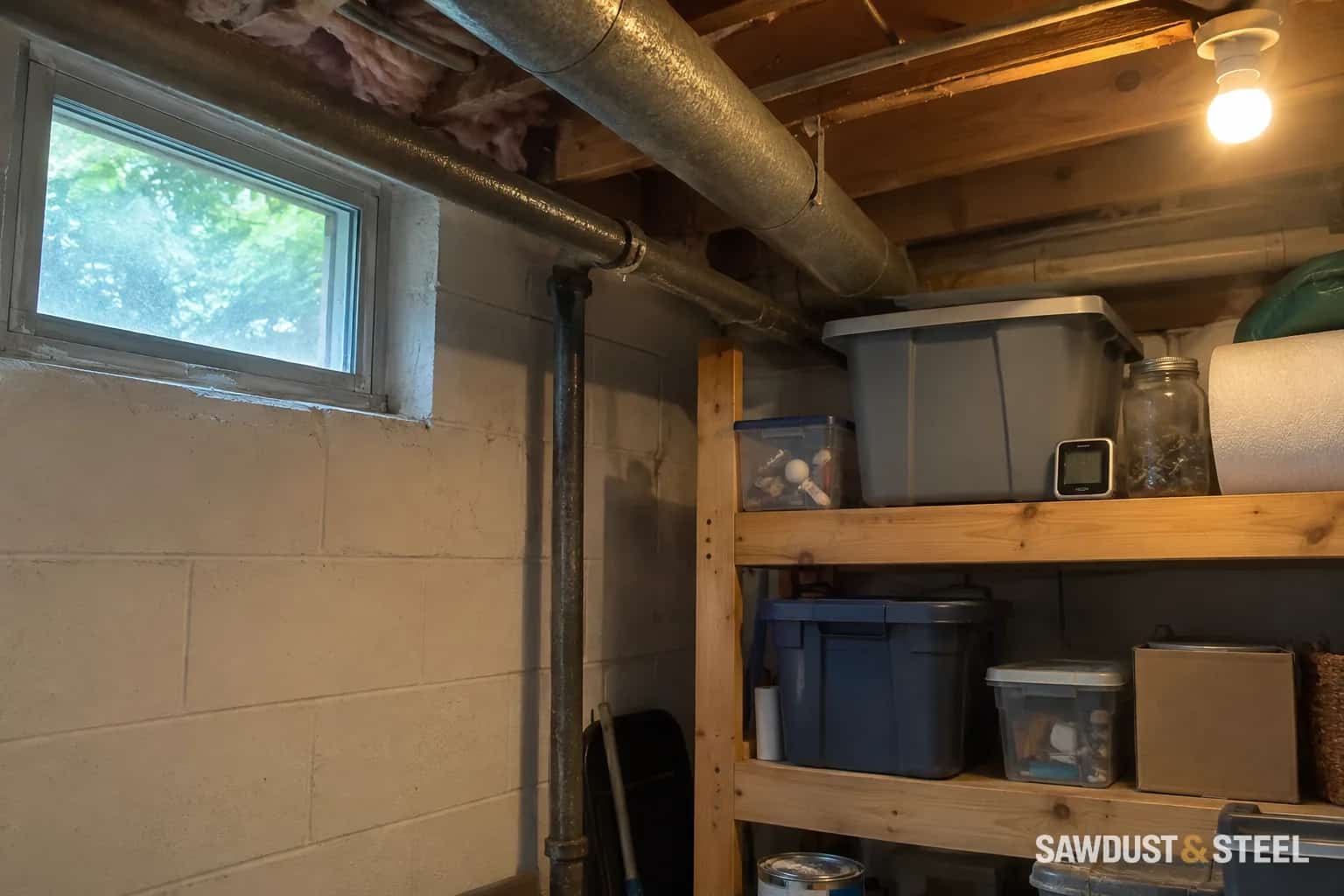
You look up in the basement and find beads of water along a cold pipe. Your first thought is probably not “interesting building science.” It is probably “please do not drip on that box.” Move the belongings, protect the area, and work out where the water begins.
A cold pipe can collect water from the air
Condensation happens when moist air meets a sufficiently cold surface. A cold-water line can behave much like the outside of a chilled glass, especially during humid weather or periods of water use. The water on the outside does not necessarily come through the pipe wall.
Health Canada’s moisture guidance includes drying and insulating cold pipes as a response to condensation. First establish that condensation is the problem; insulation is not a repair for leaking plumbing.
Observe the pattern without hiding it
| Observation | Useful next check |
|---|---|
| Fine droplets along several cold sections | Record humidity and whether they appear during cold-water use. |
| Water repeatedly starts at a fitting or valve | Have that point checked for a leak. |
| A wet patch lies below an apparently dry pipe | Trace water from nearby or above; it may travel before dripping. |
| Insulation is wet or damaged | Investigate the pipe and insulation detail before covering them again. |
Dry an accessible area carefully and observe where moisture returns, without disturbing fittings or working near wet electrical equipment. Photograph the starting point and timing. Condensation and a leak can coexist, so a humid day does not clear every joint of suspicion.
Insulate the run as a complete detail
Once the pipe is sound, select insulation intended for the pipe size and condensation-control conditions. Pay attention to seams, joints, bends, and supports. A length of foam with an open split can leave humid air a route to the cold surface.
Armacell’s guidance on insulation failure explains the importance of suitable closed-cell insulation and a correctly installed system for cold-water services. Follow the chosen product’s instructions rather than treating every foam sleeve and tape as interchangeable.
Solve the room’s moisture problem as well
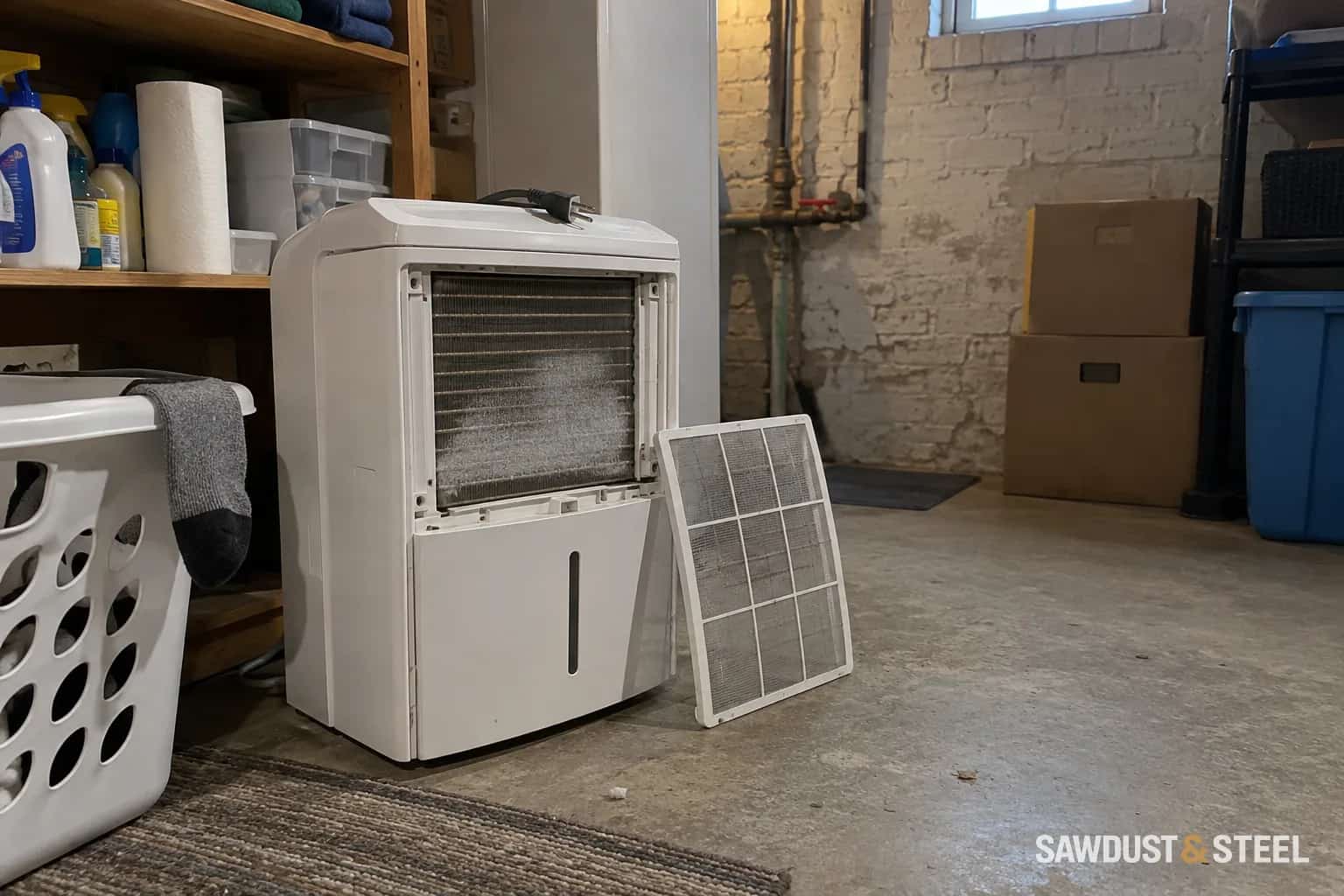
Use a humidity meter and look for moisture sources, ventilation problems, or water entry. If you use a dehumidifier, check its operation and drainage instead of assuming the sound of its fan proves it is collecting water. Opening basement windows during muggy weather may bring in more moisture, depending on outdoor conditions.
Do this before framing or closing a ceiling around the pipework. Photograph the completed insulation, preserve necessary service access, and check the area under the conditions that originally produced droplets.
A dry pipe and a dry room are a much better starting point for a finished basement than a neatly hidden mystery. The cardboard boxes will appreciate the distinction, even if they never say so.