
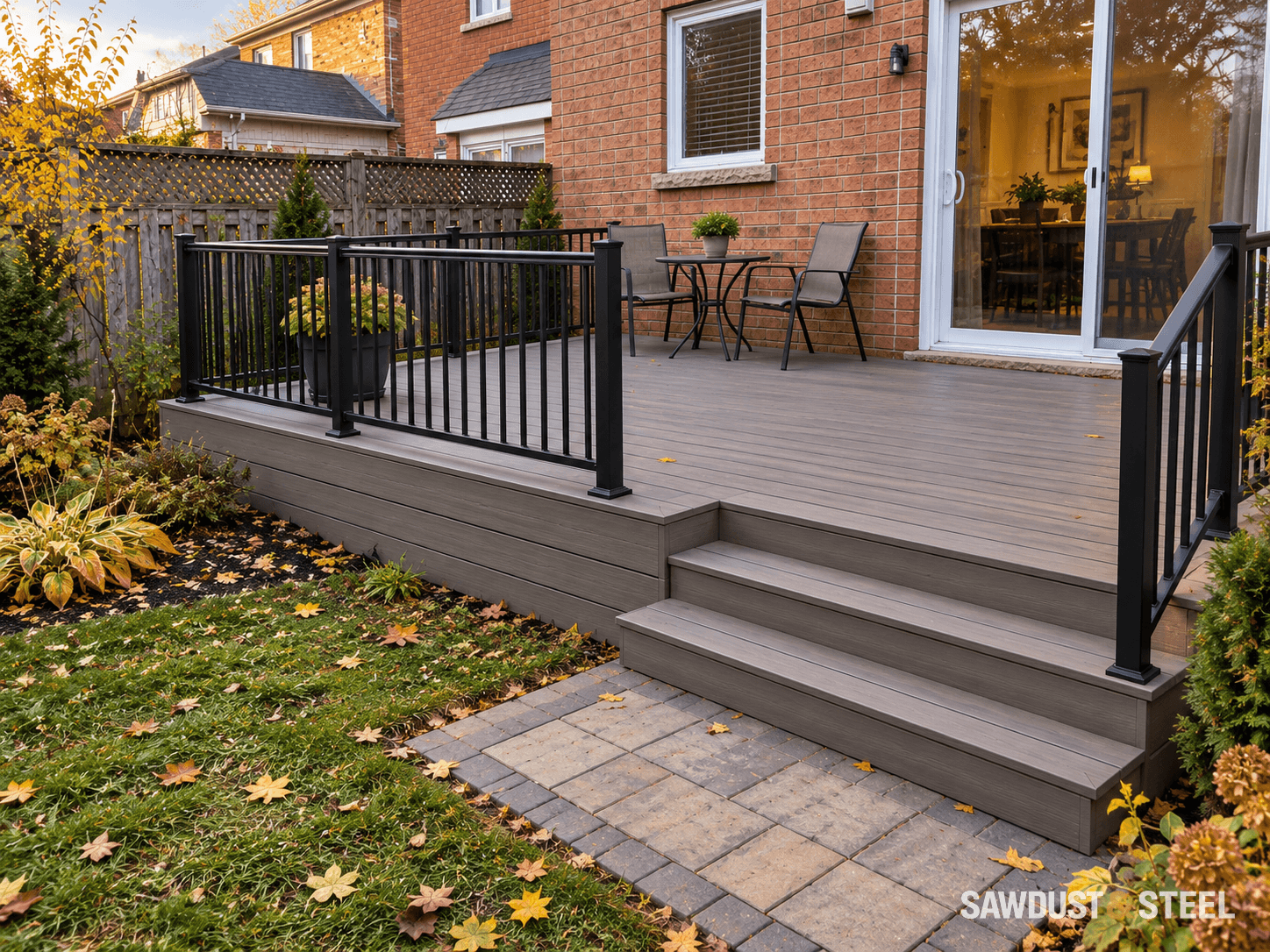
A neat deck photograph rarely includes a close-up of the gaps. Then November arrives, a joint looks wider, and suddenly that little space becomes the only thing you can see.
Identify the board before judging the gap
Trex explains temperature-sensitive spacing and directs installers to the applicable guide. Side spacing, end spacing, and clearance against a wall are different details. A measurement copied from another brand can be wrong for yours.
Keep the useful space useful
Do not fill the joint with caulk or force boards together to improve a winter photograph; drainage and movement still need somewhere to happen.
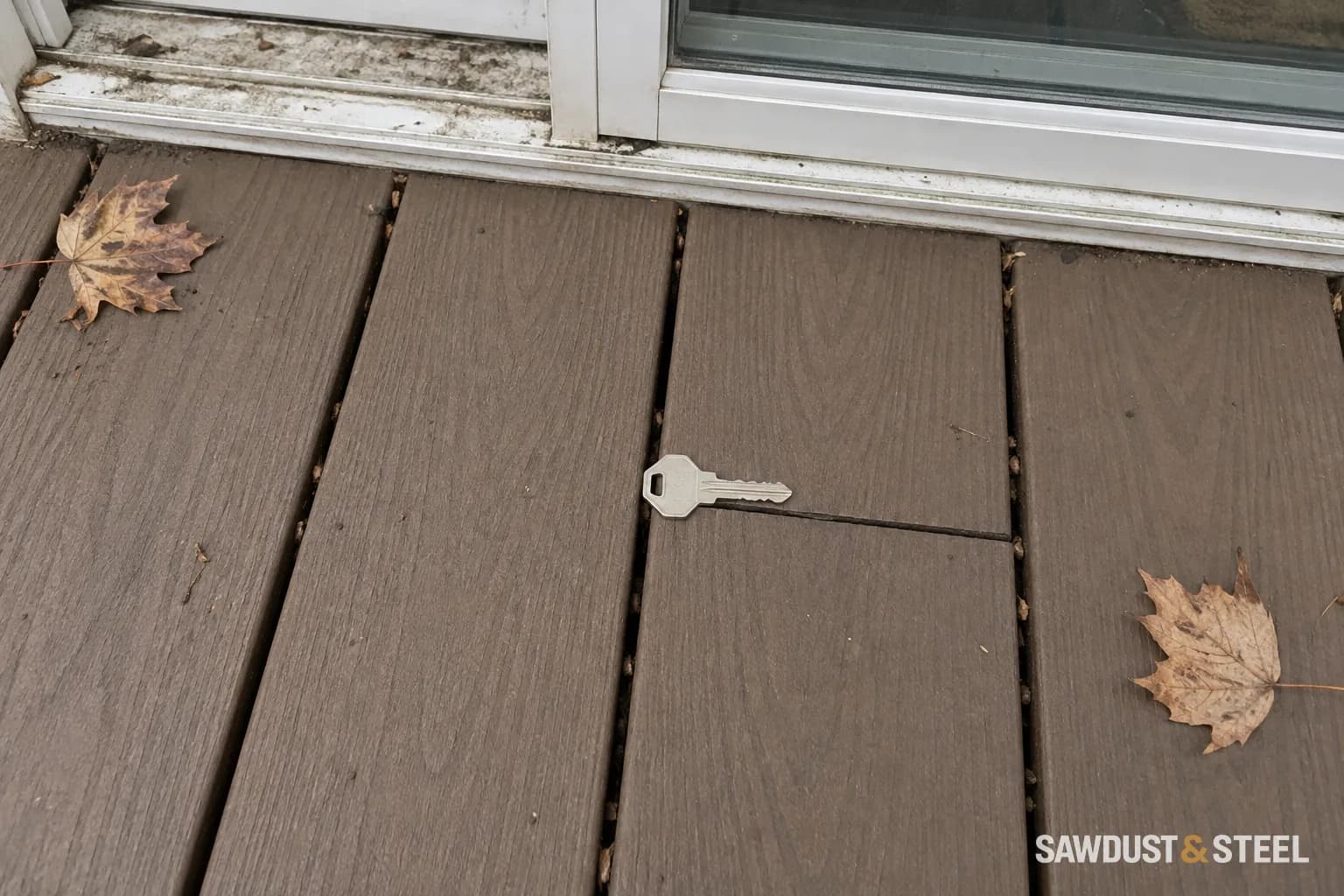
Side, end and wall gaps have different jobs
Side gap
Along the long edges
Width-to-width spacing separates adjacent board runs.
End gap
Between board ends
End-to-end spacing accommodates length change at a joint.
Abutment
At a fixed obstacle
Clearance keeps the board from pressing into the house or post.
Do not transfer one dimension to all three locations.
Trex's spacing article illustrates the distinction with 3/16-inch width spacing in ordinary conditions, an end gap of 1/8 inch above 40 F and 3/16 inch below it, and larger clearances at fixed abutments. The same page flags an exception for heavily wooded or wet conditions. Use the complete current guide for the actual product, environment and fastener rather than treating this example as a universal composite table.
| Record | Why it matters |
|---|---|
| Product and generation | Similar-looking boards can have different instructions. |
| Gap type and location | A wall clearance is not the same as an end joint. |
| Installation temperature if known | It explains which installation gap should have been chosen. |
| Current temperature and condition | A cold-day photo and hot-day photo may show different openings. |
| Movement or loss of support | Lifting, rubbing or unsupported ends deserve more than cosmetic reassurance. |
At a 10 C installation, the cited Trex end-gap example falls on the warmer side of 40 F, about 4.4 C. At a 0 C installation, it falls on the colder side. Those are installation examples. They do not mean a finished deck must keep exactly that measurement through every season. Boards in direct sun can also be warmer than the surrounding air, so an assessment should note exposure rather than rely only on a weather-app reading.
What to do with an existing gap
Choose a few representative joints: sunny and shaded, long and short runs, and one near the house. Photograph each with a ruler without pushing the boards. Note trapped debris and whether water can drain. If a board is lifting or binding, keep people away from the defect and have the support and fasteners checked. Do not drive extra screws through the face to force it flat before understanding the cause.
A larger winter gap may be expected movement, while a joint installed with no allowance may bind in heat. Both claims require the actual product information. For meeting ends, compare butt-joint and breaker-board support. Where a wavy edge is the complaint, check fascia fastening separately.
Before the next step
- Find the exact board line and installation guide.
- Compare joint type and installation temperature, not appearance alone.
- Have unsupported, buckled, or loose ends inspected.
A deck is allowed to move. Your installation should have a deliberate way to accommodate it. Ask for that explanation before asking for a smaller gap.
Working with timber instead? Pressure-treated board gaps can widen as the lumber dries, so use the wood-specific guidance.