
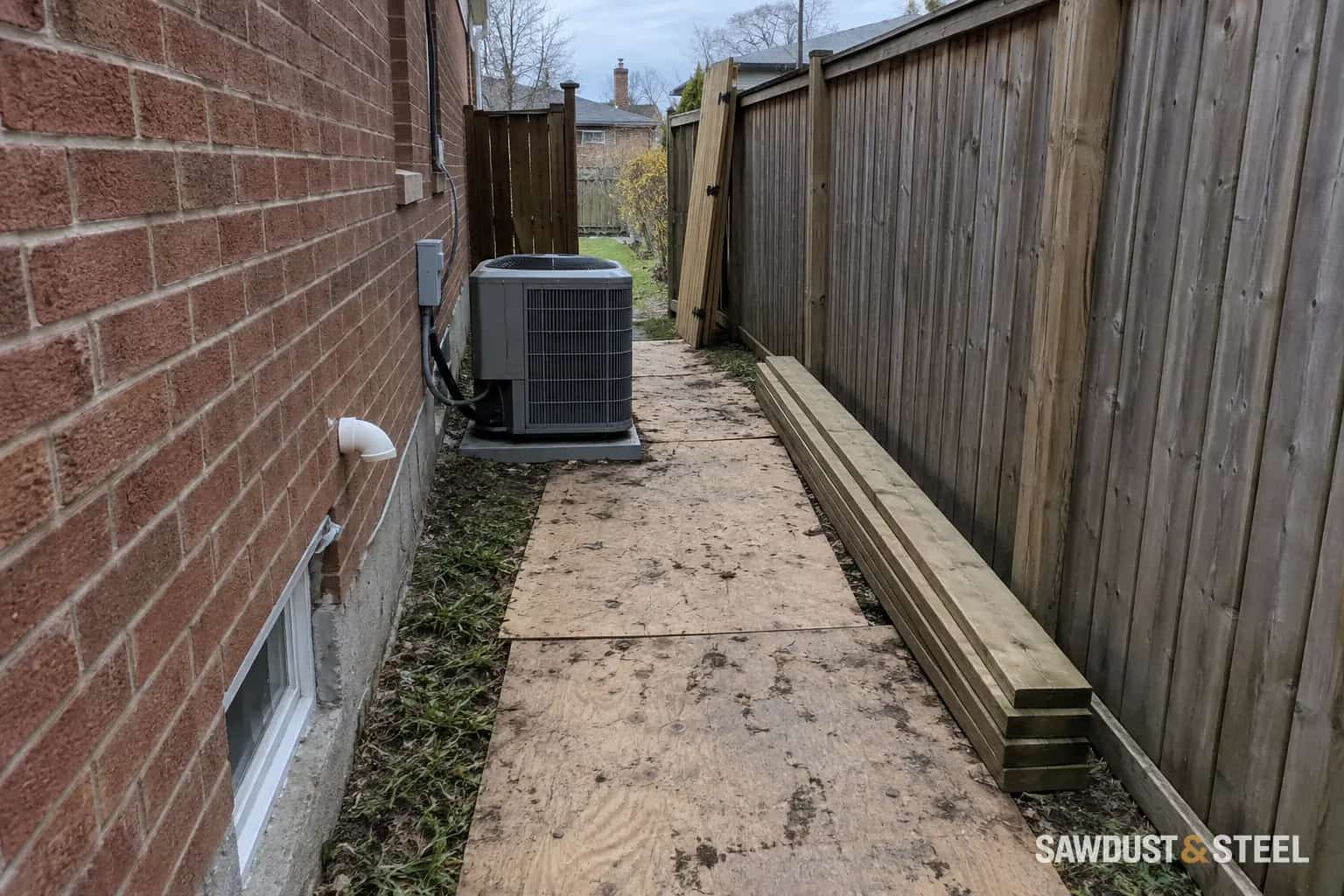
The deck is a simple rectangle. Getting a long board into the garden involves a gate, a turn, an air conditioner, and an optimistic drawing on a phone.
Measure the journey, not just the gate
Record the narrowest width, corners, height restrictions, steps, and surfaces along the route. Photograph the approach from the delivery point. Include anything that cannot be moved casually, such as meters and equipment.
Oakville's tree-protection procedure is relevant where construction activity affects town trees. Material storage and equipment travel deserve attention alongside excavation; verify any private-tree constraints separately.
Ask how each stage will happen
Long members, excavated soil, concrete or pile equipment, and demolition waste have different access needs. Ask the installer to walk through each stage, including where one person can step aside while another carries a board. Record any temporary gate removal and where the gate will be kept. The narrow passage is often also the household's route to the bins, so agree when it will be occupied and how exits will remain usable.
Ask whether a gate or fence panel needs temporary removal, who has authority to approve it, and who reinstates it. Neighbour access should be agreed explicitly rather than treated as part of the contractor's optimism.
Make the quote comparable
- Delivery and unloading location.
- Equipment route and surface protection.
- Excavated material and demolition-waste removal.
- Temporary removals and reinstatement.
- Secure overnight storage without blocking exits or services.
Keep these items on the same drawing used for the deck. The best access plan is specific enough that the first delivery feels routine. It should not depend on discovering that someone else's driveway is conveniently empty.