
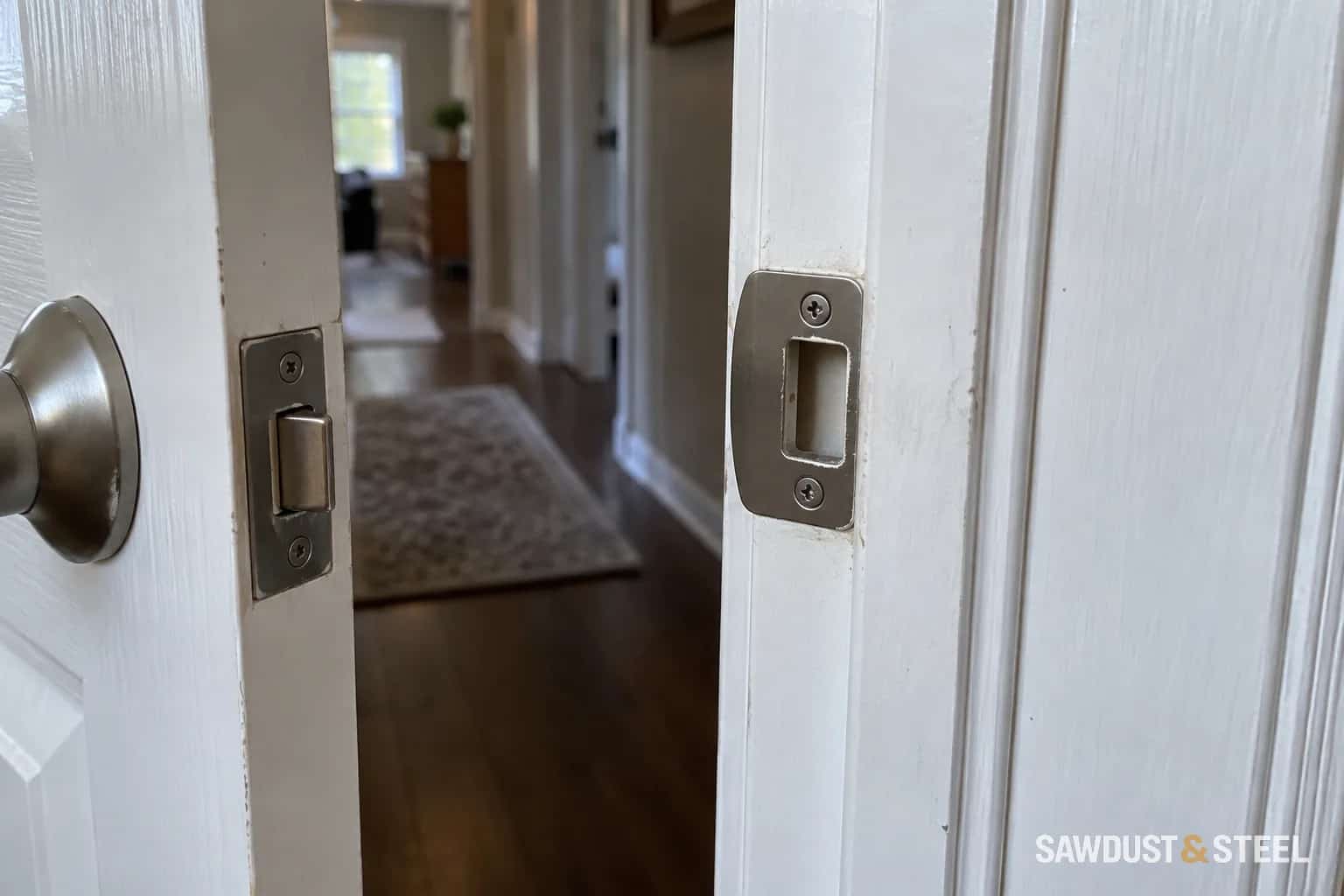
A loose lever feels like one problem until you look closely. Sometimes the handle slides on its shaft. Sometimes the round cover plate rattles while the mechanism is secure. Sometimes both sides of the assembly shift in the door. Find the moving connection before tightening everything within reach.
Check the handle with the door open
For an ordinary interior door, keep the door open while checking the mechanism so a faulty latch cannot leave you on the wrong side. Gently operate the lever and watch the round plate, called the rose, against the door. Compare the other side. Do not force a handle that sticks or use it to lift a sagging door.
| Movement | Likely area to inspect |
|---|---|
| Lever moves along the shaft but the plate stays still | Handle retention: the model's set screw, catch or other fastener |
| Decorative cover rattles but the assembly is firm | Cover attachment, which may clip or twist into place |
| Both sides shift against the door | Mounting fasteners and the door's preparation |
| Handle turns but the latch does not retract reliably | Spindle, latch or internal mechanism, not simply a loose trim cover |
These are locating checks, not a guarantee that a part is repairable. Look for a maker's name on the latch face, packaging or installation record. Photograph both handles and the edge of the door. The model matters because similar-looking plates can hide quite different fasteners.
A small hole is not always a set screw
Schlage's FC60 installation instructions illustrate a screw-retained handle arrangement. Kwikset's referenced light-commercial instructions illustrate a catch-retained lever arrangement. These are product examples, not interchangeable removal procedures. A recess that accepts a release tool should not be treated as a screw socket by guesswork.
Find the correct installation or service instructions before taking the handle off. Use the specified tool and keep removed parts together. If a set screw is missing or damaged, obtain the correct replacement rather than forcing a hardware-store screw of approximately the same diameter into it. Thread, length and tip details can affect retention.
Tighten only after you know what the screws secure
Where the whole assembly moves, the mounting screws may need attention, but first check that the parts are seated correctly and the door surface is sound. Some screws pass through to the opposite assembly; others attach particular components. Follow the maker's sequence and tighten evenly to the specified condition. Excessive tightening can distort parts or make operation stiff.
If screws spin, will not draw the parts together or repeatedly loosen, stop treating the problem as routine adjustment. Incorrect fasteners, damaged threads, missing parts or unsuitable door preparation may be involved. A replacement handle does not automatically correct an enlarged or damaged mounting area. Photograph it for the supplier or have the assembly assessed.
A heavy door hanging low is another separate problem. If you have been hauling it upward by the lever to make it close, inspect the hinges and attachment. Black hinge dust or squeaking can point toward a maintenance or wear issue, while loose hinge screws need their own repair.
Test the mechanism before closing the door normally
With the door still open, operate the handle from both sides and check that the latch retracts and returns freely. Test any privacy function according to the product instructions. Then close the door gently and check engagement without slamming or lifting. Stop using a mechanism that can trap someone or fails to release reliably, and arrange repair or replacement.
If the handle now works but the latch misses the strike, follow the door-won't-latch guide. If the latch releases but the painted edge clings to the frame after a few hours, investigate paint sticking to the stop. The lever should operate the latch, not compensate for every other problem in the opening.