
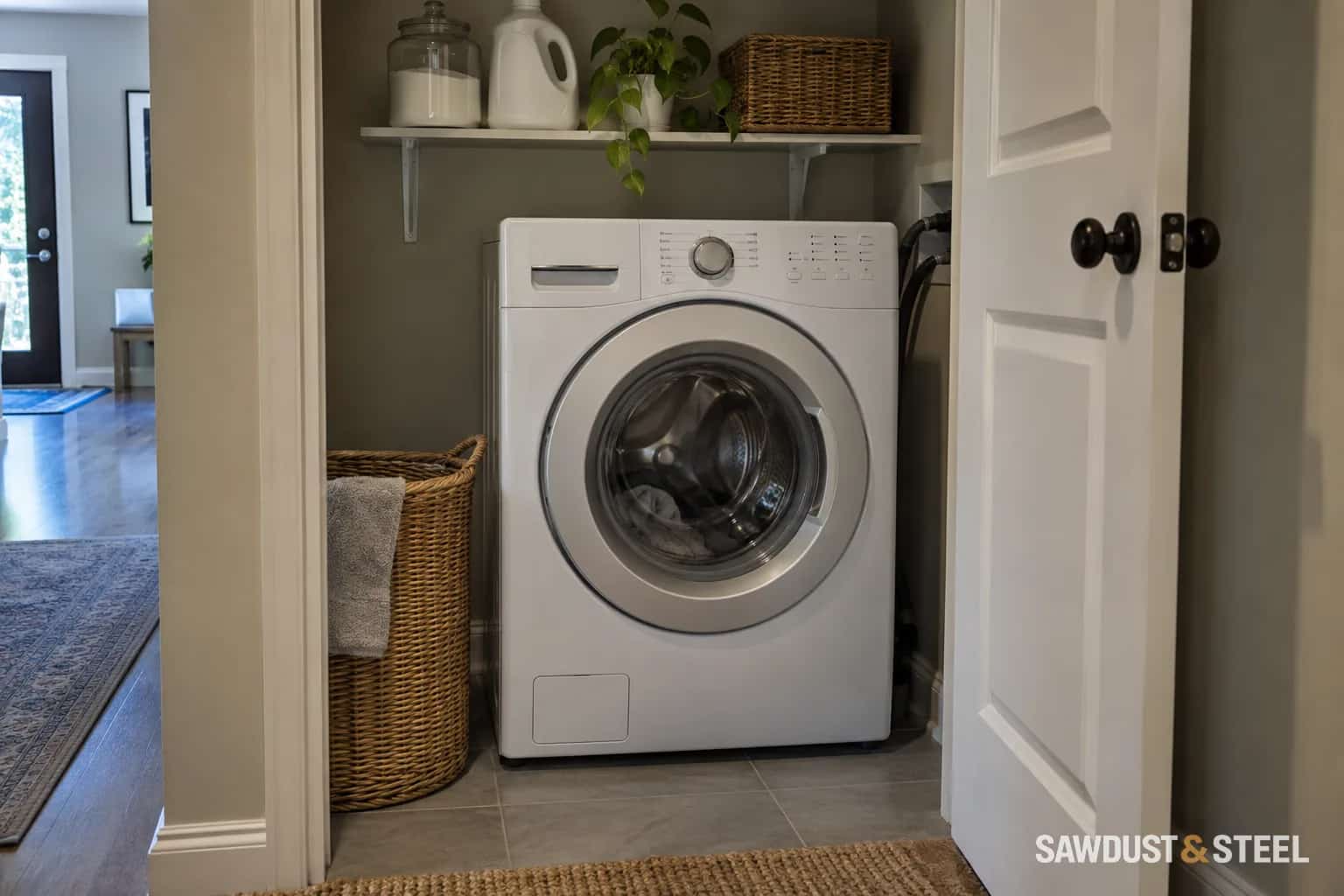
You ran the clean-washer cycle. The drum looked spotless. Two loads later, the familiar damp-towel smell returned. The next useful step is to find what the cycle did not address, rather than pour in a larger assortment of cleaning products.
Locate the smell and note when it appears
With the machine idle, note whether the odour seems strongest at the door seal, the detergent drawer or the room's drain. Does it appear only when water pumps out? Are clothes left wet inside for hours? Is there standing water, a drainage error or a leak? Write those observations down before cleaning; they help separate routine residue from a fault.
A musty machine and a sewer-like room odour are not interchangeable diagnoses. If the room drain is the source, use the basement floor-drain odour guide rather than assuming every smell can be washed out of the drum. Confirm the actual drain arrangement with a plumber when the cause is unclear.
Use the washer manual as the cleaning checklist
Whirlpool's front-load odour guidance covers washer-cleaning cycles, detergent and drying between uses. The exact model matters: the approved cleaner, drawer removal and drain-filter access can differ. Find the model number and its manual before lifting panels or adding chemicals.
| Area | Useful check | Boundary |
|---|---|---|
| Door gasket | Look at accessible folds for trapped small items, lint and residue. | Follow the model's cleaning method; do not pull the seal off its mounting. |
| Dispenser | Check for product accumulation and instructions for removal. | Not every drawer or insert releases the same way. |
| Drum and cleaning cycle | Use the specified empty-machine cycle and approved product. | Do not substitute a dishwasher pod or combine cleaning chemicals. |
| Drain filter, if homeowner-accessible | Check whether the manual includes a safe drain/filter procedure. | Opening it can release water; stop if access or procedure is unclear. |
Keep the machine empty when its cleaning instructions require it. Use one specified product and its stated amount. Extra detergent is not a disinfecting upgrade. If previous products have been used, follow the manufacturer's rinse and cleaning directions rather than adding a second cleaner on top.
Check dosing before blaming the gasket again
Whirlpool's maintenance overview links excessive detergent to residue and advises dosing for the load and product instructions. Use HE detergent where the washer requires it. Check concentration, load size, soil level and the detergent maker's water-hardness guidance rather than automatically filling a cap or drawer to its maximum.
For an automatic dispenser, confirm the concentration and dose settings after changing detergent. A setting that worked for the old bottle may not match the new one. If you use fabric softener, include its dispenser and dosing in the review instead of treating it as a cure for odour.
Give the machine a workable after-load routine
- Unload promptly so the wet fabric is not stored inside.
- Remove accessible trapped items and deal with residual moisture as the manual directs.
- Allow the interior to dry using the manufacturer's recommended door position or built-in drying function.
- Keep children and pets from accessing the drum; do not defeat a safety feature to prop the door.
- Put the specified maintenance interval in the household routine, along with filter checks the manual assigns to the owner.
Health Canada also recommends allowing remaining washer water to dry between uses. In a tight laundry closet, arrange the space so that drying and safe access are possible. If the surrounding room stays damp from a rack of wet clothing, address the indoor drying routine too.
Know when another cleaning cycle is not the next step
Photograph recurring residue and save error codes. Tell the service technician which maintenance steps you completed, which products you used and whether water remains after a cycle. A damaged seal, recurrent drainage fault or odour that persists despite correct care calls for inspection. Do not dismantle the appliance or try stronger chemistry to prove you have cleaned hard enough.
If water is escaping as well as smelling, the washer drain-pan plan is about limiting consequences and detecting leaks. It does not correct the machine's fault. Keep the repair and the surrounding room protection as two separate decisions.