
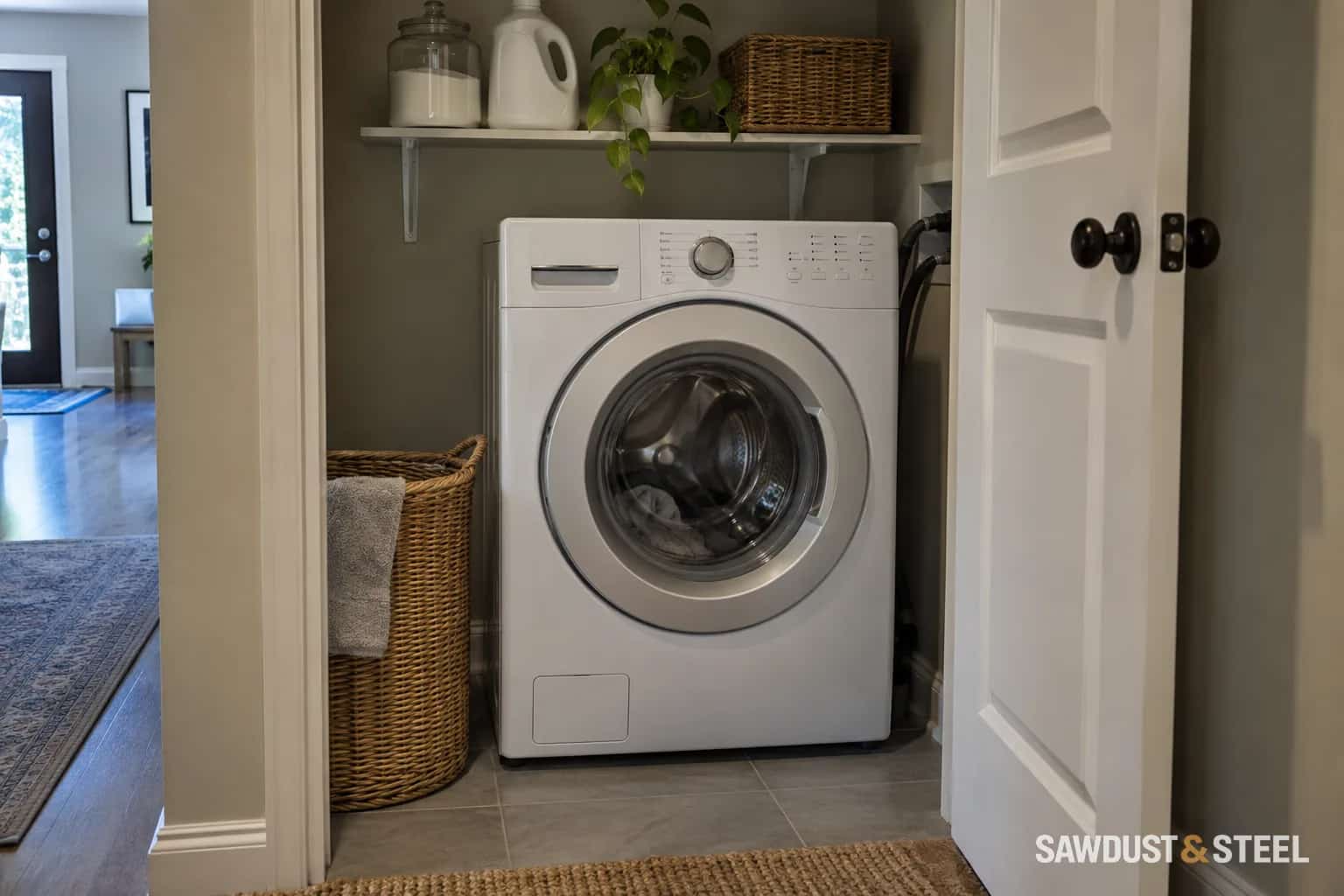
Water under an upstairs washer has a room underneath it to visit. A pan is worth discussing during layout, when a drain route and service access are still choices. It is much less convenient after the laundry cabinetry is fixed in place.
Distinguish a container from a connected drainage plan
Oatey washing machine pans describes pans intended to protect floors and ceilings and offers a drain connection. That product description does not establish a legal requirement for every Ontario installation, or tell you where the drain may connect.
Ask the plumber and local building department what applies to this scope. Show the proposed pan, washer, floor and drain route. Do not connect a pan to a convenient pipe without an approved plumbing detail. The washer's normal discharge and the pan drain are separate planning questions.
Containment
A suitable pan receives leakage that actually reaches it.
Detection
A compatible alarm can make an otherwise hidden leak noticeable.
Isolation
Reachable, identified valves allow the supply to be shut off.
Check inside dimensions and moving parts
Measure the pan's usable inside space, rim height and connection location against the actual machine and its feet. The outside footprint alone is not enough. Whirlpool: washer rubbing noise includes pan interference among checks for rubbing noise, so the fit deserves attention before the machine is lowered into place.
Include the pan in the finished height calculation for any counter above the washer. Ask how the appliance will be removed for service without damaging the pan or its connection. A fragile lip directly in the moving path can turn a routine repair into another floor job.
Do not promise what the pan cannot guarantee
A pan only receives water that lands within it, and its capacity and drain arrangement have limits. A spray from a connection or a leak outside the footprint may miss it. Have the installer discuss accessible valves, approved hoses and an appropriate detection or automatic shutoff option for the installation.
At handover, locate the pan outlet and sensor if fitted, and confirm that storage will not hide them. Keep the shutoffs reachable. If the machine rubs or shakes after fitting, use the installation check rather than trimming the pan or raising the washer on improvised blocks.