
You've cleaned the basement, run the laundry, and checked behind the washer. The smell is still there, strongest beside the floor drain. Before another bottle of cleaner goes on the shopping list, check whether the drain's water barrier has dried out.
A little water may be all a seldom-used trap needs. A smell that quickly returns, slow drainage, or sewage coming up calls for a different response. Here's how to separate that simple first check from a problem that needs a plumber.
Why a quiet drain can start smelling
A trap holds water to separate indoor air from the drainage system. If the drain is rarely used, that water can evaporate. Toronto Water's plumbing explanation shows the water barrier and advises adding water to drains before sewer smoke testing.
For an accessible floor drain that is not backing up, replenishing the trap with water is a reasonable first check. Toronto's smoke-testing guidance uses one to two litres per drain. Pour slowly and stop if it does not drain normally. There is no need to begin by mixing cleaning chemicals.
Notice what happens afterwards
| Observation | Useful next step |
|---|---|
| Odour clears and the drain remains normal | Keep the seldom-used trap from drying out and watch for recurrence. |
| Odour returns quickly | Have the trap, any primer, venting, and connections assessed. |
| Several drains gurgle or drain slowly | Ask a plumber to investigate the drainage system. |
| Sewage rises through the drain | Treat it as a backup, not a dry-trap problem. |
A returning smell is information. Note whether it follows laundry, heavy rain, or long periods without use, and tell the plumber how long the water top-up helped. 'It came back after the washer emptied' is more useful than 'it still smells sometimes.' If a trap primer is present, ask the plumber to check it; that is the small water-feed arrangement intended to help keep the trap filled.
Know when to stop investigating
If you suspect a fuel-gas leak or anyone feels unwell, leave the building and call emergency services or the gas utility from outside. Do not assume an unidentified odour is harmless sewer gas.
For an actual backup, avoid contact with sewage and follow the local utility's reporting guidance. Toronto Water's backed-up-drain page explains its response process for Toronto properties.
Before finishing the basement
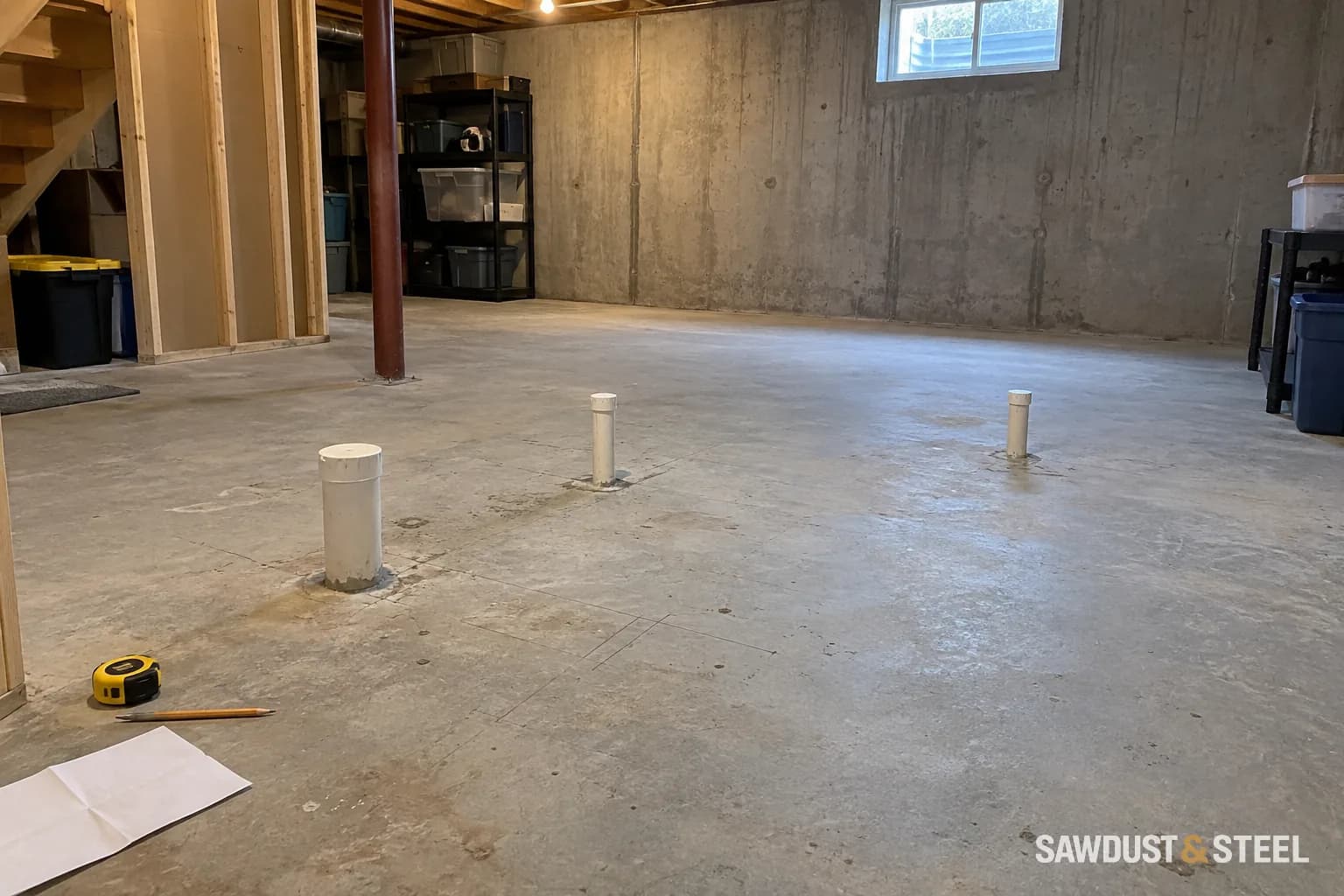
Keep required drains and service points accessible. During one basement layout, the floor drain fell beneath a proposed storage cabinet. We moved the cabinet line so the drain could still be reached and checked without emptying the furniture. A decorative cap or new floor covering should not become the solution to an unresolved smell. Resolve the plumbing first, then finish around it.
If the top-up helps, make a note of when you did it and whether the smell stays away. If it returns, you've got a useful starting point for the plumber rather than another empty bottle of cleaner. Get that answer before the new flooring or cabinetry makes the drain harder to reach.
Where a backwater valve is part of the system, keep its finished-floor access cover usable while the drain problem is investigated.