
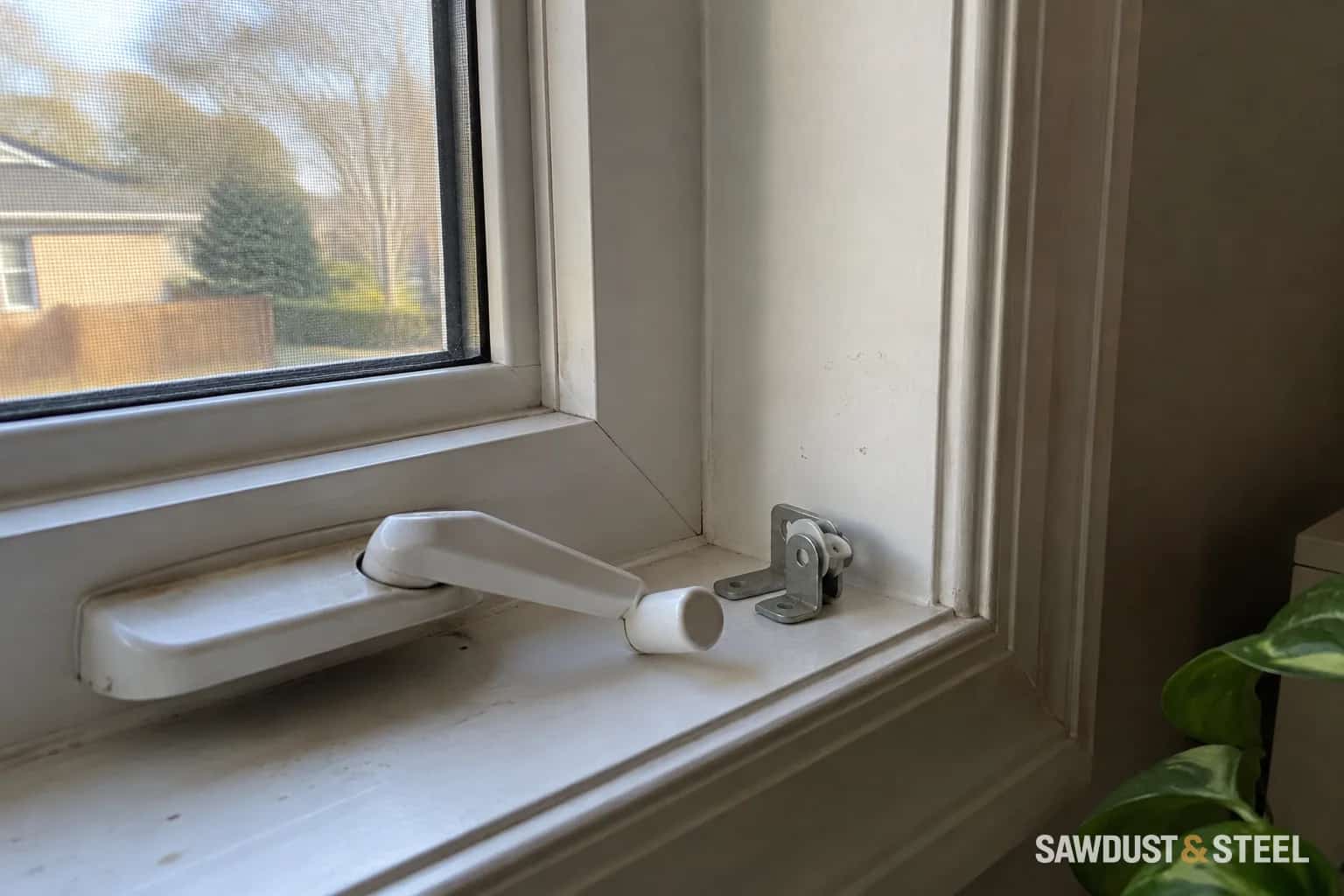
A window recess can look deep until you put a tape measure beside the crank. The glass-to-wall distance is not necessarily usable mounting space. A blind needs a place for its brackets, room for its headrail and an unobstructed path as it rises and falls.
Minimum mounting depth and fully recessed depth are different
Minimum mounting depth describes the space required to attach the specified bracket. Fully recessed depth describes the room needed to keep the assembly within the opening. A product may mount securely at the first dimension yet project past the trim. Decide whether that projection is acceptable before ordering, rather than discovering it after the custom blind arrives.
One Hunter Douglas Duette UltraGlide manual makes the distinction particularly clear: it lists a 1/2-inch minimum inside-mount depth but a 2 1/4-inch fully recessed depth for its 3/8-inch and 3/4-inch pleat versions. That is an example from that manual, not a sizing rule for other Duette generations, blinds or control systems. Use the current instructions for the exact product being supplied.
Attachment
Measure the flat, permitted bracket surface at each proposed mounting point.
Projection
Compare the usable recess with the product's fully recessed depth.
Operation
Check the shade's path and the window hardware through their full movement.
Measure at the bracket locations, not just the centre
Look for stepped trim, curved moulding, removable stops and changes in depth near the corners. A rounded profile may occupy space without offering a flat bracket seat. Identify what the fasteners will enter and whether the window maker permits attachment there. Do not assume that a thin liner, vinyl frame or glazing stop is suitable support simply because a screw can penetrate it.
Measure the opening using the covering manufacturer's width and height procedure as well. Some suppliers make their own deductions for clearance; others request finished sizes. Record which measurement you are providing. Subtracting a clearance twice is a reliable way to buy a permanent strip of unwanted daylight.
Operate the window before committing to the shade position
Hunter Douglas's mounting comparison identifies shallow openings and obstructing cranks or locks as reasons to consider outside mounting. Check the handle in its closed, unlocked and operating positions, not just folded neatly out of the way. Then consider where the shade's fabric or slats, bottom rail and controls will travel.
A simple cardboard profile made to the supplier's headrail dimensions can help visualize projection and interference. It is a planning aid, not a substitute for the bracket template or mounting instructions. Confirm that the window remains operable and that required escape access is not obstructed. If the window already binds or the crank turns without opening it, repair that first.
Choose the mounting arrangement for the room
| Arrangement | What to confirm |
|---|---|
| Fully recessed inside mount | Both bracket and full assembly depth fit, with clear operation. |
| Projecting inside mount | Minimum attachment depth is met and the projection is acceptable and unobstructed. |
| Outside mount | Suitable support, coverage and clearance beyond the opening are available. |
| Different covering or control system | The new product has genuinely different dimensions, verified in its own instructions. |
Outside mounting can also improve overlap at the sides, but it does not automatically eliminate every light gap. Ask for the product's coverage guidance and check adjacent cabinets, doors and wall controls. Decorative trim should not carry an assembly unless its construction and fastening suit that load.
If shades are part of a heat or fading problem, compare them with the window's other requirements. Window film compatibility depends on the glazing and exact film; it is not an automatic substitute when a blind does not fit. Finish with a marked-up measurement sheet showing the product, mounting method, brackets and hardware clearance so the order reflects the arrangement you actually want.