
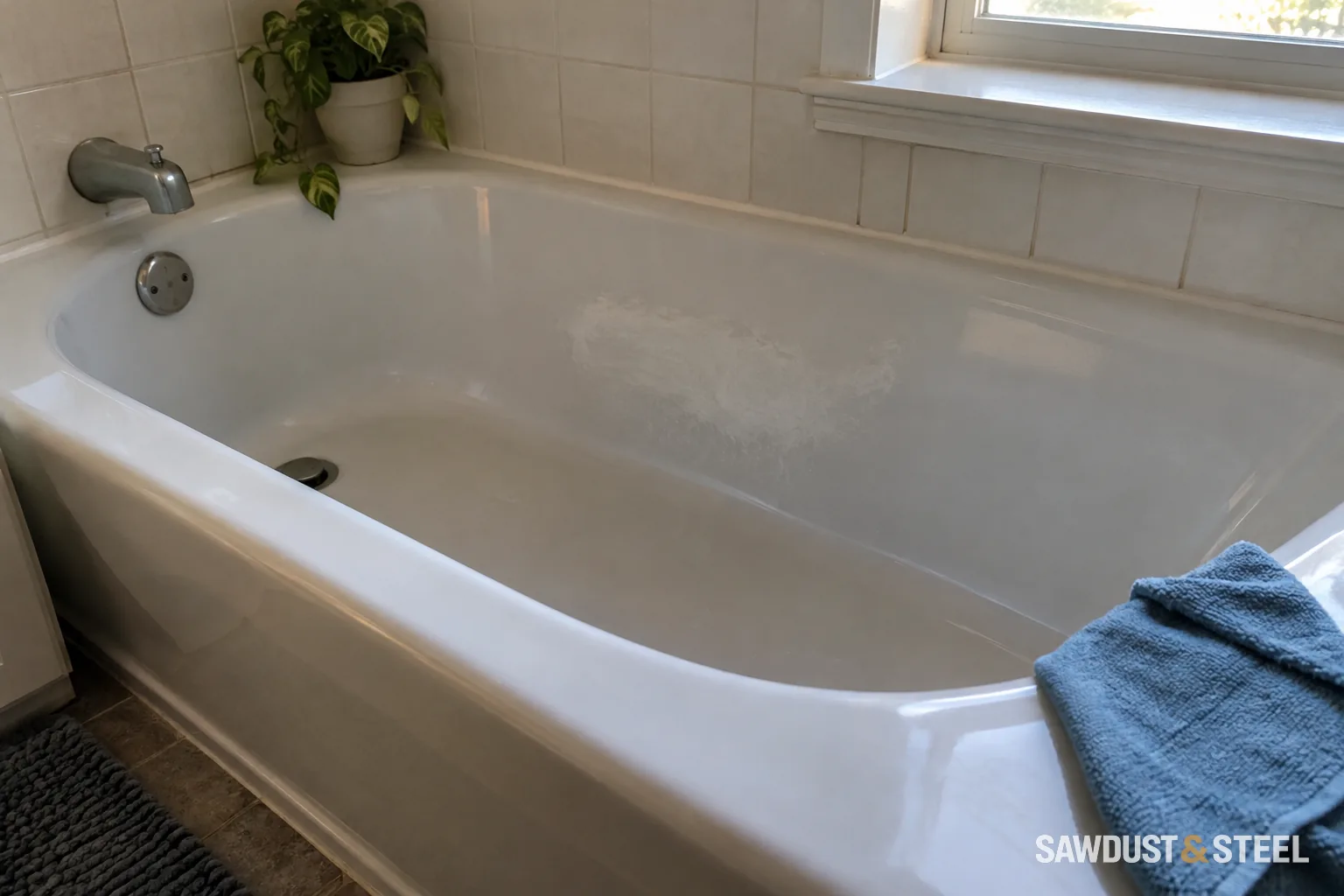
The renovation had a very reasonable brief: keep the comfortable old tub, replace the gloomy tile. Ben even likes the slightly dated colour. The surprise is not the tub. It is the damaged board at its back edge, which turns a cosmetic refresh into a more careful repair.
Keep the tub for the right reasons
Inspect for cracks, corrosion where applicable, worn surfaces, movement, and previous patching. Have the drain and overflow checked while access is available. A tub worth keeping should suit how the household uses it, not merely be difficult to carry down the stairs.
If replacement becomes necessary, compare the everyday access and cleaning tradeoffs of freestanding and alcove tubs before choosing the new layout.
| Check | Why it changes the decision |
|---|---|
| Tub edge or tiling flange | The new waterproofing needs a compatible, continuous connection. |
| Support and movement | A moving tub can stress the surrounding joints. |
| Drain and overflow access | A small plumbing issue may be much harder to reach after the wall closes. |
| Damage behind the old surround | Repair scope depends on what is actually found. |
The waterproofing has to meet the tub
MAAX's bathtub guide distinguishes tub configurations and flange options. Identify what your existing tub actually has. Then have the installer show how the selected waterproofing system connects to it. A bead at the visible tile edge is not a substitute for a complete detail behind the finish.
If the connection cannot be made reliably, keeping the tub may be false economy. Do not cut away an essential flange to make new board sit neatly. The right detail depends on the tub and wall system; our shower waterproofing guide explains the broader assembly choices.
Write a small scope with an honest unknown
- Specify protection of the retained tub during demolition and tile work.
- Agree how concealed damage will be photographed, priced, and approved.
- Keep a decision point after exposure and before rebuilding the surround.
- Confirm who tests the plumbing and checks the finished joints before handover.
For older finishes, arrange appropriate hazard assessment before disturbance. The renovation dust guide explains why ordinary dust protection does not address every legacy material.
Ben's project kept the tub, but we paused with the surround open so the damaged backing and the flange connection could be assessed together. We protected the tub with a secured cover and kept checking beneath it for grit; demolition debris can scratch a good surface through a careless cover. The owner approved the extra backing repair before rebuilding began. The saving shrank, but keeping his comfortable tub still made sense.
If new shower controls are part of the refresh, identify the existing valve before buying trim. A finish change can become a larger plumbing job when the parts are incompatible.
If the tub surface is the main problem, compare refinishing with replacement. Whichever route you choose, settle bath access-panel placement before the new surround closes off the plumbing.
A connection example worth seeing before demolition
In the Schluter KERDI tub detail, the membrane connection depends on where the backing stops relative to the tub flange. The method uses the specified mortar at the wall and KERDI-FIX or another suitable sealant at the tub interface. That is an assembly detail, not permission to bridge any old tub edge with whatever silicone is on the van. Clean, sound, compatible bonding surfaces matter.
Behind tile
Wall backing
Sound, securely supported backing aligns with the selected detail.
Hidden junction
Waterproof layer
Continuous membrane connects to the identified tub flange.
Drainage
Tub rim
The connection directs water into the bathing fixture.
Tile edge
Visible finish joint
A serviceable finish joint remains; it is not the only water barrier.
Concept only. Flange shape and backing position must match the tub and waterproofing instructions.
Ask to see the corner where the vertical wall reaches the front apron. That small change of direction is easy to miss on a wide photograph. Also check the valve opening and spout penetration while the wall is accessible. If the tub has no usable flange for the planned shower application, stop and settle an approved alternative before ordering tile. Retaining a comfortable fixture is a good aim; retaining a junction nobody can explain is not.
Try bath night and cleaning before replacing it
If the tub has to come out, measure its internal sitting length, back slope and rim height before choosing a different style. Two tubs with the same exterior length can feel very different inside. In a children's bathroom, try the adult kneeling position beside the showroom model and the reach across its rim. At home, tape the proposed footprint on the floor and include the adult, bathmat and open door. The pleasant five-minute test is cheaper than discovering that hair washing requires leaning over a wide rim every evening.
A freestanding model also needs reachable cleaning space behind it and somewhere for a towel and shampoo. Check that a hand, brush and cloth can reach the real rear gap; a narrow stripe of floor is not useful access by itself. An alcove model can consolidate daily showering and bathing, but must be intended for that use. MAAX's bathtub guide separates installation styles. Choose the exact configuration first, then coordinate the filler, drain, support and water protection. Keeping the old tub and choosing a replacement style are separate decisions.
At the demolition hold point, compare a retained-tub price with the complete replacement price, including moving the fixture, waste connections, new surround and any repairs. Keep drain and overflow access usable whichever option wins.