
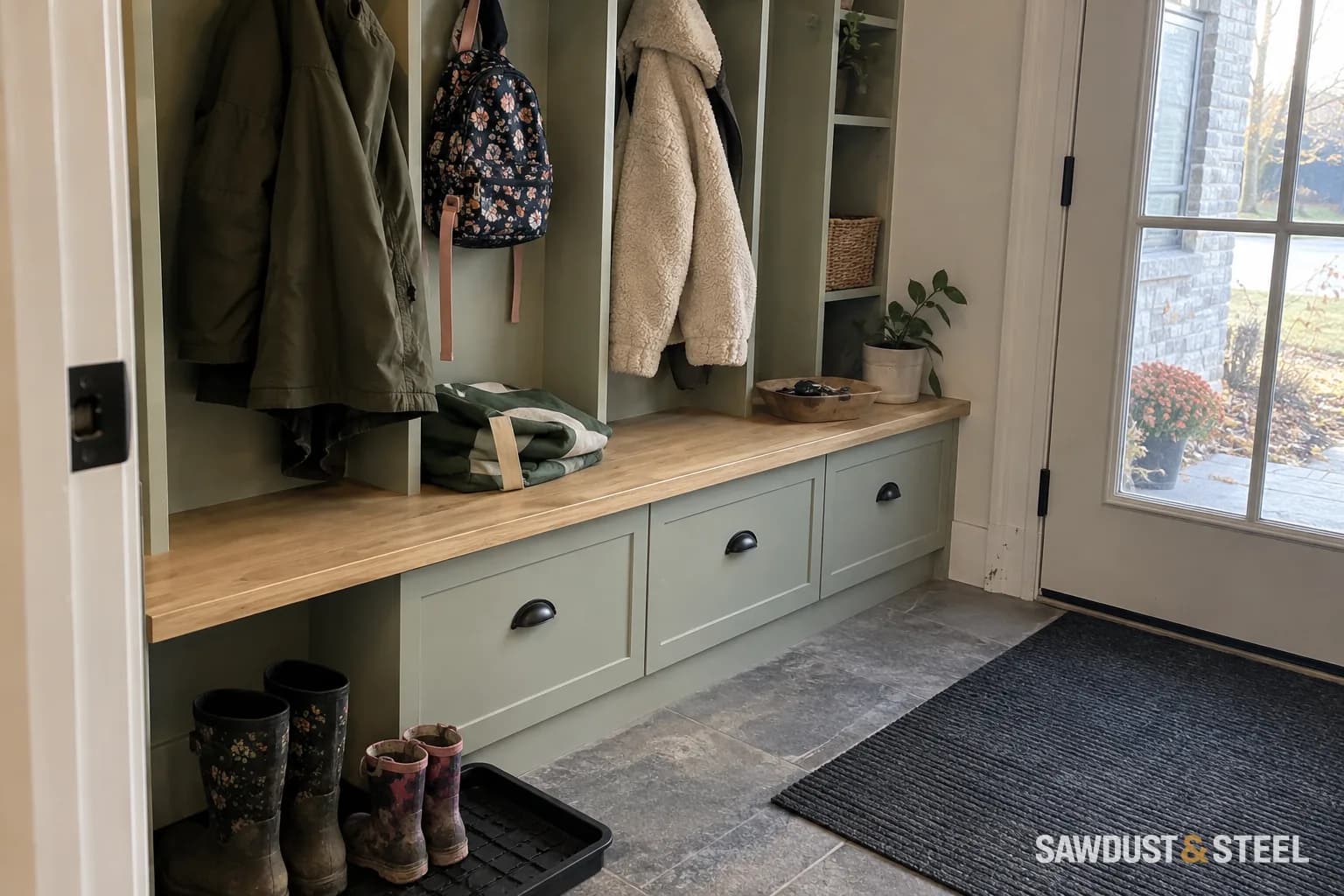
A mudroom is an unusually honest room. It records what the household does on arriving home, regardless of what the design drawing hoped they would do.
Design for the wet Tuesday
Picture everyone arriving with boots, bags, coats, and something that should have stayed at school. In a family mudroom we fitted, the first drawing gave each child a tidy narrow bay. Their winter coats filled the bays before a backpack went in. We held the actual gear against the wall, widened the daily hooks, and moved spare shoes into the closed section. The pencil coats had been much better behaved.
Open cubbies make the destination obvious and remove the door-opening step. Closed cabinets make stored gear less visible. The second option works best when the everyday routine is already willing to cooperate; otherwise the coat lands on the nearest closed door handle.
Separate daily gear from spare gear
A useful compromise is a small open arrival zone with closed storage for the overflow. That mudroom also needed a removable boot tray that could be lifted out without tipping meltwater onto the cabinet base. We left the sitting spot clear and checked that the tray pulled out past the trim. Wet gear stayed in the open drying area; the closed cupboard held dry spares. Assigning those jobs did more than adding another shelf.
IKEA Canada’s hallway storage ideas show a range of benches, hooks, and wardrobes. Treat them as examples of different storage jobs. Our recommendation is to assign the wet, daily, and occasional items before choosing the fronts.
| Zone | Useful arrangement | Check before building |
|---|---|---|
| Wet daily boots | Open removable tray | Tray lifts out level without spilling over the plinth |
| Coats arriving damp | Open hooks with space between bulky items | Air can circulate; no damp coat packed against a finished back |
| Dry spare hats and shoes | Closed doors or drawers | Actual items fit without blocking hinges |
| Mixed family arrival | Open daily bay plus closed overflow | The sitting spot and walking route stay clear |
An enclosed cubby is not a drying cabinet merely because its door has a grille. For ordinary joinery, dry wet items before storing them behind closed fronts. Use the room’s appropriate ventilation and keep heat outlets clear. If powered drying is wanted, choose equipment designed for it and coordinate its electrical and heat requirements separately. The baseboard-heater clearance guide helps avoid stealing a heater’s working space.
Mock up the doors in the narrow hall
Keep heat sources, vents and required exits clear in the mock-up. Choose open storage for items people need to drop quickly, and doors for dry things they can put away. Leave enough room to pass someone sitting on the bench. The most useful mudroom is the one people use without being reminded.
Tape the door swing on the floor and hold cardboard at the proposed door size. Try sitting, pulling out the boot tray and walking past with a laundry basket. A door that clears an empty bench can still hit someone’s knees. Compare the built-in planning and quote guide once the daily arrangement works, and check outlet access before the backs are fitted.