
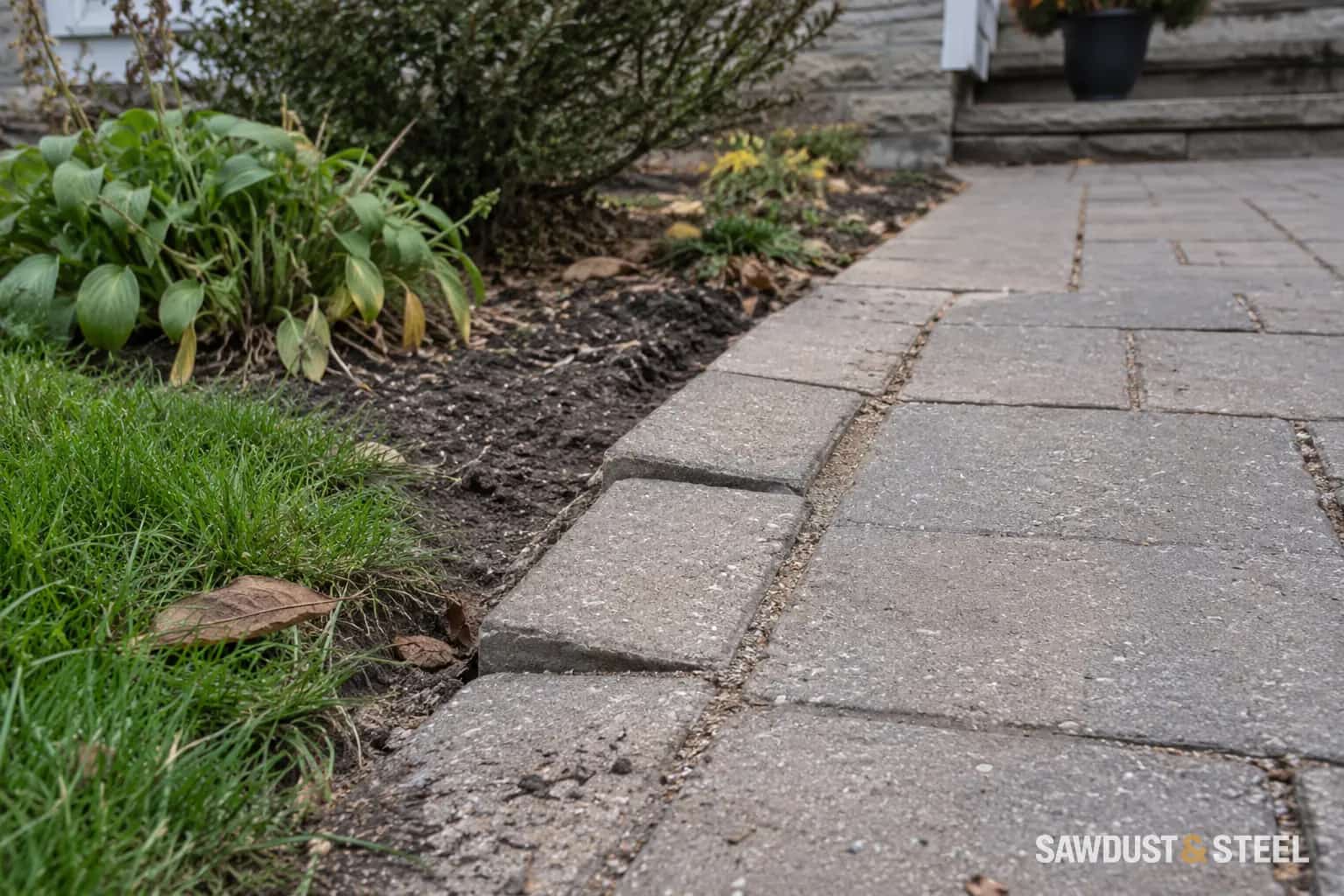
A puddle beside the patio makes permeable pavers sound like an obvious upgrade. Water goes through the joints, the puddle disappears, and the paving still looks tidy. The missing question is what happens after that water passes below the surface.
Permeable pavement is an assembly. The visible surface lets water enter; the layers beneath must store, infiltrate or convey it as designed. If the ground below cannot receive the water at the required rate, the system needs another planned route. Attractive joints are not a substitute for that decision.
Identify the source before changing the surface
Watch the yard during a manageable rainfall from a safe place. Note whether water comes from a downspout, higher ground, a neighbouring drainage route or the paved area itself. Photograph the first wet locations as well as the final puddle. The lowest point often collects water created somewhere else.
| Question | Ordinary paving repair | Permeable reconstruction |
|---|---|---|
| Water route | Surface falls and drains | Surface, base and overflow |
| Existing base | May be retained if suitable | Must suit the specified system |
| Maintenance | Surface and joints | Surface infiltration and outlet function |
| Site check | Levels and discharge | Levels, soil, storage and discharge |
A failed gutter or an incorrectly routed discharge may need correcting before the paving is touched. Underground downspout overflow can be particularly misleading because the source disappears beneath the ground. Fixing only the patio may leave the same volume arriving beside the house.
Ask what is beneath the proposed pavers
Request a section drawing showing the surface, joint material, bedding, base, underlying soil and any underdrain or overflow. The design should account for the area contributing runoff, not just the square metres of new paving. A small patio receiving a large roof discharge has a different job from a path receiving only direct rainfall.
Public Safety Canada's flood-wise landscaping guidance notes that permeable pavement does not replace drains and still needs appropriate grading away from the home. This is why the proposal must include the whole water route rather than promise that every storm will vanish through the surface.
Check whether infiltration belongs in that location
Foundation proximity, soil conditions, groundwater, nearby wells and septic systems can affect the suitability of putting more water into the ground. Ontario's stormwater design guidance treats these as design considerations, not optional landscaping details.
Have the site assessed where the conditions are uncertain. Do not excavate a deep storage layer beside the house based on a generic online section. Likewise, do not assume that a buried perforated pipe provides an outlet merely because it has been installed. The outlet has to exist, function and be permitted.
Compare a drainage repair with a full replacement
Sometimes ordinary paving can remain while its slope, edge or discharge route is corrected. In other cases, reconstruction is sensible because the existing base or levels are already wrong. Ask for both explanations before selecting a more expensive surface product.
Keep accessibility and everyday use in the comparison. Joint openings, surface texture and level transitions affect furniture, small wheels and snow clearing. Our guide to patio furniture and paver joints helps test those details with the furniture you already own. A sample area is more informative than a catalogue photograph.
Make maintenance part of the design
Ask how the chosen system is cleaned, how clogged joints are restored and which winter materials are compatible. Keep soil, mulch and loose garden material from washing onto the surface. A permeable system that is regularly covered in fine sediment will need attention even if the pavers themselves remain sound.
After installation, photograph the outlet and record how the surface behaves in several rains. Look for unexpected discharge, erosion or water remaining beside the building. Preserve the base specification and maintenance instructions with the invoice. The value of permeable paving is its functioning water-management system, not simply the fact that the joints look different from the old patio.