
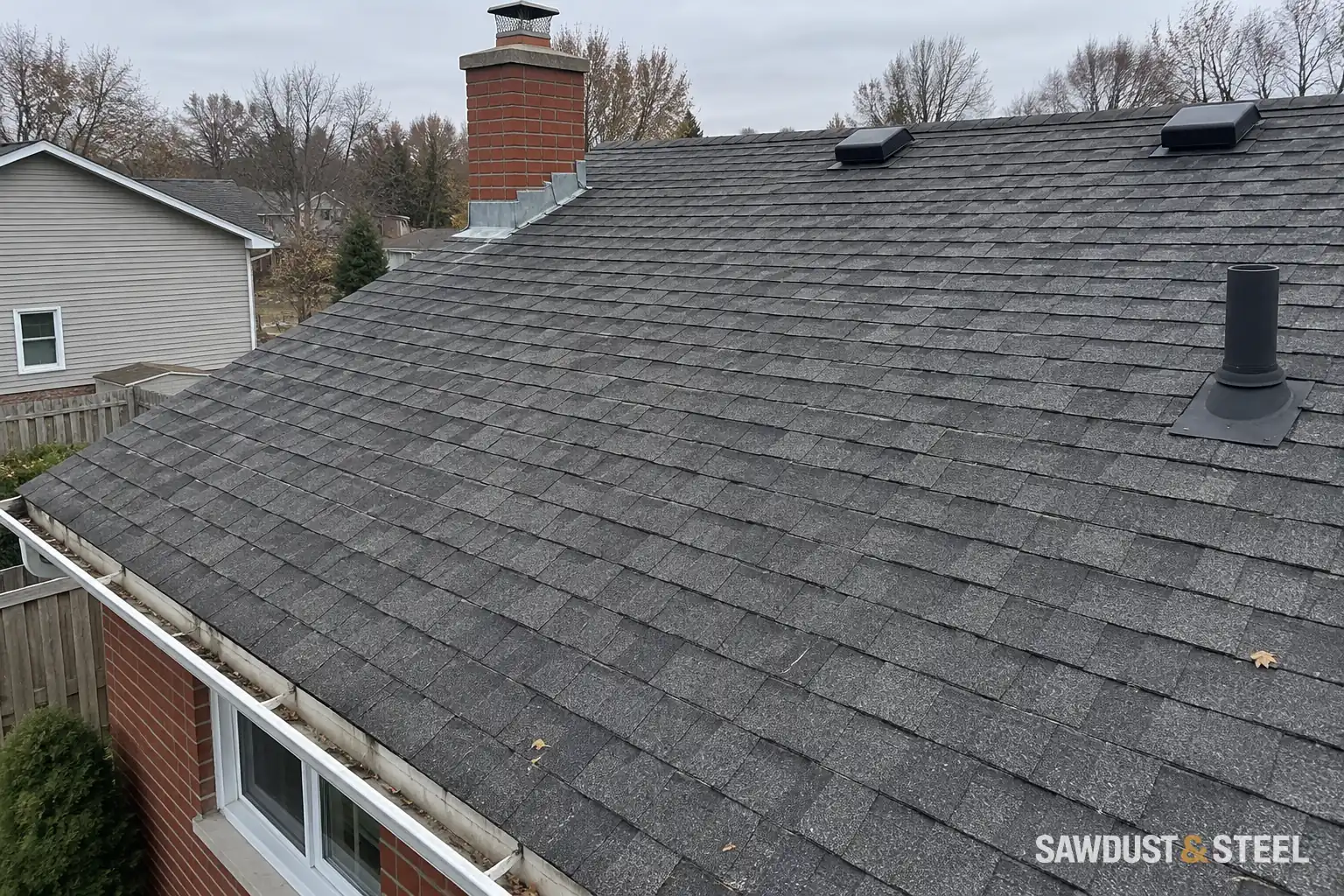
Three roof quotes arrive. All say architectural shingles; the totals barely look like they're for the same house. Start with the missing lines: tear-off, flashing, deck repairs, and ventilation can change the job substantially. Here's how to make the quotes comparable before choosing one. A useful budget starts with your measured roof and its actual scope.
Which measurements does a roof estimate need?
Living area is not roof area. A compact two-storey, a wide bungalow, and a house with dormers can have similar interior square footage and completely different roof surfaces. Pitch, valleys, hips, access, number of existing layers, material disposal, skylights, chimneys, low-slope sections, and the condition of the deck all change the work.
A measured roof plan and site inspection establish the quantities and visible conditions. We once revised a preliminary scope after finding a second roofing layer at the edge and realizing the bin could not fit through the rear access. Neither changed the shingle the owner had chosen. Both changed the amount of handling and disposal. Ask which parts of an early estimate remain provisional, and settle the access plan before delivery day.
What should every roof quote include?
| Line item | What should be written | Why it changes cost |
|---|---|---|
| Measurement | Roof area, pitch, slopes, valleys, ridges, and penetrations | Defines material quantity and labour |
| Removal | Number and type of existing layers, disposal, and site access | Multiple layers and difficult access add handling |
| Deck | Inspection method and unit rate for approved replacement | Hidden damage cannot be confirmed before removal |
| Water management | Eave membrane, field underlayment, valleys, drip edge, and flashings | Different scopes can look identical in the final total |
| Roof covering | Exact manufacturer, product, colour, accessories, and fastening system | Products and warranty systems are not interchangeable |
| Completion | Ventilation work, protection, cleanup, taxes, schedule, and warranties | These are part of the job even when a quote forgets them |
What changes the total most?
Geometry and access usually move labour first. A steep or cut-up roof needs more setup and slower material handling than a simple gable. Tight driveways, protected landscaping, neighbouring walls, and limited bin access also matter. Include access and disposal arrangements in the quote.
The existing assembly can move the scope even more. A full tear-off may expose damaged deck boards, obsolete flashings, blocked intake ventilation, disconnected exhaust ducts, or a low-slope section that needs a different roofing system. Those conditions should be documented, explained, and approved before extra work begins.
How should hidden deck repairs be priced?
No contractor can honestly confirm the entire deck through finished roofing. The contract should say how the exposed deck will be checked, show a unit rate for approved replacement, and require photos or owner approval before the allowance grows. Owens Corning's roof-deck preparation instructions require a dry, smooth, structurally sound deck. Resolve damaged decking before installing the new roof system.
Make the sheathing allowance measurable
| Line | Write down before tear-off |
|---|---|
| Known scope | Visible defects, access limitations and what remains concealed |
| Unit | Board length, sheet size or area; specify thickness and material |
| Rate includes | Material, labour, fasteners, handling and disposal; identify any minimum |
| Beyond the allowance | How additional quantity is measured and who authorizes it |
| Different structural work | Stop and assess damaged rafters or trusses separately |
A line reading “decking as needed” leaves too much to the day the roof is open. Ask whether the base price includes any replacement quantity and how extra quantities will be recorded. A per-sheet rate is only comparable when both quotes mean the same sheet, thickness, labour and disposal.
For example, a completion record might show the included allowance, three approved additional sheets, the agreed rate and a location photograph. Multiply only the approved additional quantity by that rate, then reconcile any separately authorized work and applicable tax. These are accounting steps, not a suggested GTA price or a promise that three sheets will fix your roof.
If the exposed condition involves the supporting framing, do not silently stretch a sheathing rate to cover it. The contractor should explain the separate assessment and scope. The same applies when a wider opening reveals another assembly problem.
Decide who approves changes while the roof is open
Give the roofer a primary and backup contact. Ask for one wide photograph locating the damage and a closer view showing the reason for replacement, with quantity and cost before authorization. Agree how the open area will be protected if a decision takes time. Protecting the building from weather and approving a permanent repair are related decisions, but they should not be blurred into an unexplained invoice.
List flashing decisions at each junction
List valleys, sidewalls, chimneys, skylights, plumbing penetrations and changes of roof slope separately. For each, identify the existing condition, proposed material, integration with adjacent layers and replacement or reuse decision. “Flashing included” does not tell you whether the roofer intends to remove a wall finish or simply work around it.
GAF technical bulletin R-170: metal flashing reuse prefers replacement. Its limited reuse conditions concern existing metal in like-new condition, correct dimensions and sufficient remaining life; damage caused by reuse is excluded from standard warranty coverage, and enhanced warranty eligibility requires advance approval. Those conditions are specific to GAF. Have the chosen roof manufacturer and actual warranty answer the reuse question before accepting a blanket promise.
Include adjacent wall and masonry work
A properly scoped junction may require siding, trim or masonry access. Identify who opens and restores those finishes, what remains excluded and how the water-management layers reconnect. Refer to roof-to-wall flashing coordination when re-siding and roofing overlap. Do not let each trade assume the other is handling the concealed part.
Keep the final flashing record
Save product names, approved details, photographs before covering and any written manufacturer acceptance with the contract. If the tear-off reveals a different junction than expected, use the agreed change process. This record is much more useful later than a shingle colour name on the invoice.
Do asphalt, metal, and cedar quotes include the same work?
They should cover the same house, but not pretend the assemblies are identical. Asphalt quotes should identify the complete manufacturer system and warranty conditions. Standing-seam metal quotes need the panel, substrate, coating, seams, clips or fasteners, trims, penetrations, and snow-management review. Cedar quotes need grade, treatment, exposure, fasteners, ventilation, valley, and underlayment details from the Cedar Shake & Shingle Bureau manual. Our material comparison explains the homeowner tradeoffs without mixing them into the quote math.
What should the contract say before work starts?
Ontario's home-renovation consumer guidance says to get written estimates with itemized products and services and include the selected estimate in the contract. When an estimate is part of the contract, the final price generally cannot exceed it by more than 10% unless you agree to new work or a new price. The contract should also state schedule, payment terms, cleanup, warranties, subcontractors, and responsibility for permits.
Do not accept ‘standard roofing package’ as the material description. Write down the exact products, quantities or measured scope, exclusions, deck-repair process, and change-order rule. If a detail matters while comparing quotes, it matters enough to survive into the contract.
How do you compare three roofing quotes fairly?
Put the quotes beside each other and match the work line by line. Ask each contractor to clarify missing lines and separate optional work from required work. Then compare the exact assembly, repair allowances, schedule, warranty, and total. Ontario's guide to hiring a roofer also recommends written estimates and a detailed contract.