
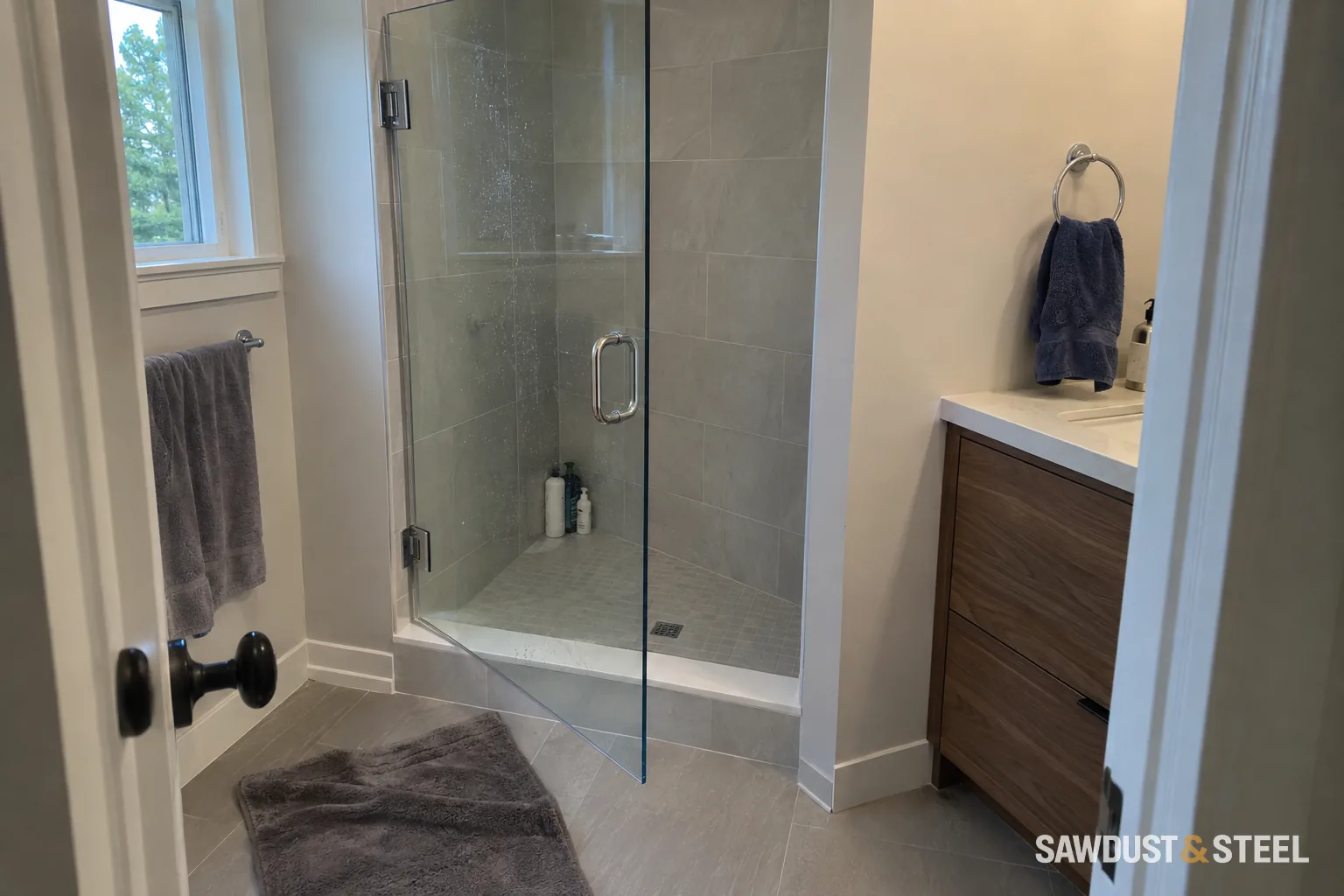
At this design meeting, Theo brings a picture of a long, beautiful niche. His shampoo bottle is practically packed. The only clear wall faces the backyard, and the existing wall is shallower than the inspiration photo suggests. Something has to give. Preferably not the insulation.
The empty-looking cavity is doing a job
A recess consumes wall depth. On an outside wall, that can displace insulation or interrupt the layers controlling air and moisture. Natural Resources Canada's wall insulation guidance explains the importance of those continuous layers. Applying that principle here means evaluating the remaining assembly, not simply squeezing foam behind the niche.
A waterproof niche product addresses shower water. It does not, by itself, establish an adequate exterior-wall design. Schluter's niche installation instructions also show that support and connection to the waterproofing are deliberate installation details.
Three alternatives worth drawing
| Option | The tradeoff |
|---|---|
| Use an interior wall | May move bottles away from the preferred sightline; check plumbing, wiring, and framing. |
| Build the wall inward | Can preserve space for the exterior assembly, but reduces shower dimensions and needs a complete design. |
| Use an approved surface shelf | Keeps the wall cavity intact, but projects into the shower and needs compatible attachment. |
Bring the actual bottles to the layout conversation. A shelf that fits a hotel-size shampoo bottle can be useless with a tall pump container. Set height for the people using the shower and avoid a location that makes someone twist or reach awkwardly.
Decide while the drawing is cheap
- Confirm which wall is exterior and what is inside it before choosing a recess.
- Have the designer resolve any framing changes; do not cut a stud to make the picture fit.
- Coordinate the niche, waterproofing, drainage of horizontal surfaces, and final tile cuts.
- Confirm any permit implications with the local building department for the actual scope.
Theo's bathroom ends up with a smaller niche on the interior wall. The oversized conditioner bottle still lives on a separate shelf. We checked the bottle with the pump raised, too; measuring it closed would have produced a shelf that stored it neatly but made it awkward to use. The niche bottom and tile cuts were then resolved with the waterproofing detail before framing. He kept the smaller niche after trying the reach from his normal shower position. The bottles were close enough, and the outside wall kept its insulation space.
Pair this decision with shower waterproofing, corner movement joints, and bathroom permit planning.