
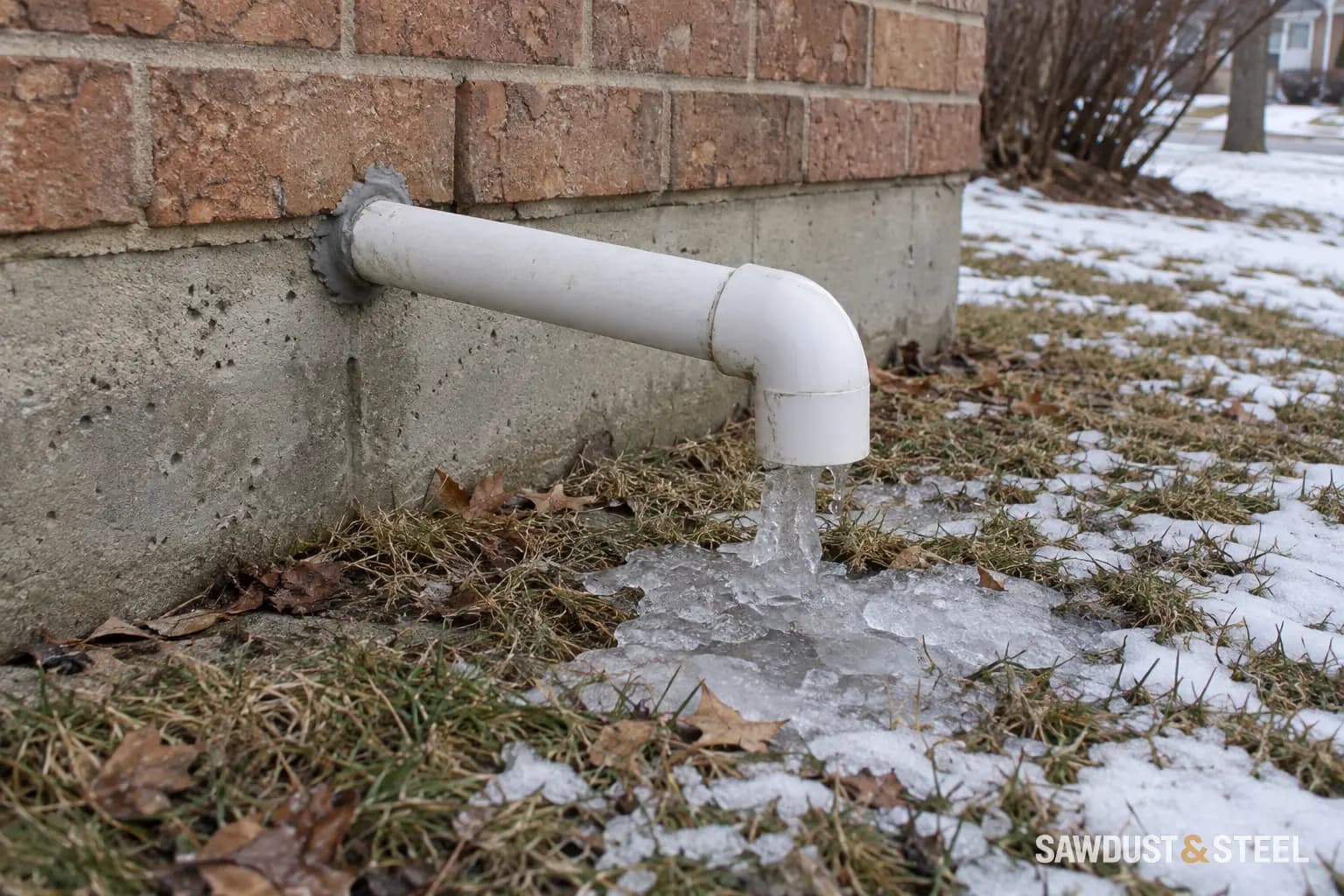
The pump runs. The basement owner feels reassured. Outside, the outlet is disappearing into a growing lump of ice. Those two observations belong in the same inspection.
Follow the water beyond the wall
Mississauga's stormwater guidance notes that winter conditions can block drainage and directs sump discharge onto the property, not City roads or ditches. Other municipalities have their own requirements. Check the local rule and the installed system together.
Ask for a winter operating plan
Have the contractor assess outdoor pipe routing, low points, outlet position, and the manufacturer's requirements. Keep the approved discharge point visible and away from snow piles. Show its location to whoever clears the driveway, and include a ground-level outlet check after heavy snowfall. Note whether water actually appears when the pump runs; a familiar motor sound can hide a new blockage. Never reach into an energized sump or enter standing water around electrical equipment to investigate. Do not pour boiling water into uncertain pipework, use a flame, or improvise electrical heating. A blocked line or rising basin needs prompt professional attention.
Find the place water can remain between cycles
Trace the visible route from safe ground before winter. Mark a flexible extension, a dip behind a planter and any place where water pools at the end. Those observations help the installer distinguish a blocked termination from a route that traps water. Do not remove or rearrange pipework casually: a winter modification still has to discharge to a suitable location without returning water to the foundation.
If the pump sounds different, runs unusually long or the basin level rises, treat that as a performance problem. Look at the outlet only if you can reach it safely without entering water or walking onto dangerous ice. No visible flow can have several causes, including a blockage, frozen line or pump problem; the sound alone cannot identify which. Arrange prompt service and protect people from the affected area while the cause is resolved.
| Observation | Useful next step |
|---|---|
| Outlet buried by new snow | Clear loose surrounding snow safely without damaging the pipe; confirm the intended opening remains unobstructed |
| Ice grows across walking route | Have the approved discharge arrangement revised; do not accept a recurring slip hazard |
| Visible hose sags and retains water | Ask installer to review drainage between cycles and manufacturer compatibility |
| Pump runs but water does not lower | Seek prompt service; do not reach into energized equipment |
| Electrical equipment or wiring in standing water | Stay out and seek appropriate emergency/electrical assistance |
Photograph the outlet in autumn and mark it for whoever clears snow. Include a check after large snowfall and thaw-refreeze weather, with a clear instruction about what requires a call. Keep the backup-pump plan separate: two pumps connected to one blocked route still face the same obstruction. If basement finishes are planned, resolve this history before choosing floor coverings.
Before the next step
- Locate the outlet before snow covers it.
- Review trapped-water and freezing risks with the installer.
- Keep the approved destination clear without creating an ice hazard.