
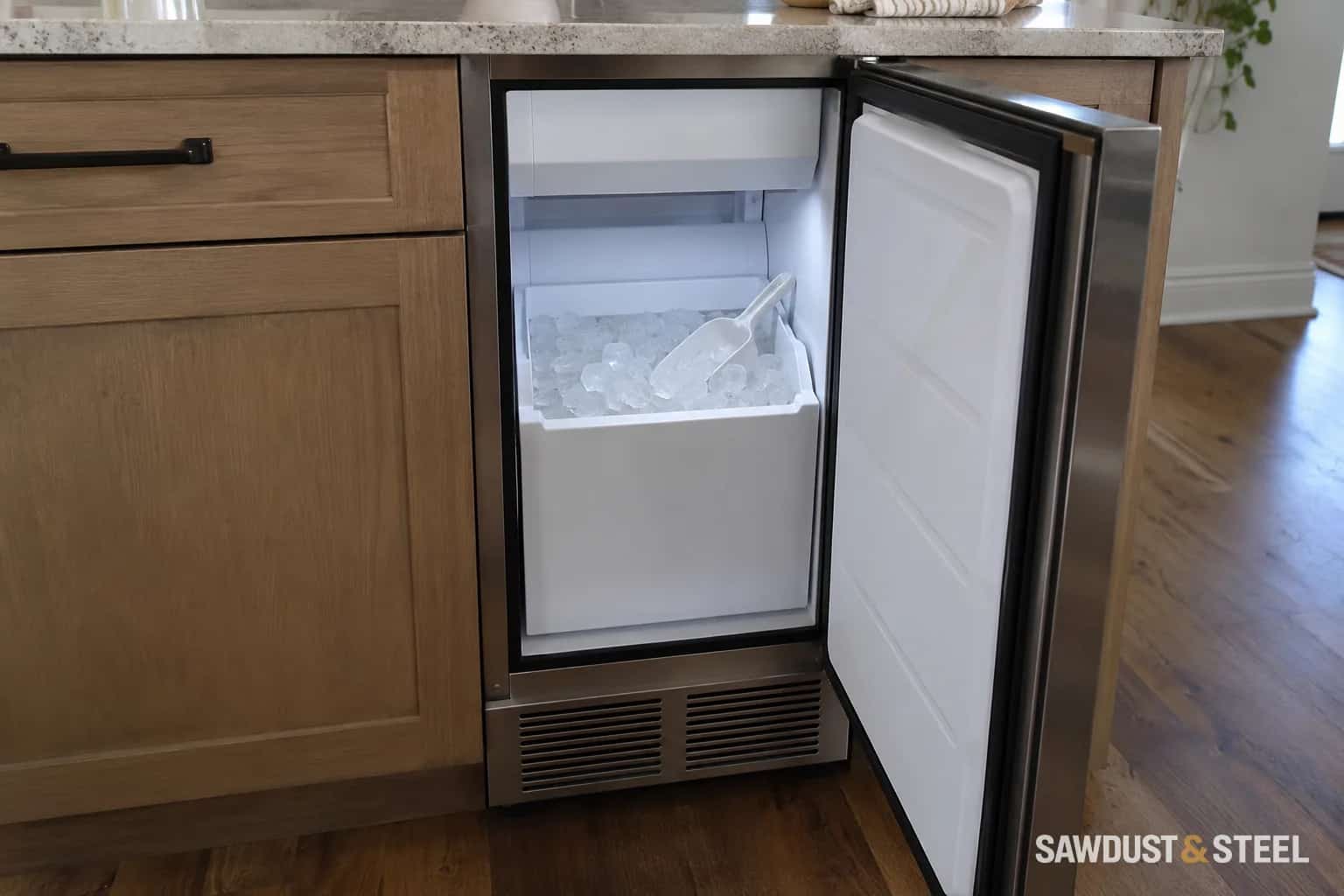
A drinks cabinet seems like an obvious place for an ice machine until someone asks where the water goes. The answer depends on which kind of machine you are buying. A refrigerator's ice maker, a draining clear-ice machine and a drainless crescent-ice unit are not interchangeable installation projects.
Start with the model, not the opening width
U-Line's explanation of its ice makers and ice machines distinguishes frozen storage in its crescent units from the cooler-style bins of its clear and nugget machines. That operating difference helps explain why the drain question belongs near the start of the purchase.
Read the installation instructions for the exact appliance, including any suffix identifying a pump version. The U-Line HCR115 crescent-ice maker, for example, is explicitly sold as requiring no drain. The Sub-Zero UC-15I family includes gravity-drain and pumped versions.
That makes the first shopping question straightforward: does this model require a drain, and is the pump included, optional or unavailable? Obtain the answer before comparing cabinet widths and door finishes. An optional accessory on a sales page should be included in the installation quotation if the location needs it.
Gravity needs a route that keeps falling
For a gravity-draining machine, compare the height of its drain outlet with the proposed receiving drain and the entire route between them. Sub-Zero identifies that relationship as central to selecting a gravity or pump model. A drain that is close horizontally can still be too high.
The route must satisfy the selected appliance's instructions and the local plumbing requirements. A dip where water can collect, a kink behind the machine or a route that rises to a sink connection defeats the idea of simple gravity drainage. Have the plumber confirm the receiving drain and backflow protection before the cabinet supplier commits the opening.
| Proposed location | Decision before ordering |
|---|---|
| Suitable drain below the machine with an approved falling route | Confirm gravity model requirements and the finished outlet/drain positions. |
| Receiving drain above the machine outlet | Check the approved pump model or kit and its routing limits. |
| No suitable drain route | Reconsider location, plumbing scope or a genuinely drainless appliance. |
| Existing machine has a drain but replacement does not match | Compare both manuals; do not reuse the connection merely because the hose fits. |
| Water supply is available but waste is unknown | Treat drain feasibility as unresolved, not a minor installation detail. |
A pump has limits, not a blank cheque
The pump must suit the machine and proposed route. Check vertical rise and horizontal run together, including the manufacturer's combined limit rather than selecting both advertised maxima independently. The KitchenAid owner's manual W11686966A reduces allowable run as rise increases. Another brand's pump may use a different rule.
Both the KitchenAid instructions and Sub-Zero guidance describe specified open receiving-drain arrangements and warn against a direct closed-pipe connection that permits drain water to back up. Those product details need to be reconciled with the installation's local requirements; a US manual is not an Ontario plumbing-code ruling.
Do not improvise a route to a sump pit, storm drain or loose bucket. Ask the plumber to identify the appropriate sanitary connection and the appliance supplier to confirm the pump selection. Allow for pump sound and service access when choosing a quiet seating area for the machine.
Keep the rest of the installation serviceable
The water shutoff should remain accessible, and the appliance must retain its specified ventilation and removal space. Account for its door swing, grille and levelling range, plus the space occupied by connections behind it. New flooring or fixed trim should not trap the machine under the counter.
If the model uses a filter, reserve its replacement space too. The same distinction between footprint and service space explained in our under-sink filter guide applies: being able to install a component does not guarantee you can later remove it.
Keep electrical and plumbing requirements with the cabinet drawings. Do not assume an available receptacle, water valve or dishwasher connection automatically suits another appliance. Have the appropriate installer verify the proposed services without turning the cabinet maker's drawing into a substitute installation manual.
Check drainage during the handover
Ask the installer to demonstrate the machine's operation, drainage and accessible shutoff, and to identify the pump if one is fitted. Keep the exact model information, manual and maintenance instructions. If water collects where it should not, stop using the machine and investigate the drainage fault before it damages the surrounding cabinetry.
A drainless unit removes one planning problem, but it still needs the manufacturer's water, power, ventilation and maintenance provisions. Choose the type of ice and machine you will actually use, with an installation the room can support.