
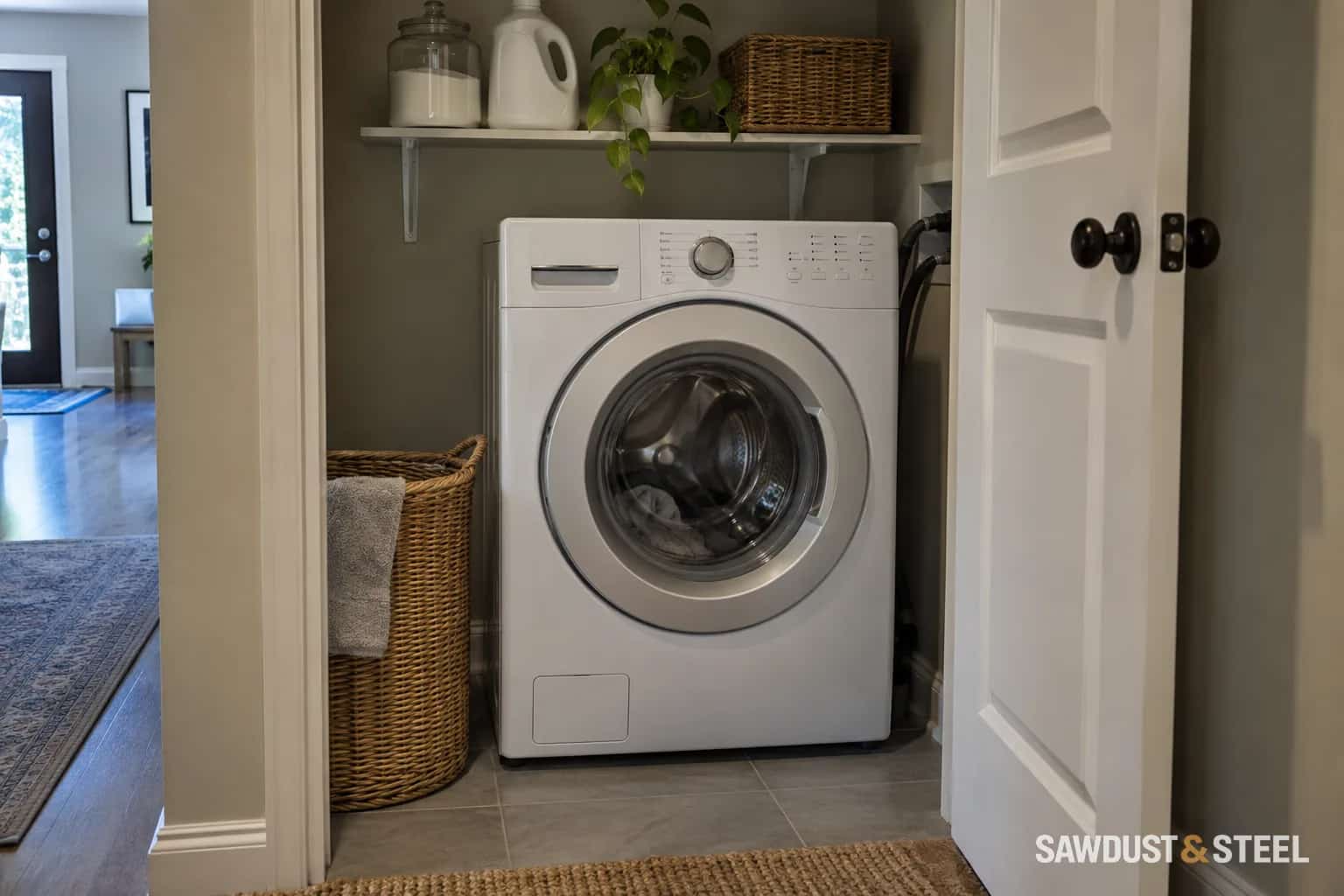
A washer should not be travelling toward the hallway. Stop the cycle if the machine is moving or striking its surroundings; do not try to hold it in place while it spins. Note whether the behaviour began at installation, after moving it or with a particular load.
Give the installer a useful history
Record the model, whether a pedestal or stack is involved and which cycle produced the problem. A short video from a safe position can show whether the cabinet rocks or the surrounding floor responds. Do not repeat a violent spin cycle just to improve the footage.
Whirlpool: front-load washer walking or vibrating identifies shipping materials, leveling, foot contact, load distribution and flexing floors as things to check. Use its diagnostic categories with your own model instructions; do not start removing unidentified bolts from the machine.
New or recently moved
Confirm transport restraints and installation steps with the installer.
Machine rocks while stopped
Have foot contact and leveling checked on the finished floor.
Floor moves during spin
Arrange assessment of the support and the appliance, not just new pads.
Pads are a later decision
An accessory cannot correct retained transport restraints or a foot that does not bear properly. Soft pads can also change the height and stability of the installation. Ask whether the appliance manufacturer approves the proposed product and whether it fits the actual diagnosis.
Check for cabinet or countertop contact as part of the installation review. A machine may transmit noise through a nearby surface even when the floor is firm. A laundry counter needs its own support and appropriate separation; it should not be used to hold the washer down.
Distinguish a load issue from a persistent fault
Follow the manual for bulky items, load size and cycle choice. Note whether the problem occurs only with a particular item or across ordinary loads. If it persists after the permitted user checks, have appliance service investigate; internal suspension and bearings are not a cabinet adjustment.
If the floor itself appears to sag, bounce or deteriorate, seek qualified assessment before altering framing. Do not build an improvised platform or wedge the machine against a wall. After correction, have the installer verify normal operation and check that hoses and any stacking connection remain correctly arranged.