
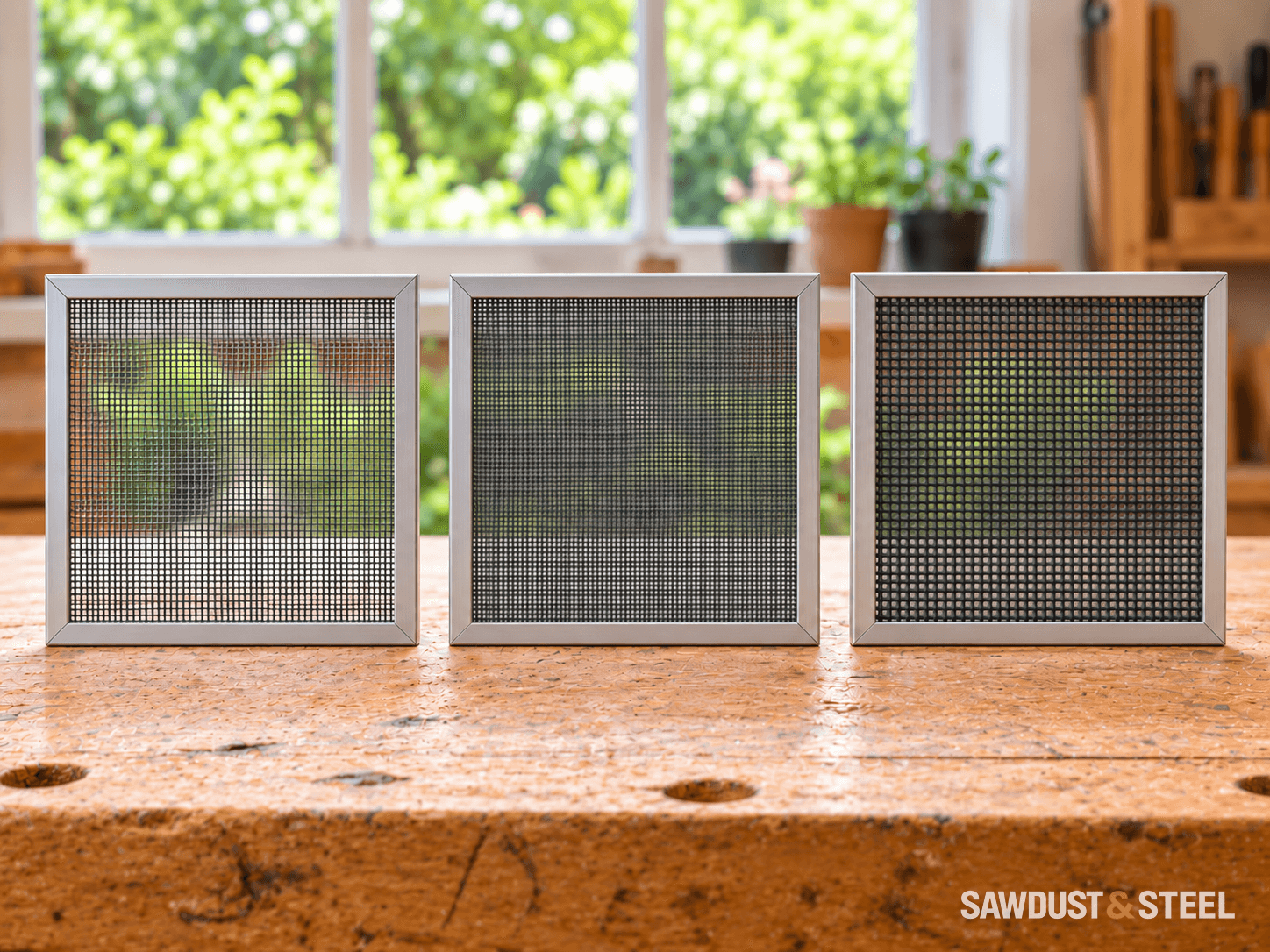
The old screen has a small tear, the summer insects have noticed, and the replacement aisle contains more kinds of black mesh than expected. Buying the strongest-looking roll is one option. A better one is to decide what the screen needs to do in that particular opening.
Choose the problem, then compare the fabric
| Main need | Useful comparison |
|---|---|
| Ordinary flying insects | A compatible general-purpose insect mesh and a well-fitting frame |
| Very small insects | The specified opening size and the insects the product is intended to exclude |
| A clearer garden view | Strand thickness, openness and a sample viewed from inside |
| Repeated pet scratches | Tear resistance plus frame and retention strength |
| Less sun or glare | A purpose-designed solar-screen specification and its effect on light and airflow |
Before changing materials, inspect the perimeter. Tiny insects can use a gap beside the frame regardless of how fine the mesh is. Bent rails, missing clips and a poor fit deserve attention through the replacement-screen measuring guide. A finer fabric cannot repair the opening around it.
Mesh count is only part of the picture
Phifer's screen terminology guide separates mesh count, aperture, strand diameter and openness. Mesh count describes the weave in each direction. The actual opening also depends on strand thickness, so a bigger count alone does not tell the whole story.
Openness describes the proportion of open space in the fabric. Phifer explains that more open products generally offer more airflow, light and visibility, while a denser screen changes that balance. Ask for the specifications of the actual choices rather than comparing labels such as premium and extra strong. They describe a sales range, not a common test scale.
For small insects, Phifer's No-See-Um mesh is an example of a closely woven product intended to exclude most smaller flying insects. That is not a promise to stop every insect or airborne particle. Identify the nuisance and ask the supplier whether the selected mesh is designed for it.
Pet resistance does not turn a screen into a guard
Phifer describes PetScreen in terms of resistance to tears and punctures from pet wear. That can be useful when claws repeatedly damage ordinary mesh. The whole screen still depends on its frame, corners, clips and retention; a stronger fabric can remain attached to a weak or loose frame.
Do not rely on insect screening to prevent a child or animal from falling through an open window, or to contain a pet that pushes against it. Use an appropriate separate safety arrangement for the situation. Also keep required window operation and emergency access in mind when considering any guard or added hardware.
Check the frame groove and spline together
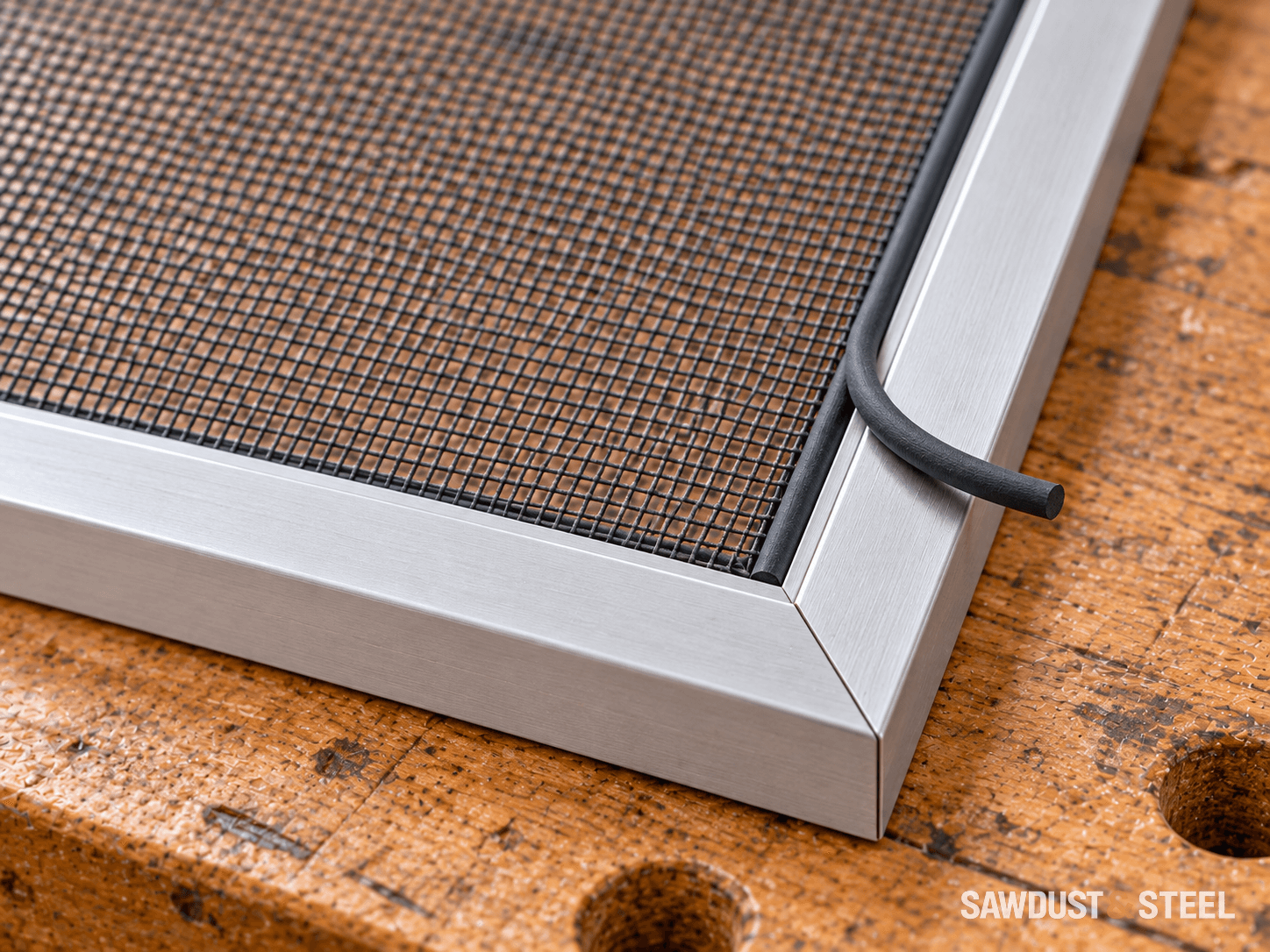
The spline is the cord that holds mesh in a compatible frame groove. Phifer's spline guide explains that frame design and screen thickness affect the choice. A thicker replacement mesh can require a different spline; forcing the old combination into the channel can distort the frame or damage the fabric.
Bring the frame profile and an existing spline sample to the supplier, or use the window maker's specified replacement system. Ask whether the proposed material suits the frame and any retractable mechanism. A roll intended for a fixed porch panel may not be an approved substitution in a compact roller housing.
Try one opening in ordinary daylight
View samples from the normal seated and standing positions, with the actual garden or street behind them. Look both straight through and at an angle. Check how the choice changes the room's brightness and view, and compare published airflow information where ventilation is a priority. A phone photograph of two swatches can exaggerate moire and hide the difference you see in person.
After fitting, inspect the perimeter, corners and retention, then operate the window or door normally. The mesh should be secure without bowing the rails. For a rolling patio screen, also use the track and roller guide. Keep the material and spline details with the frame measurements so the next small tear does not restart the entire research project.