
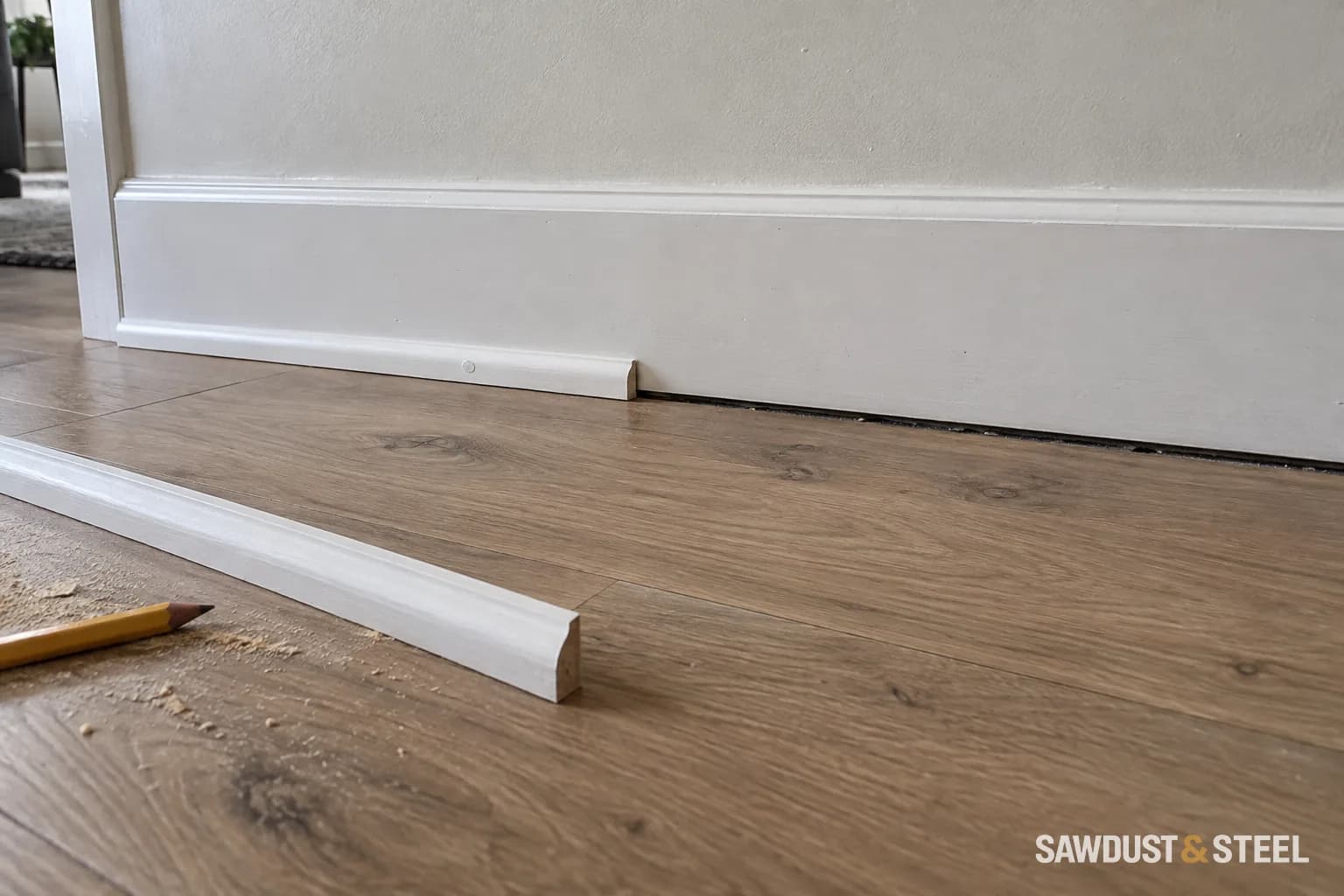
In this hallway, Daniel takes a photo of a baseboard corner every February. Every July, the gap is smaller. He has tried filler twice. The filler has now joined the annual tradition by cracking in exactly the same place.
Name the gap before fixing it
| Where it opens | First question |
|---|---|
| At a mitre or butt joint | Is material movement or poor joint preparation involved? |
| Along the top against the wall | Is the trim secure, and is the wall straight? |
| Under the baseboard | Is this floor unevenness, an intended clearance, or movement in the floor? |
| Beside widening wall cracks or sticking doors | Does the pattern need a broader building assessment? |
WoodWorks' wood-shrinkage explanation describes moisture-related dimensional change in wood. Applying that principle to interior trim helps explain seasonal patterns, but it does not diagnose a particular hallway. Material choice, acclimation, fastening, and the surrounding assembly also matter.
Keep a useful record
Photograph the same joint with a ruler, note the date, and record indoor humidity if you have a reliable meter. Look for a repeated seasonal pattern rather than reacting to one cold morning. Check for dampness or local air leakage where appropriate. Do not crank up a humidifier simply to close a trim joint; the house's condensation behaviour matters too.
- Confirm whether the trim is wood, MDF, or another material before choosing a repair.
- Have loose fastening or a poor fit corrected before adding cosmetic filler.
- Use a compatible flexible product only where the joint detail calls for it.
- Keep floating-floor expansion clearances free to perform their intended job.
When a small gap deserves a bigger look
Rapid change, growing cracks, uneven floors, or newly sticking doors should not be dismissed as seasonal trim behaviour. The structural warning-sign guide helps identify patterns that need assessment. A little winter opening by itself is a different starting point from several things moving together.
At Daniel's corner, the short return also moved when pressed. We refitted and secured it before finishing the joint; another layer of filler would have hidden that loose fit for about a week. The repair leaves a less noticeable seasonal line rather than a promise of no movement. He keeps the February photo, but stops making repainting the hallway an annual event.
If the gap stays wide all summer, the next question is fit: scribing in older houses shows how we shape trim to an uneven surface. Replacing the piece instead? Compare trim materials, then settle the paint and caulk timing before finishing it.