
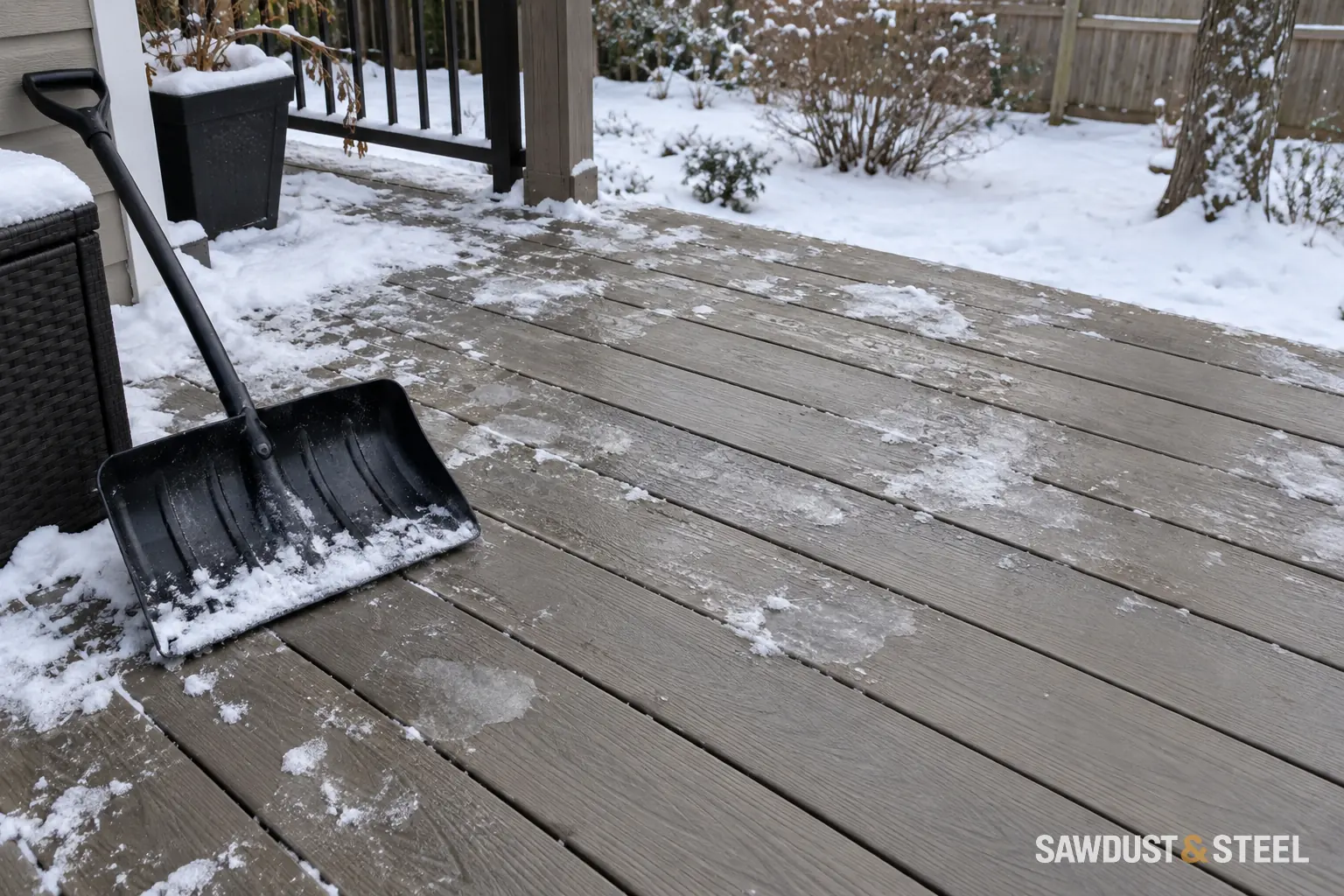
The deck is low maintenance in July. February adds a qualification in small, slippery print.
Identify the surface before choosing the tool
Find the decking product and its care instructions. Composite is a category, not one material with one approved cleaning method.
Trex's care page permits plastic shovels and identifies ice-melting options for its products. That does not establish compatibility for another brand, nearby metalwork, or a particular finish. Check those instructions together rather than following the biggest lettering on the salt bag.
Clear a route you can actually use
Prioritize the door, handrail approach, stair, and landing. Avoid chopping at bonded ice or scraping the surface with an improvised metal edge. If the route cannot be used safely, use another entrance until it can be addressed.
Do not pile cleared snow against the house opening or where meltwater will return to the same steps. Think about tomorrow afternoon's thaw as well as this morning's shovel.
Keep a short winter record
- Where does ice appear first?
- Does it follow roof melt, sunshine, or ordinary rainfall?
- Is a downspout, gutter overflow, or low landing feeding the area?
- Are the boards and stair components otherwise sound?
Address recurring ice as a water question as well as a cleaning task. Keep photos for the contractor when the ground is visible again. Winter has a useful habit of showing exactly where the drainage plan was optimistic.
Where a downspout feeds the icy patch, review discharge routes around walkways before accepting repeated salting as the solution.
A plastic tool and a product-specific ice-melt example
For the products covered by Trex's care instructions, a plastic shovel is permitted and calcium chloride or rock salt are listed for melting ice. Its early-generation guidance says to rinse residue when practical and never use a metal snow shovel. Check your exact range, the ice-melt label and adjacent materials; a permission for the deck surface does not establish compatibility with every railing, fastener, plant or pet exposure.
| Tool or action | Practical distinction |
|---|---|
| Plastic shovel with a sound plastic edge | Use within the decking maker's instructions; check it for embedded grit. |
| Plastic blade with a metal wear strip | The contacting edge is still metal; do not judge by the blade colour. |
| Metal scraper or chopping action | Can gouge the walking surface; do not use force to lift bonded ice. |
| Approved ice melt | Use the labelled amount and care sequence, then address residue when conditions allow. |
Inspect the shovel at the start of the season. A screw, stone or damaged edge caught in plastic can draw a line along every board. Move loose snow before it is repeatedly walked into a hard layer where possible. Keep the blade controlled around board ends, hidden fasteners and stair nosings; forcing it through a raised edge can damage both the edge and the tool.
Do not create tomorrow's ice while clearing today's
Leave the rail approach and the full walking route usable, not a narrow slot between heaps. Watch where a sunny roof or dark wall releases meltwater in the afternoon.
When weather permits cleanup without creating another freeze, remove residue using the deck maker's method. Do not hose a landing just before temperatures fall. Photograph any new roughness or scratches dry, then use composite surface-damage assessment rather than sanding them. If a rail or tread is loose, that needs the deck safety check as well as snow removal. The usable outcome is a sound route with manageable drainage, not merely an ice-free square beside the door. Once the deck is safely accessible and thawed, clear packed leaves from the board gaps without damaging the edges or a drainage layer below.