
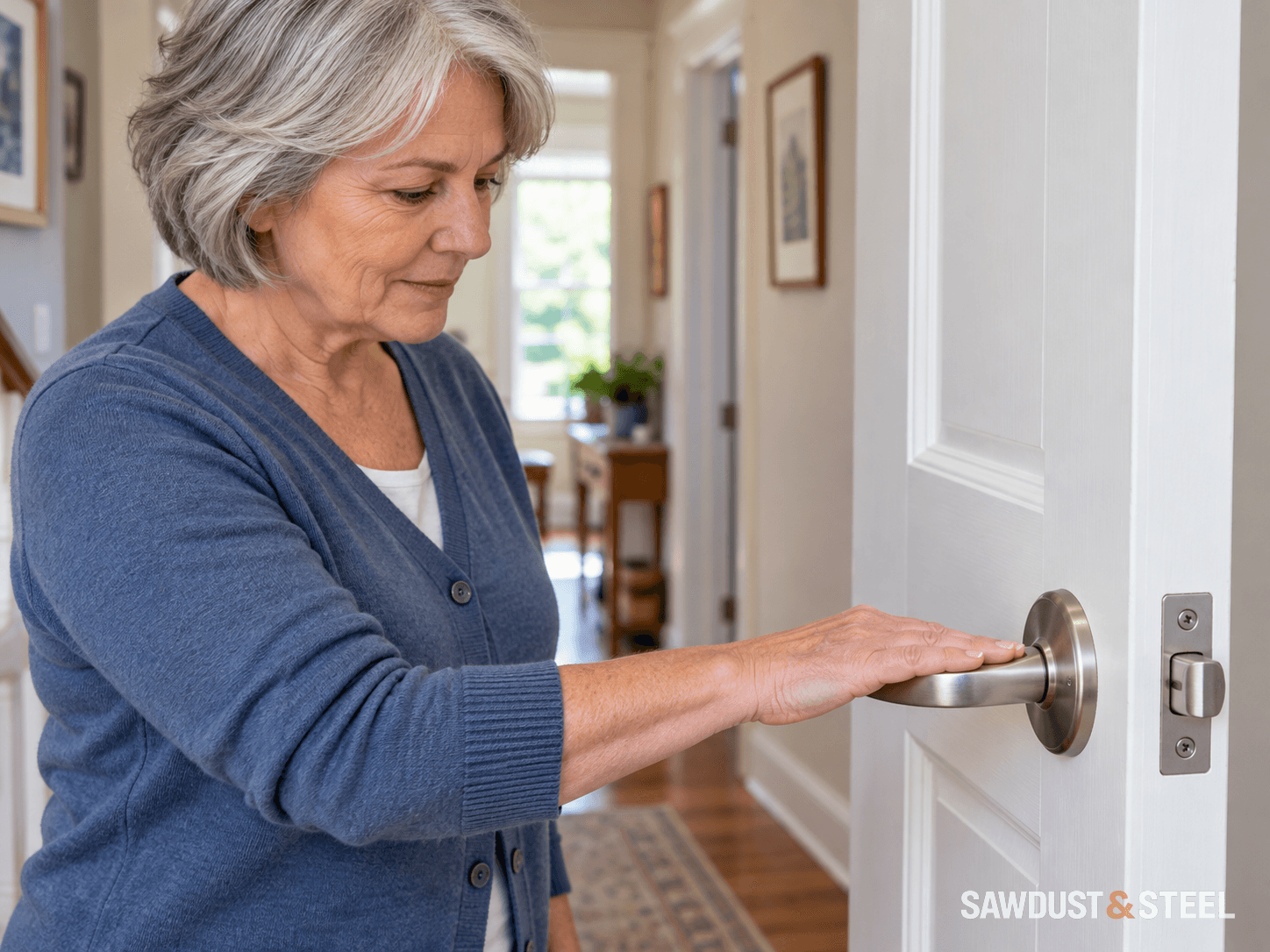
A round knob can be an awkward thing to turn with a sore hand, a light grip or an armful of laundry. A lever may be a useful improvement. It deserves a trial on the actual door before twelve matching boxes arrive and you discover that the small privacy button is still impossible to use.
Choose the movement the person can use comfortably
CMHC's home-accessibility guidance identifies knob grippers and lever handles as options that reduce the need for a tight grip or twist. The practical next step is to try them with the person who uses the door, rather than deciding from a finish sample.
Compare the force, range of movement and space behind the handle. Can the person operate it with the hand and approach they normally use? Does the free end catch clothing or a bag? Does the shape remain comfortable through the whole movement? A smooth-looking cylinder and a broad curved lever can feel quite different.
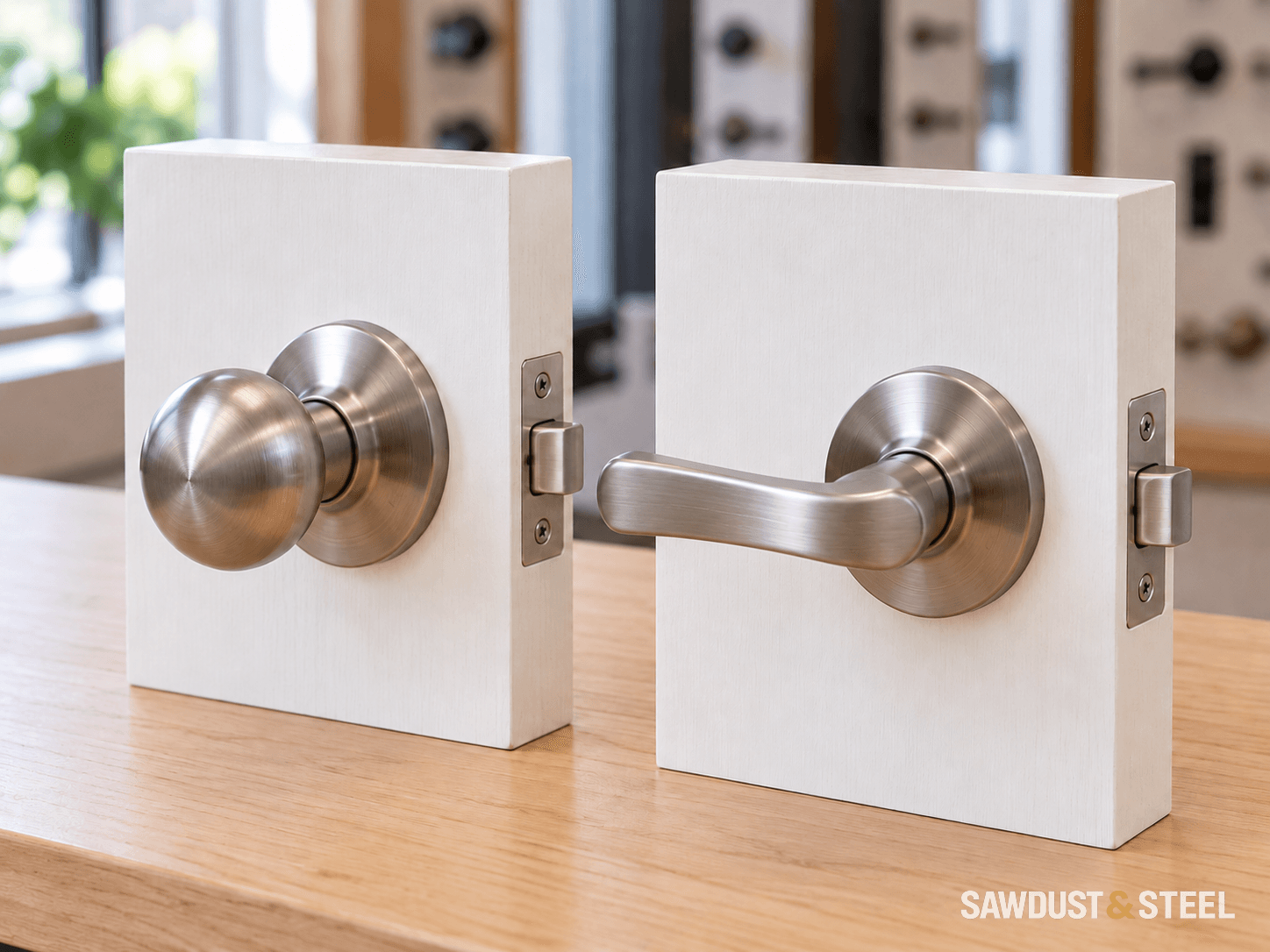
A showroom sample helps compare grip, but it cannot reproduce the weight, closer or alignment of your door. Choose one suitable opening for a trial before committing to the whole house. If needs are complex, an occupational therapist or accessibility specialist can help evaluate the complete task and the person's preferred approach.
Separate latch effort from door effort
First operate the handle with the door open. Then compare normal opening and closing. If the handle is easy to turn in free space but difficult when latched, the latch may be loaded against the strike. A swollen edge, poor hinge alignment or an unsuitable seal can also make the door hard to move after the latch retracts.
Use the door-latch alignment guide to separate those problems. A longer handle should not become a tool for lifting a sagging slab. Likewise, do not remove a required closer or defeat a latch to make an opening feel lighter. Rated doors and shared-building entrances need their approved hardware and adjustment route.
Reach
Approach the handle from the position normally used, with room for the hand and any mobility aid.
Release
Operate the latch and any privacy control without an uncomfortable grip or twist.
Move
Push or pull the door through its useful opening without binding or excessive effort.
Pass and close
Move through, reach the other handle and close the door comfortably.
Give the lock controls the same attention
Passage, privacy and keyed functions solve different needs. Try the inside button or turn piece as carefully as the main lever. Check how it unlocks and whether the action can be understood and repeated comfortably. A large lever with a tiny, stiff turn piece may only solve half the problem.
For a bathroom or bedroom privacy set, confirm the outside emergency-release method and keep its tool accessible outside the room. The privacy-lock guide covers that check. Do not assume every lever releases a lock in the same way or that every privacy function has the same outside access.
Measure the old preparation before ordering
Record door thickness, face-bore diameter, backset and the latch-edge preparation. Check the strike and the material beneath the existing rose. A new trim plate may expose an old paint outline, but the more important issue is whether the new body and fasteners fit sound material.
Confirm handing and whether the model can be reversed. Schlage's handing guide explains its left/right identification and points to model-specific reversing instructions. Do not assume another supplier uses the same viewing convention, or that rotating a decorative handle is the correct reversal procedure.
Check projection and nearby obstacles too. A lever may reach farther across the face or toward a wall than the old knob. Open the door slowly through its full useful travel and review the door-stop position. A return toward the door can be worth trying where clothing catches, but fit and comfort still need the real sample.
Make the first installation the acceptance test
Install the complete compatible set according to its instructions. With the door open, confirm that both handles return and the latch retracts freely. Then test normal use from both sides, including the privacy release where fitted. If tightening the mounts makes the mechanism stiff, correct the installation rather than accepting stiffness as the price of a secure handle.
Have the intended user try it in ordinary use before ordering the remaining sets. Keep a note of the exact model, function and handing that worked. A successful change should make the door easier to use repeatedly, including when the person is tired, not merely look consistent along the hallway.