
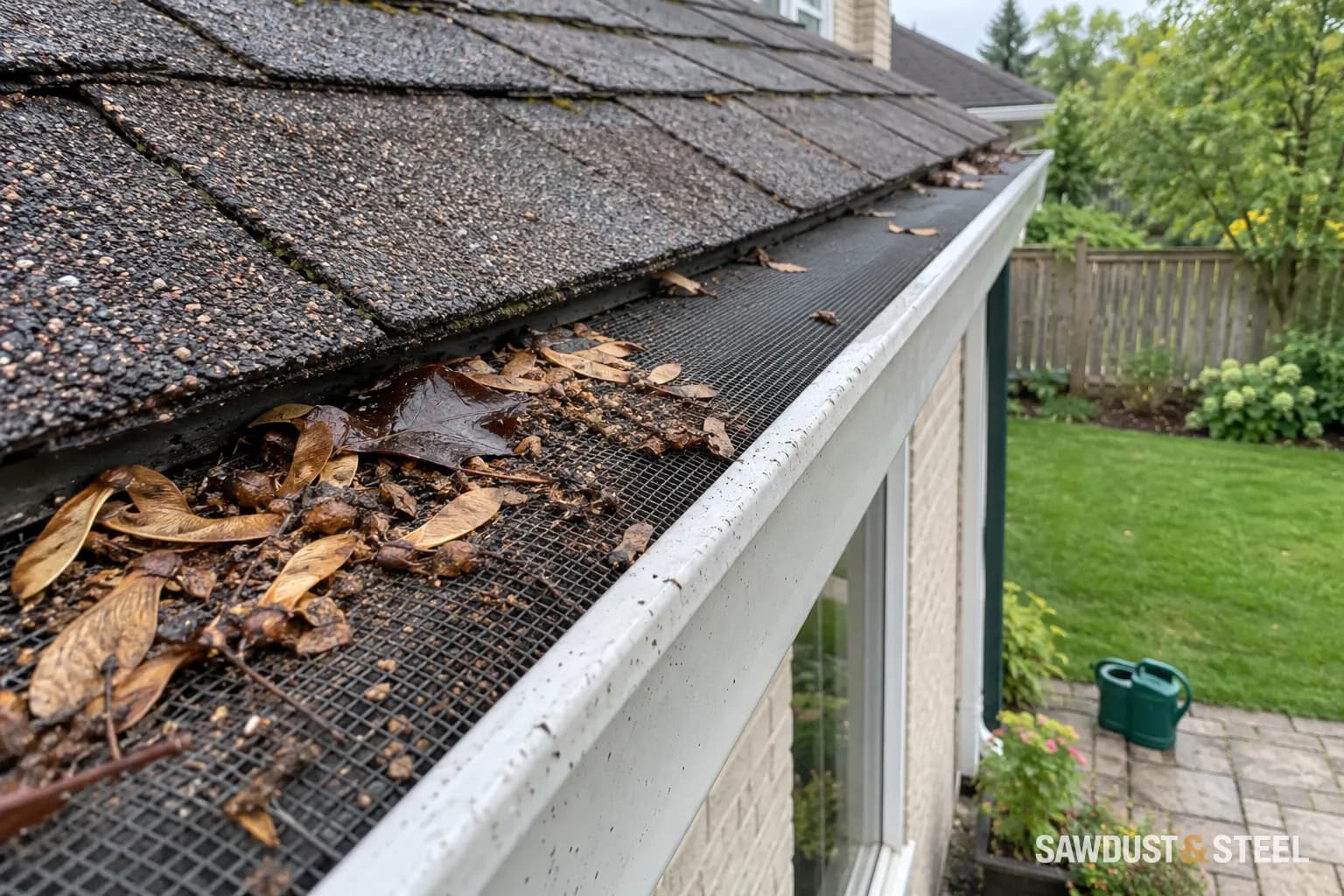
You've cleared the gutters, put the ladder away, and the neighbour's maple still has half its leaves. Fall timing is a small negotiation with the trees. Plan the main cleaning after most nearby leaves fall and before repeated freezing, then allow for a final check. The payoff is water reaching the ground outlet and draining away from the house, not simply an empty-looking trough.
The short timing answer
The City of Mississauga tells homeowners to keep eavestroughs, downspouts, window wells, and drains clear of leaves and debris, especially in spring and autumn. Toronto recommends cleaning eavestroughs at least twice a year and checking elbows and outlets for clogs. For most GTA homes, that means one spring service and one late-fall service, plus an extra look after a major windstorm or heavy final leaf drop.
Finding grit after a roof replacement? Read what new-shingle granules in gutters can mean before assuming the debris alone proves the roof is failing.
Do not stop at the gutter
- Clear leaves, shingle grit, nests, and debris from the trough and outlet.
- Run water through each downspout and watch the elbows. Check for water leaving at the bottom; a hidden elbow may be blocked.
- Look for standing water, loose fasteners, separated joints, rust staining, and sections pulling away from the fascia.
- Make sure extensions discharge safely away from the foundation without sending water across a walkway, driveway, or neighbouring property.
- Disconnect and store rain barrels before freezing, then reconnect the downspout to a safe winter outlet.
Health Canada's moisture and mould guide also recommends keeping eavestroughs and downspouts clear and directing outflow away from the building. On one fall cleanout, the trough was empty and the top of the outlet looked clear, but water only dribbled from the bottom. A packed plug of wet maple leaves sat inside the lower elbow. Clearing that and repeating the flow check finished the job. Scooping the visible leaves would have left the owner with a very tidy overflow problem.
Gutter guards reduce debris, not every maintenance visit
Look at what the trees actually drop. Broad leaves, fine seeds and needles can behave differently on a guard. Ask the supplier how surface deposits are removed and how the trough and outlet beneath are inspected. A system that sheds autumn leaves may still collect material at a valley or behind an edge.
Get the maintenance method in writing, including whether sections must be lifted and who reinstalls them. Ask what the warranty expects and whether a cleaning service is familiar with that product. Do not let someone force a guard loose simply because its attachment is hidden.
After service, ask for photos of the cleared outlet and correctly reinstated guard. An open or bent section can change water entry and debris collection. Keep the guard identity in the house records, rather than leaving the next cleaner to guess what holds it in place.
Watch the system in ordinary rain
Start at the valley
Observe concentrated runoff and any overshooting at the guard.
Follow the gutter
Look for spill points or water escaping behind the trough.
Check each downspout
Observe joints and whether water reaches the lower outlet.
Finish at the receiving ground
Note ponding, path wetting and flow toward the foundation.
Observe from a safe ground position in ordinary weather; this route does not require climbing or opening the system.
What the water test can reveal
Overflow behind the gutter, dark fascia, peeling paint, soft wood, a dripping end cap, or water collecting beside the foundation deserves repair before freeze-thaw weather. Granules in an older roof's gutters can also be an early wear signal. Our Ontario roof warning-sign guide separates normal debris from the signs that need a roof inspection.
The five-minute winter check
Before the first lasting snow, walk the house from the ground during rain. Confirm every outlet runs, extensions stay attached, and water moves away from the foundation. If a clean trough still spills, use the clean-gutter overflow diagnosis instead of cleaning it again. If a downspout feeds a rain barrel, arrange the winter bypass and overflow route before freezing weather. During winter thaws, check that outlets are not buried or frozen. If ice repeatedly builds at the eaves, move on to the Ontario ice-dam guide. The durable answer may be in the attic, not the gutter.