
About a third of the calls we take in Oakville, Burlington, and Mississauga are second-opinion calls. A homeowner has already signed with somebody, paid a deposit, watched the job go sideways, and is calling us in to either finish it or rip it out and start over. Every single one of those stories starts with a warning sign the homeowner saw on day one and talked themselves into ignoring.
The red flags aren't subtle. They're almost always obvious in the first meeting — the way a contractor answers (or dodges) a direct question about WSIB coverage, the way a quote is written (or scrawled on a business card), the deposit they ask for. This post is the field guide I wish every homeowner in the GTA had before they let the first contractor into the kitchen. Seven red flags that mean walk away. Five questions every homeowner should ask. And the Ontario Consumer Protection Act deposit rules that a surprising number of contractors have never heard of.
Red flag 1: they won't itemize the quote
The single biggest tell in the whole hiring process is whether the quote comes back itemized or as a single round number. A contractor who writes you "Kitchen renovation — $58,000" on a one-page quote and won't break it down is either hiding a margin you can't see, hiding a scope they don't actually know how to price, or planning to change the scope mid-job and claim it was "included."
Every honest contractor in the GTA can line-item a job. It's not a trade secret. It's just how quotes get written. Our own cost breakdowns are public — we wrote what a custom deck actually costs in the GTA, what a full GTA kitchen renovation costs in 2026, and what a GTA bathroom renovation actually costs in 2026 precisely because we show our math. If a contractor can't show you theirs, there's a reason.
What an itemized quote looks like: materials broken out by line (lumber, drywall, tile, hardware, fasteners), labor broken out by phase (demo, framing, rough-ins, finish), subtrades listed separately (plumber, electrician, HVAC), permit fees as their own line, and a contingency allowance called out in black and white. If the quote doesn't have at least those six categories, ask for them. The answer you get — or don't get — tells you everything.
Red flag 2: no written contract
If the quote is also the contract — a single page with a number and a signature line — walk away. A proper contract in Ontario covers scope of work, start and completion dates, payment schedule, change-order procedure, warranty terms, insurance and WSIB numbers, and cancellation rights. It doesn't need to be twelve pages of legalese but it needs to exist as a document that both parties sign.
The reason this matters: Ontario's Consumer Protection Act (CPA) gives you a 10-day cooling-off period on any home renovation contract over $50 signed in your home. That right only exists in writing. If there's no contract, there's no cooling-off window, no documented scope, and no paper trail when the job goes sideways. We've seen clients lose five-figure deposits because the only paperwork was a text message and a venmo request.
Red flag 3: cash-only
A discount for cash is one thing — some shops will knock two or three points off to avoid credit-card processing fees, and that's normal. Cash-only, on the other hand, is a hard stop. A contractor who refuses e-transfer, cheque, credit card, and bank draft is telling you one of three things: they don't have a business bank account, they're not reporting the income, or they don't have the corporate structure to take a proper payment.
Any of the three is a problem, but the income-reporting one is the one that costs you the most. A contractor who isn't reporting income isn't carrying commercial liability insurance, isn't paying into WSIB, and cannot be found by a Small Claims Court judgment because there's no registered business to sue. If they disappear mid-job with your deposit, you don't have a contractor problem — you have a private individual problem, and private individuals with no assets are functionally judgment-proof.
Every legitimate carpentry shop in the GTA takes e-transfer, cheque, and usually credit card for the deposit. Our own rule: the deposit goes through a channel that leaves a paper trail, every time. No exceptions, not even for a $500 repair.
Red flag 4: pressure for a large deposit
This is the red flag with the highest financial exposure, so it gets the most math. In Ontario, there is no statutory cap on how much a contractor can ask for as a deposit on a renovation contract — it's whatever the two parties agree to. But there is a market standard, and there is a math of how much money you should have at risk at any given moment.
The market standard in GTA residential carpentry is 10 to 20 percent at signing, with the balance paid in draws tied to milestones — framing complete, rough-ins passed, drywall hung, cabinets in, final walkthrough. A deposit of 25 percent is the outer edge of what we'd consider normal and only on jobs with long-lead-time materials where the contractor is writing cheques to the cabinet shop before demo day. Anything over 30 percent is a red flag, full stop. A contractor who asks for 50 percent upfront is asking you to fund their business — not your renovation.
- Small job ($5k–$15k): 15% deposit is normal, 25% is the high end.
- Mid job ($15k–$50k): 15% deposit is normal, draw schedule of 3 to 4 milestones.
- Large job ($50k–$150k): 10% deposit is normal, draws every 2 weeks or at each inspection milestone.
- Long-lead custom cabinets or stone: up to 25% deposit is defensible if the contractor shows you the supplier's invoice for the material order.
- Over 30% deposit: walk away unless there's an invoice chain that proves exactly where the money is going.
The other thing to know: never pay in advance of work completed. Every draw should lag behind the work, not lead it. If the plumber's rough-in is done and inspected, pay the plumbing draw. If the cabinets are installed, pay the cabinet draw. You should never be in a position where the contractor has been paid for work they haven't done yet, because that's the exact position where a contractor disappears.
Red flag 5: no WSIB proof
WSIB is the Workplace Safety and Insurance Board — Ontario's workers' compensation system. Every construction contractor who employs workers in Ontario is required by law to register and carry coverage, and every legitimate contractor will have a Clearance Certificate number they can send you in under five minutes. It's a document you can verify directly on the WSIB website by entering the account number.
Why this matters to you, the homeowner: if an uninsured worker is injured on your property, you can be held personally liable for their medical costs and lost wages. Your home insurance will not cover it. Your liability policy will not cover it. It is one of the few ways a renovation can end with a homeowner facing six-figure exposure — and it's entirely preventable by asking for the clearance certificate before the contractor picks up a hammer.
Ask the question directly. "Can you send me your WSIB clearance certificate before we start?" A legitimate contractor will email it the same day. A contractor who says "I'm a sole proprietor, I don't need WSIB" is technically correct under the letter of the law — but then they also have no workers' compensation if they get injured on your property, which exposes you in a different way. In that case, ask for their personal liability insurance certificate instead. If they have neither, walk away.

Red flag 6: no references they'll let you actually call
Every contractor will tell you they have happy clients. That's not what you're asking for. You're asking for three references with phone numbers for jobs completed in the last twelve months, and the right to call all three without the contractor on the line. The distinction matters. A contractor who has to pre-brief a reference before you call is a contractor whose reference is curated, not honest.
When you do call, the questions are short. Did the job finish on time? Was the final price within 10% of the original quote? Were there change orders, and were they priced fairly? Would you hire this crew again for a different scope? Is there anything you wish you'd asked the contractor before you signed? That last one is the gold one — the answers are almost always specific and almost always useful.
A contractor who can only provide references more than two years old is a contractor whose recent work isn't something they want you to see. A contractor who can provide no references at all is a contractor you haven't actually heard of for a reason.
Red flag 7: vague timelines
The honest answer to "how long will this take?" is never a single number. On a kitchen, it's 14 to 24 weeks depending on scope, and the spread is explainable line by line. On a second-storey addition, it's six to nine months including winter weather and inspection delays. On a deck, it's 5 to 8 working days on site plus 2 to 4 weeks of permit turnaround. Any contractor who can't explain the range — or who promises a hard date on day one without ever mentioning permit lead times, cabinet lead times, or inspection scheduling — is a contractor who has never actually hit a schedule.
The tell isn't the number itself. It's whether the contractor can narrate the weeks back to you. "Week one is demo and dust containment. Weeks two and three are rough-ins, inspector comes Friday of week three. Weeks four and five are drywall and paint. Week six is cabinets. Week seven is the counter gap. Week eight is trim and punch list." A contractor who can walk that rhythm has done it fifty times. A contractor who says "about six weeks, maybe seven" and offers no detail has either done it twice or is guessing.
Our own timeline write-ups are public precisely because the schedule is the job as much as the construction is. If your contractor can't produce a week-by-week plan in writing, that's a seventh red flag — and it's the one most homeowners ignore because it feels rude to ask.
Five questions every GTA homeowner should ask on the first call
After the red-flag list, these are the five questions we recommend every homeowner ask on the first phone call — before the in-person consultation, before the deposit, before anything. If the answers come back clean, book the visit. If any of them come back vague, you've saved yourself a trip.
- "Can you send me your WSIB clearance certificate and your commercial liability insurance COI by email today?" — legitimate answer is "yes, what's your email?" followed by a document within a few hours.
- "Who pulls the permit on this job, and how do you handle inspection scheduling?" — legitimate answer is "we pull it, we handle it, you don't deal with the city."
- "What's your deposit, and what does your draw schedule look like after that?" — legitimate answer is a percentage under 25 and a milestone-based draw schedule described in detail.
- "Can I have three reference numbers for jobs completed in the last year that I can call without you on the line?" — legitimate answer is three names, three cities, three phone numbers, no hesitation.
- "What does your written warranty cover, and for how long?" — legitimate answer is a specific document, a specific list, and specific durations for structural vs finish work.
That last one is worth its own emphasis. Warranty policy is one of the clearest separators between serious and unserious shops in the GTA. A good shop publishes it. Our own warranty terms are on the website for anybody to read before they ever call us — 10 years on structural work, 5 years on finish work, with the exclusions and claim process written out in plain language. A contractor who doesn't publish warranty terms — or who promises "lifetime warranty" without a written document — is a contractor whose warranty is worth whatever you can get in Small Claims Court.
The reasonable deposit math in Ontario
Let's do the actual math on a deposit because it's where most homeowners get taken. A $80,000 kitchen renovation has a legitimate deposit in the $8,000 to $12,000 range (10-15%), with the balance flowing in four or five draws of $13,000 to $18,000 each as milestones are hit. A $180,000 second-storey addition has a legitimate deposit in the $18,000 to $27,000 range (10-15%), with draws roughly every two weeks or at each inspection milestone. Cost ranges for both of those scopes come from our second-storey cost breakdown and the kitchen cost post linked earlier.
Where the deposit ceiling legitimately moves up is long-lead custom material. If the contractor is ordering $22,000 of full-custom cabinets from a shop that requires a 50% deposit with the order, a 25-30% deposit on the overall contract can be justified — but only if the contractor shows you the supplier's purchase order. The money should be traceable. If they can't show you exactly where it's going, the answer is no.
The CPA doesn't cap the deposit, but it does give you a 10-day cancellation window after signing. Use it. Read the contract twice. Call the references. Verify the WSIB number on the government website. If any of those checks come back wrong, exercise the cancellation in writing inside the ten days and the deposit is refundable by statute. This is the single most powerful consumer-protection tool Ontario homeowners have, and almost nobody uses it because almost nobody knows it exists.

What a good first meeting actually looks like
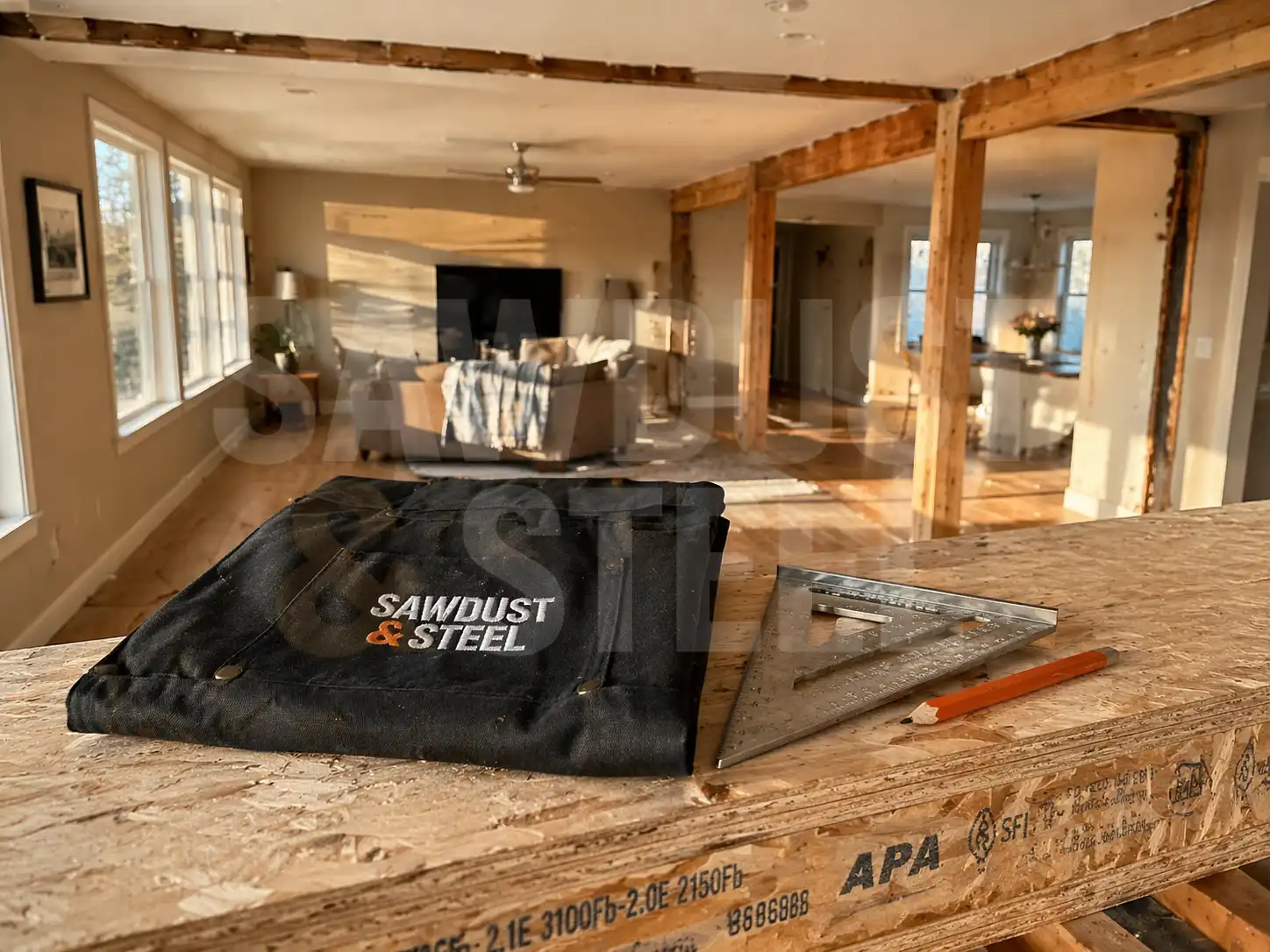
A good first meeting is 45 to 75 minutes. The contractor shows up on time, walks the space with a tape measure and a notebook, asks more questions than they answer, and doesn't quote a number at the meeting. They leave with photos and measurements, and they come back inside five business days with a written, itemized quote and a draft contract. They hand you their WSIB number before you ask.
A bad first meeting is 20 minutes. The contractor eyeballs the room, names a number off the top of their head, asks for a deposit on the spot, and dodges questions about insurance and warranty. You can tell which meeting you're in inside the first ten minutes. Trust that signal. The best renovations we've ever done started with a first meeting where the homeowner asked hard questions and we answered them on the spot — and the worst renovation stories we've ever inherited started with a first meeting the homeowner knew was off but went through with anyway.
If you're in the research phase and you're sizing up carpenters across the GTA — for trim, built-ins, structural work, a deck, a kitchen, a bathroom — our finish carpentry and trim service page is a fair place to start. But more importantly, ask every contractor you interview the same five questions. The ones who answer cleanly earn the second meeting. The ones who don't have told you everything you need to know.
“I wish I'd asked the first guy about WSIB on the phone. He spent two hours at my kitchen table, I wrote him a $14,000 deposit on the spot, and he was gone six weeks later. Marcus walked in on the second consult, handed me his clearance certificate before I even asked, and itemized the job down to the fastener count. That was the difference.”
The whole red-flag list comes down to one idea: a legitimate contractor in the GTA expects you to ask these questions and has the documents ready. The reason an honest shop doesn't mind the questions is that the questions are the whole point — they're the filter that keeps the good shops in business and the bad shops on the margins. Ask them. Call the references. Verify the WSIB number. Read the warranty. Use your ten-day cancellation window if anything feels off. That's how you hire a carpenter in the GTA without becoming the next second-opinion phone call.