
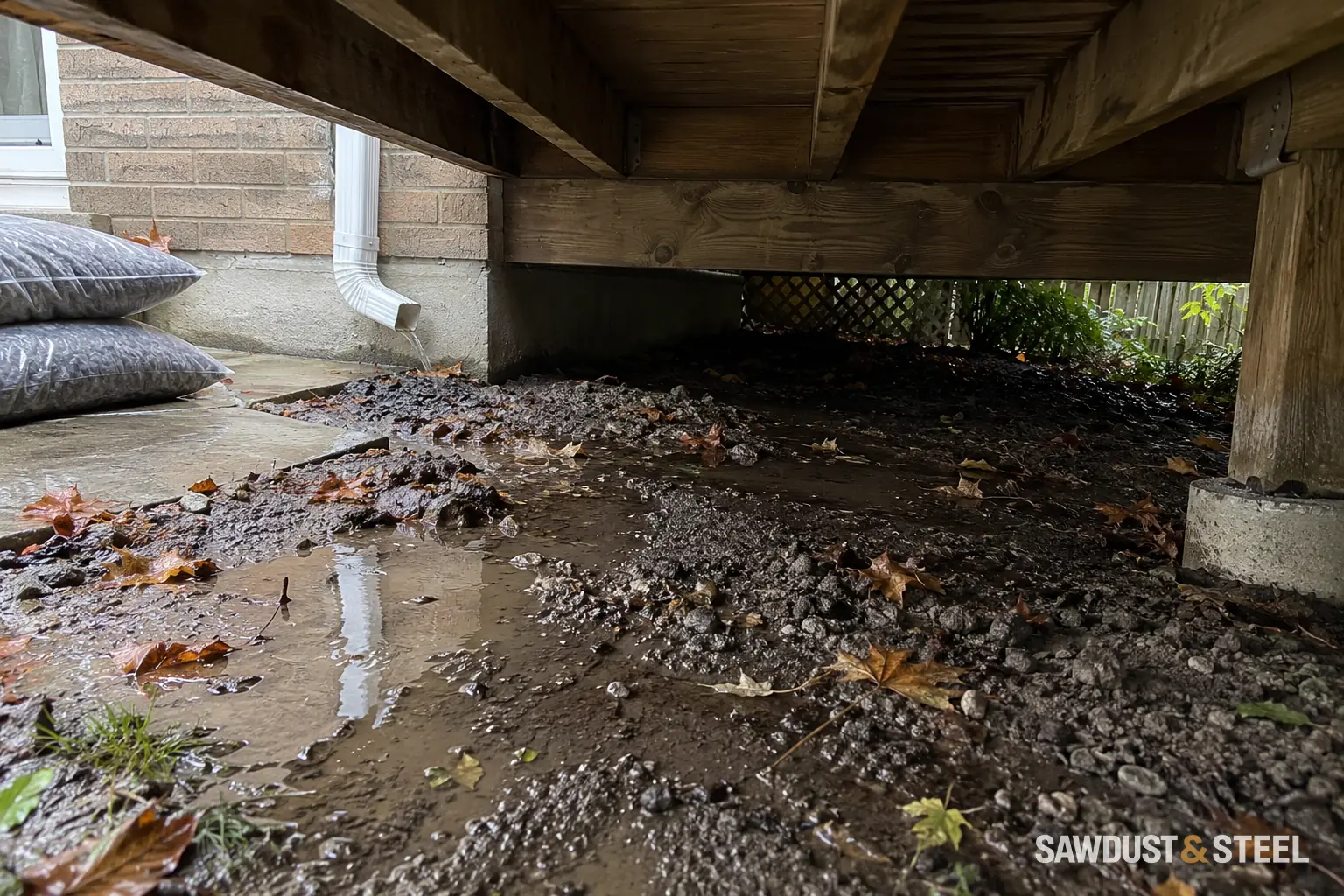
The deck dries after rain. Underneath, the ground stays wet enough to remember last Tuesday. It is easy to blame the gaps between the boards. Those gaps are supposed to let rain through.
Observe the route during an ordinary rain
From a safe, accessible position, record where water first arrives and where it remains. Include the nearby downspout, patio edge, garden irrigation, and foundation wall. Photograph the same area later so the duration is clear.
Health Canada's moisture guidance recommends directing rain and snowmelt away from the home and addressing moisture sources. That is the goal here; covering damp ground is not evidence that the source has changed.
Do not order a drain without an outlet
A contractor should be able to explain where collected water will go and whether that route is permitted. Avoid transferring the problem onto a neighbour's property or a walking surface. Buried drainage needs more planning than a convenient trench beside the posts.
Ask whether the site needs to absorb water or carry it elsewhere. The rain-garden versus French-drain comparison helps clarify that choice before anyone prices a trench.
Keep the repair proportionate
- A concentrated roof-water source may call for a downspout or discharge correction.
- A low pocket may need a grading assessment that respects foundations and supports.
- Water at the basement wall deserves investigation before the deck is enclosed.
- Wet or deteriorated structural members need their own assessment.
Do not excavate around footings or alter their cover casually. Ask the designer where the drainage work can occur without affecting support. We would solve one demonstrated water route at a time, then watch the next rain. It is less photogenic than a new skirt, and usually more informative.
If opening the adjoining wall reveals decay, the sill-plate repair plan needs to address both the support and the moisture source.
If runoff has washed soil away from a support, read the exposed deck footing guide before hiding the changed grade with fill.