
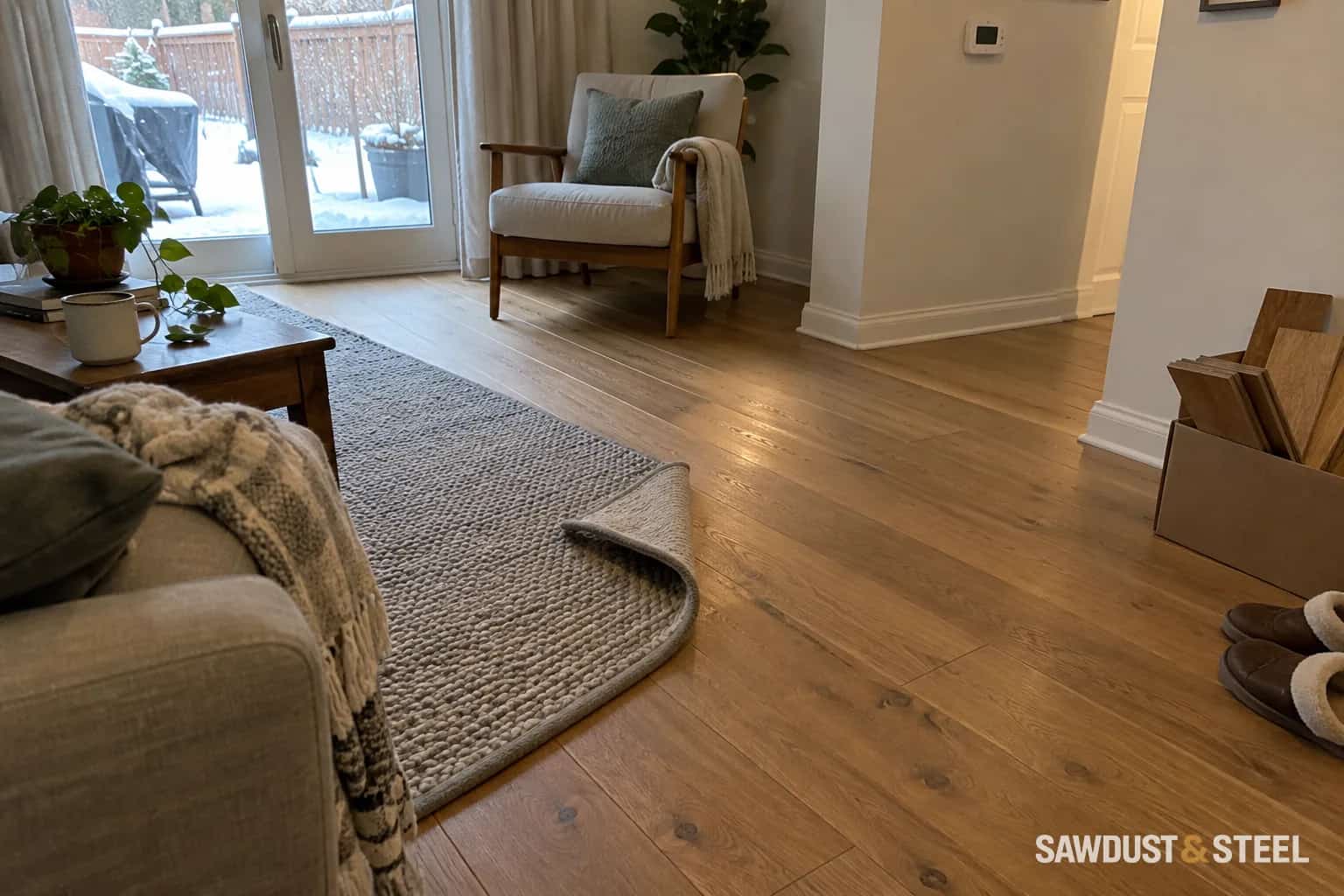
Warm wood under bare feet is a reasonable renovation ambition. The part to settle before ordering is whether the chosen boards, heating system, and installation method are approved to work together. The word engineered on a sample does not answer all three.
Match the product, not just the wood category
Record the flooring manufacturer, collection, construction, species, thickness, and installation method. Then identify the heating system: embedded pipes, electric cable, a surface mat, or another specified assembly. Ask for the applicable instructions for that combination.
Mirage's radiant-heating technical bulletin illustrates why this matters: permitted installation methods vary with the heating arrangement, and some of its flooring products are excluded. A general sales answer should not overrule the product-specific document.
A surface limit is not the thermostat setting
The relevant limit may refer to the wood surface, not the room-air setpoint or the water circulating beneath it. As one manufacturer example, Mirage specifies a maximum wood-surface temperature of 27°C and limits temperature variation across the floor. Use the limit for the actual product; this is not a universal Ontario code temperature.
Ask the heating designer how that limit will be maintained and checked. Include the planned furniture and floor coverings in the conversation. If the room needs more heat than the approved floor assembly can deliver, the design needs another answer before installation, rather than a hotter setting afterward.
Choose the layers together
| Layer or condition | What to confirm |
|---|---|
| Subfloor | Moisture results, flatness, preparation, and compatibility with the floor system. |
| Adhesive or underlay | Approval for both the flooring and heating arrangement, including thermal resistance. |
| Wood flooring | The exact product's permitted method and temperature and humidity conditions. |
| Controls | How the specified floor-temperature limit is maintained during operation. |
| Startup | Who commissions the heating and follows the floor's installation and restart sequence. |
Kährs' flooring guidance likewise directs owners to follow both the flooring and heating supplier's instructions, and discusses low thermal resistance for underlay. Its product advice is useful context, but an instruction for a Kährs floor is not approval for another brand.
Settle the sequence before deliveries
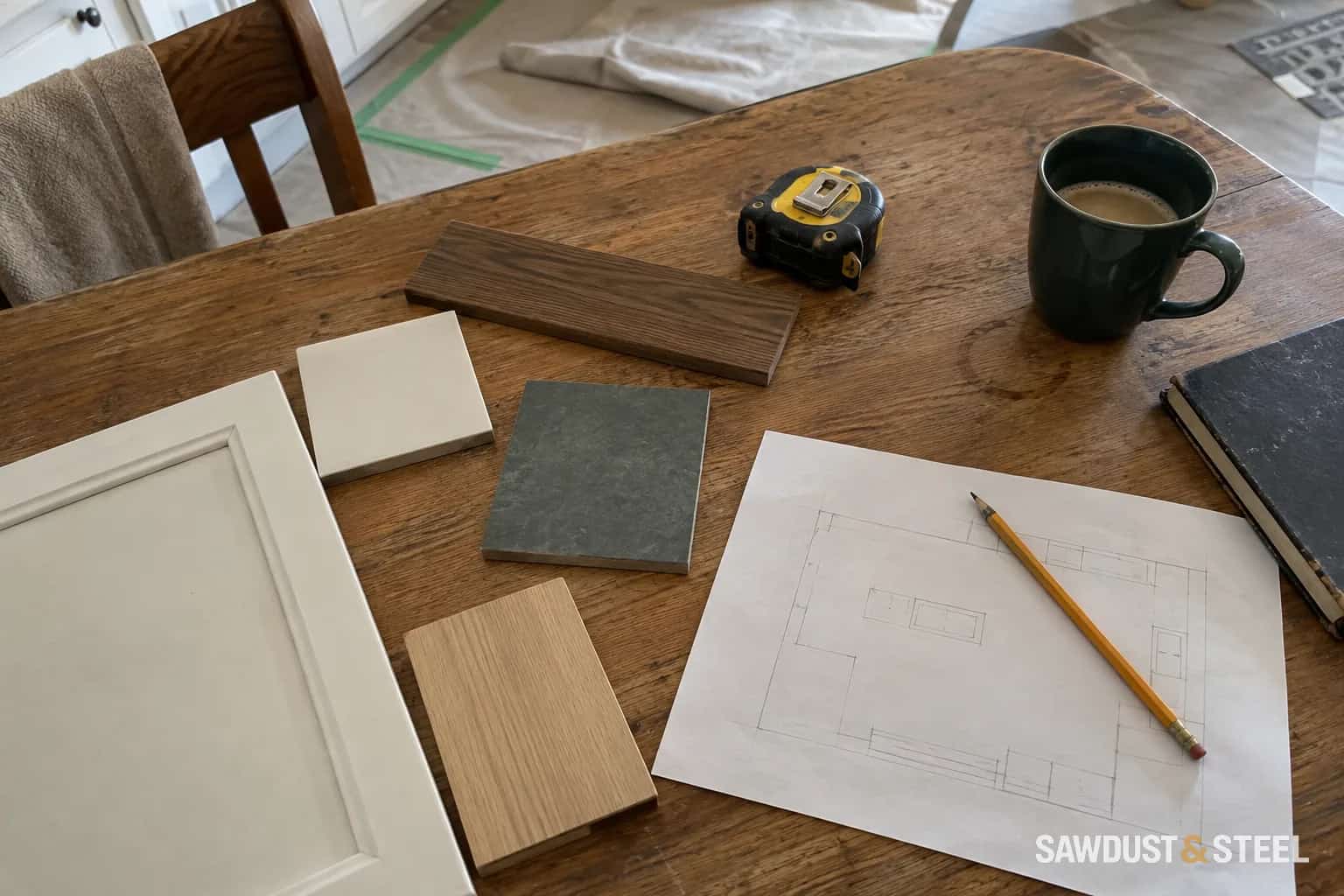
Ask for a written sequence covering moisture testing, the heating system's initial operation, flooring acclimation where required, installation conditions, and the permitted return to normal heating. Mirage's bulletin includes a pre-installation operating period; other products may have different instructions.
The useful handover is a small set of records: exact product names, the installation instructions used, moisture results, commissioning notes, and control settings. Keep them with any photographs showing concealed pipes or cables. They make later repairs and flooring replacement easier to plan.
Keep movement and fixed cabinetry in the plan
Radiant-heat compatibility does not settle expansion gaps or whether fixed cabinets can sit over a floating floor. Resolve those details with the same product instructions, including doorways and the edge of a kitchen island. The floor should be selected as part of the room, not as a separate purchase that everyone else must work around.